
Field notes · The tea year
Shincha and Japan's tea seasons.
Tea in Japan is picked up to four times a year, and the first picking is worth the most by far. The calendar, the 88th night, and what each harvest does to flavour and price.
HHiro OkumuraTea farmer, TeafyPublished 11 November 20266 min read
The short answer
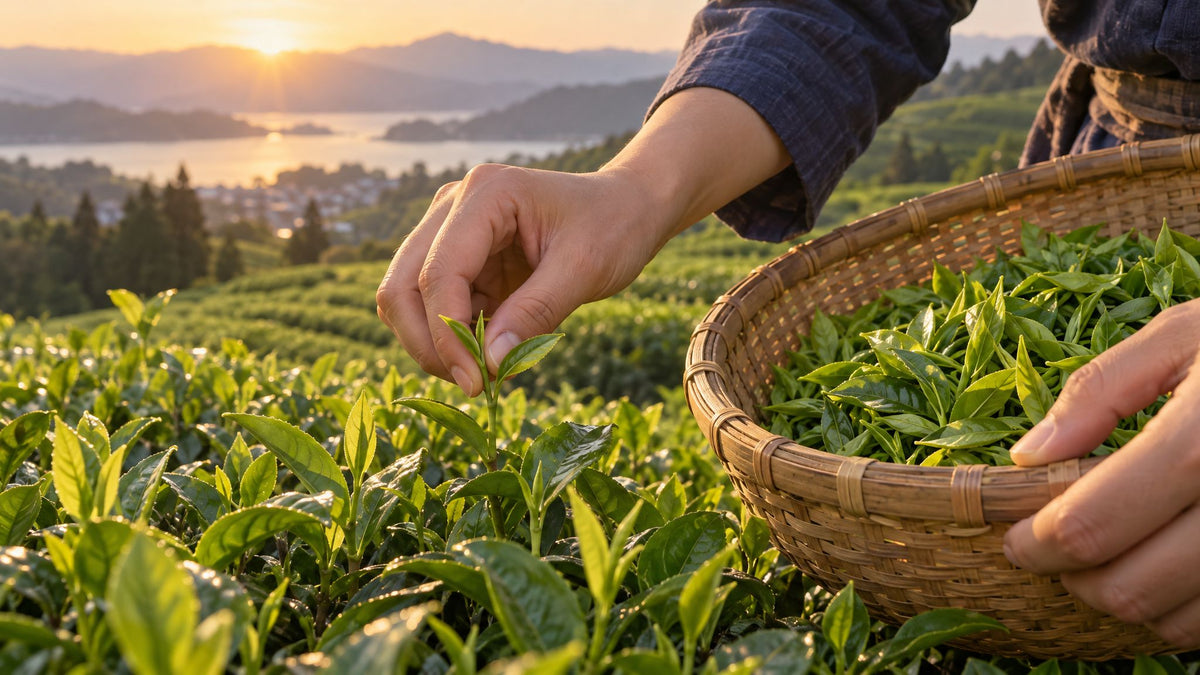
Shincha (新茶) means new tea: the first tea of the year, picked in spring as ichibancha (一番茶). In Kagoshima picking starts in early April; in Shizuoka and Uji it peaks from late April into May. Japan picks up to three more times through summer and autumn. The first flush is the sweetest and most valuable: in 2025, first flush tencha fetched about twice the price of second flush at the farm gate (MAFF).
In this guide
The tea year, in one picture
A tea bush rests through winter. In spring it wakes slowly, and that slowness is everything. Cool nights, short days, a young shoot taking its time. That is where the sweetness comes from.
Then the year speeds up. Each later harvest grows faster, in more heat and more sun. Faster growth means less sweetness and more bite.
Typical timing in Japan's main regions. The south starts first.
What each harvest gives you
Timing varies by region: Kagoshima starts weeks before Shizuoka and Kyoto.
Our tasting notes, scored 1 to 5.
Slow spring growth. Theanine stays high.
Summer heat. More catechins.
The reason is in the leaf. In a cool spring the plant keeps more theanine, an amino acid that tastes sweet and brothy. In summer sun, theanine is turned into catechins, which taste bitter and drying. Same bush. Different season. Different tea.
Shincha, the new tea
Shincha (新茶) is not a separate kind of tea. It is the first sencha of the year, sold fresh, soon after picking. In Japan the first shincha in the shops is a small celebration. Signs go up in tea shop windows: 新茶入荷, new tea has arrived.
Shincha tastes green in a way later tea does not. Bright, sweet, a little like fresh peas and cut grass. It is at its most vivid in the weeks after release. After that it settles and rounds out.
The 88th night
Hachijūhachiya (八十八夜) is the 88th night after risshun (立春), the traditional first day of spring. It falls around 1 or 2 May.
Japanese tradition says tea picked around this night brings good health and a long life. It also marks the heart of the first flush in many regions, and the point when late frost is usually over. Children in Japan still learn a song about tea picking on the 88th night, Chatsumi (茶摘み).
- Risshun, around 4 February: the old calendar's first day of spring.
- Count 88 nights. You arrive at about 1 or 2 May.
- Frost risk eases. Growers say the frost stops at the 88th night (八十八夜の別れ霜).
- Picking peaks in Shizuoka and Uji around this time.
Why the south picks first
Japan is long. The spring tea front moves north the way the cherry blossom front does.
Approximate first flush windows. Each spring shifts them a little.
Kagoshima, on Japan's warm southern tip, starts weeks before Uji. That early start is one reason Kagoshima has grown so fast: its tea reaches the market first.
Price and taste by harvest
Source: MAFF 茶をめぐる情勢, October 2026.
Japan's first flush has shrunk by more than a third since 2008. Farms age. Growers shift to cheaper late season tea. That is one reason first flush matcha has become so expensive.
When does shincha reach Australia?
Shincha is released in Japan from late April to June. After processing, shipping and testing, new season tea typically reaches Australia from around the middle of the year.
Matcha is different. Tencha from the first flush is stored cold, whole, and milled through the year. Milling to order keeps it fresh long after the spring picking.
Monthly Google searches in Australia. Interest rises as Japan's picking season begins in March and April.
Peak month for first harvest matcha: Mar. Quietest: Oct.
Google Ads Keyword Planner, Australia, all languages, Google Search. Monthly figures are Google estimates, rounded into ranges.Questions people ask
What is shincha?
When is matcha harvested?
What is ichibancha?
What is first flush tea?
What is hachijuhachiya?
Is second flush matcha bad?
Hiro Okumura
Tea farmer, Teafy
Hiro is a third generation Japanese tea farmer. He writes about the field: seasons, cultivars, shade and everything that happens to a leaf before it becomes tea.
Sources
- Ministry of Agriculture, Forestry and Fisheries (MAFF), 茶をめぐる情勢, October 2026
- MAFF, 茶をめぐる情勢, July 2026
- Monbushō shōka 茶摘み (Chatsumi), 1912
- Google Ads Keyword Planner, Australia, searches October 2025 to September 2026, checked 11 November 2026
We update this page when the numbers change, and date every change here.
Teas in this guide
Keep reading
 The matcha shortage, explained
 Ceremonial grade matcha
 Gyokuro and kabusecha
 Matcha cultivars explained