
Buying guide · Updated November 2026
The matcha shortage, explained.
Japan is making more matcha than ever and still cannot keep up. Here are the official numbers, what the 2026 harvest did to prices, and how to buy well while they stay high.
CChris PillaiFounder, TeafyPublished 11 November 20269 min read
The short answer
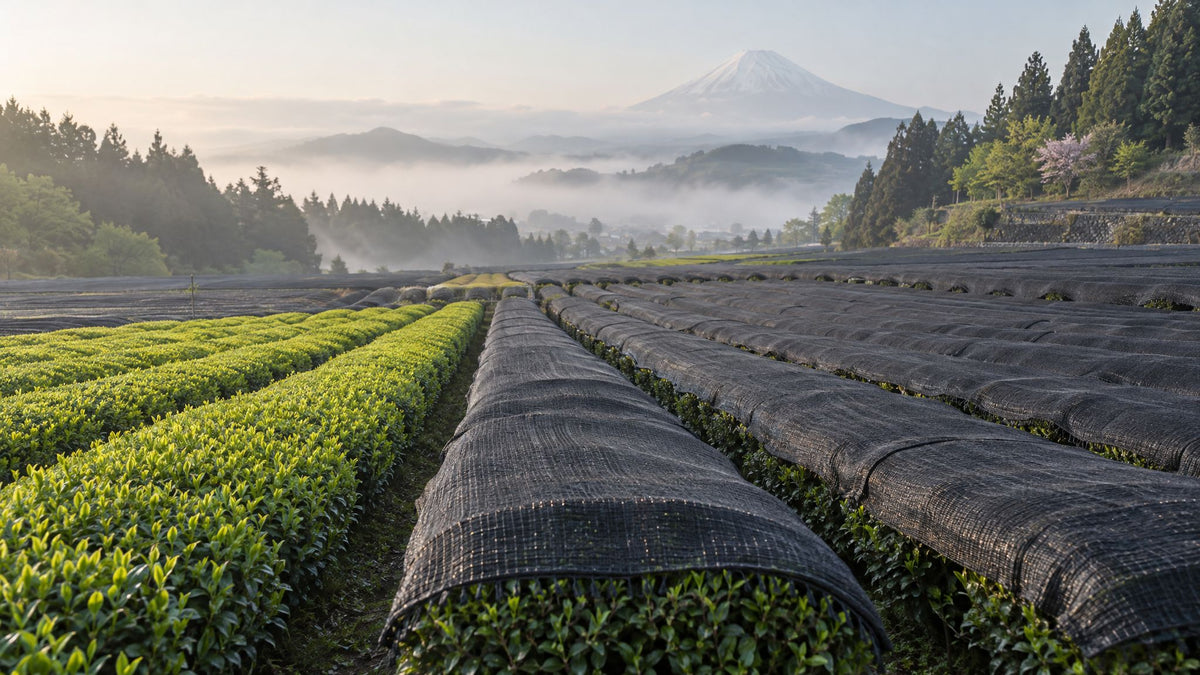
Yes, matcha is still scarce in late 2026. Japan made 6,278 tonnes of tencha, the leaf that becomes matcha, in 2025, about three times its 2014 level, yet demand grew faster. Tencha sold for about 4.9 times the price of sencha, and 2026 first flush tea traded at roughly double the previous year in Kagoshima and about 70% higher in Shizuoka (MAFF, October 2026).
In this guide
- The short version
- Why matcha cannot simply be made faster
- What MAFF's numbers actually say
- What the 2026 harvest did to prices
- Why supply cannot catch up quickly
- Japan's tea map changed too
- What it means in Australia
- Five things people say about the shortage
- How to buy smart while prices are high
- Timeline: 2025 to 2026
- Questions people ask
- Sources
The short version
Matcha is not running out. Japan grows more of it every year.
The problem is speed. The world wants matcha faster than tea bushes can be shaded, picked, steamed, dried and stone milled. Prices show the gap. In 2026 the gap got wider.
All four numbers come from Japan's agriculture ministry (MAFF), in its October 2026 tea report. That is the newest official data there is. If a page quotes one 2025 auction price and stops there, it is a year behind.
Why matcha cannot simply be made faster
Here is the part most shortage stories skip. Matcha is not a tea you can switch on. Every step below takes time, kit or both.
Each step is a bottleneck. A farm cannot relabel sencha as matcha; it has to change how it grows and processes the leaf.
What MAFF's numbers actually say
Source: MAFF 茶をめぐる情勢, October 2026. Crude tea (aracha) is the farm level product before final refining.
Two things stand out.
- Tencha is still small. Under a tenth of Japan's tea. Fast growth from a small base is still a small number.
- Tencha is expensive. Almost five times sencha per kilo. Buyers are bidding hard for it.
- Gyokuro is cheaper than tencha. Even the most famous shaded leaf tea sells for less than half of tencha now.
What the 2026 harvest did to prices
The first flush (ichibancha, 一番茶) makes the best matcha. MAFF reported that 2026 first flush tea traded at about double the previous year's price in Kagoshima and about 70% higher in Shizuoka. JA Kagoshima reported in June 2026 that its average first flush tencha price had more than doubled on a year earlier.
That gap is the most useful number for a shopper. First flush leaf costs about twice second flush at the farm gate. So when a tin labelled ceremonial costs less than a culinary powder down the aisle, ask why.
Why supply cannot catch up quickly
- Tea is a slow crop. A new bush takes several years to give a full harvest, and 39.6% of Japan's tea fields had bushes 31 years or older in 2024 (Norinchukin Research Institute, July 2026). Many need replanting, not just more shade cloth.
- Tencha needs special factories. Ashikubo Teaworks in Aoi Ward, Shizuoka invested about ¥200 million to move from under 10% tencha to about 70% of its 17 hectares. Not every farm can do that.
- The first flush is shrinking. Japan's first flush crude tea fell from 40,682 t in 2008 to 25,213 t in 2025, while cheaper late season tea grew (MAFF).
- Exports pull hard. Japan exported a record ¥72.1 billion of green tea in calendar 2025 (MAFF). In fiscal 2025 (April 2025 to March 2026) exports reached 13,125 t, up 42%, with powdered tea about 70% of the volume (The Japan Times, 1 May 2026).
Japan's tea map changed too
In 2024, and again in 2025, Kagoshima overtook Shizuoka as Japan's largest crude tea producer (30,000 t vs 24,100 t in 2025). Kagoshima now ranks first for tencha, Kyoto second and Shizuoka third. Japan's government has also encouraged growers to move from sencha to tencha for export since fiscal 2025 (Kyodo News).
That shift has a knock on effect. When leaf goes to tencha, less is left for everything else, including the sencha that roasters turn into hojicha.
What it means in Australia
Australians took to matcha fast. Japan's green tea exports to Australia reached 195,319 kg in January to August 2025, up 131% on the year before, making Australia Japan's eighth largest destination (Japanese Tea Export Promotion Council, reported by SBS News, 25 October 2025).
Some cafes responded by switching to cheaper powders, including matcha made outside Japan. That is legal, and some of it tastes fine. But it is a different product. ABC News reported in December 2025 that matcha labelling in Australia is almost completely unregulated. The checking falls to you.
Five things people say about the shortage
How to buy smart while prices are high
- Match the grade to the jobWhisked straight with water, buy first flush ceremonial. In milk or baking, a good culinary grade does the job for less.
- Check the prefecture and the flushA real Japanese matcha names where it was grown. First flush should be stated, not implied.
- Look at the colour and the dateBright jade, a clear best before date, and a light proof pouch or tin. Dull khaki usually means old or low grade leaf.
- Ask for a lab reportHeavy metal and residue testing costs money, so brands that test tend to say so and show the numbers.
- Buy what you will finish in a monthOpened matcha fades in four to six weeks. Smaller, fresher packs beat a big bag that goes stale.
Timeline: 2025 to 2026
Monthly Google searches in Australia. Interest in matcha powder peaks in late spring, as cafe prices climb.
Peak month for matcha price: Oct. Quietest: Jul.
Google Ads Keyword Planner, Australia, all languages, Google Search. Monthly figures are Google estimates, rounded into ranges.Questions people ask
Is there still a matcha shortage in 2026?
Why is matcha so expensive now?
Will matcha prices come down?
Is cheaper matcha in cafes still Japanese?
How much does real ceremonial matcha cost in Australia?
What is tencha?
Chris Pillai
Founder, Teafy
Chris founded Teafy to bring Japanese tea from the farm to Australian cups with nothing lost on the way. He writes the buying guides: prices, labels, and what is worth paying for.
Sources
- Ministry of Agriculture, Forestry and Fisheries (MAFF), 茶をめぐる情勢, October 2026
- MAFF, 茶をめぐる情勢, July 2026
- The Japan Times, Green tea exports, 1 May 2026
- Norinchukin Research Institute, 農林金融, July 2026
- Ministry of Agriculture, Forestry and Fisheries, basic policy for tea and tea culture, April 2025, including the shift towards tencha
- SBS News, Australian matcha demand and cafe prices, 25 October 2025
- ChannelLife, Australia coffee sales fall as prices climb higher, Square data, 2026
- ABC News, matcha labelling in Australia, 13 December 2025
- Reuters via Malay Mail, Heat stressed matcha output, 4 July 2025
- JA Kagoshima first flush tencha auction report, 4 June 2026 (as reported by trade press)
- Google Ads Keyword Planner, Australia, searches October 2025 to September 2026, checked 11 November 2026
We update this page when the numbers change, and date every change here.
Teas in this guide
Keep reading
 Where to buy matcha in Australia
 How to tell good matcha
 Ceremonial grade matcha
 Japanese vs Chinese matcha