
Guide · Sencha
Sencha, explained.
Every sencha is steamed. How long decides whether the cup comes out clear and bright or cloudy and round. Here is what happens inside a sencha factory, how Japan's tea judges score it, and how to brew both styles.
The short answer
What is sencha?
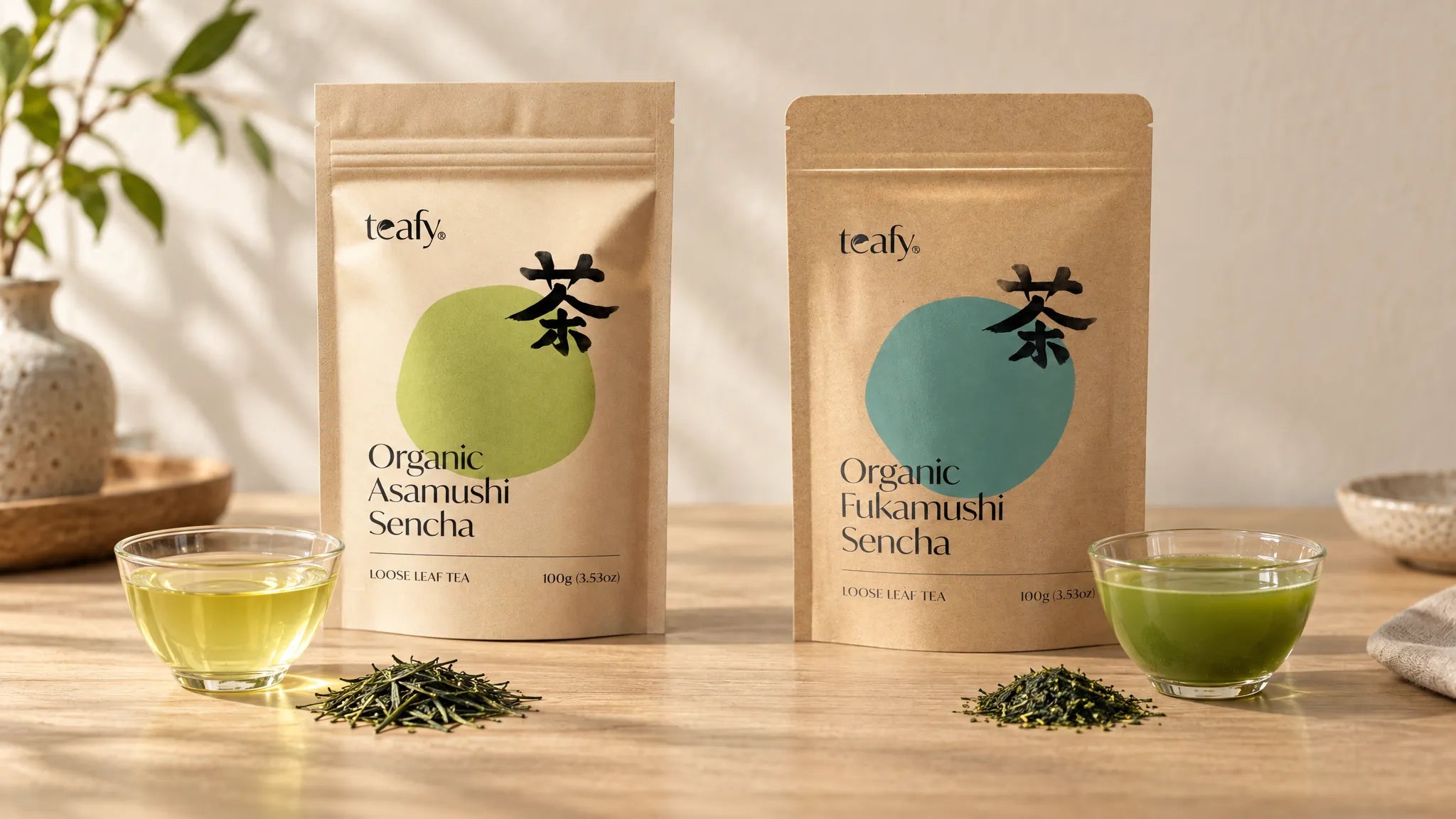
Sencha (煎茶) is Japanese green tea made by steaming fresh leaf, rolling it into thin needles and drying it. You steep it in a pot and strain it.
It is the tea most Japanese households pour every day, and the biggest single kind of tea Japan makes. Two prefectures, Shizuoka and Kagoshima, grow about four fifths of it.
- Steamed, not pan fired. Steam stops the leaf browning and keeps it green.
- Rolled into needles. Pressed and dried in stages until it is thin, straight and glossy.
- Steeped, not whisked. You drink an infusion, unlike matcha where you drink the leaf.
- Steam time sets the style. Short for asamushi, long for fukamushi.
- Mostly grown in the sun. Unlike gyokuro and matcha, which are shaded.
Interactive · Drag through the factory
Inside a sencha factory: eight steps.
Drag the handle and follow one batch of leaf from the steamer to the tea house. The bars show how much water is left in the leaf and how hot it is at each step.
蒸熱 jōnetsu
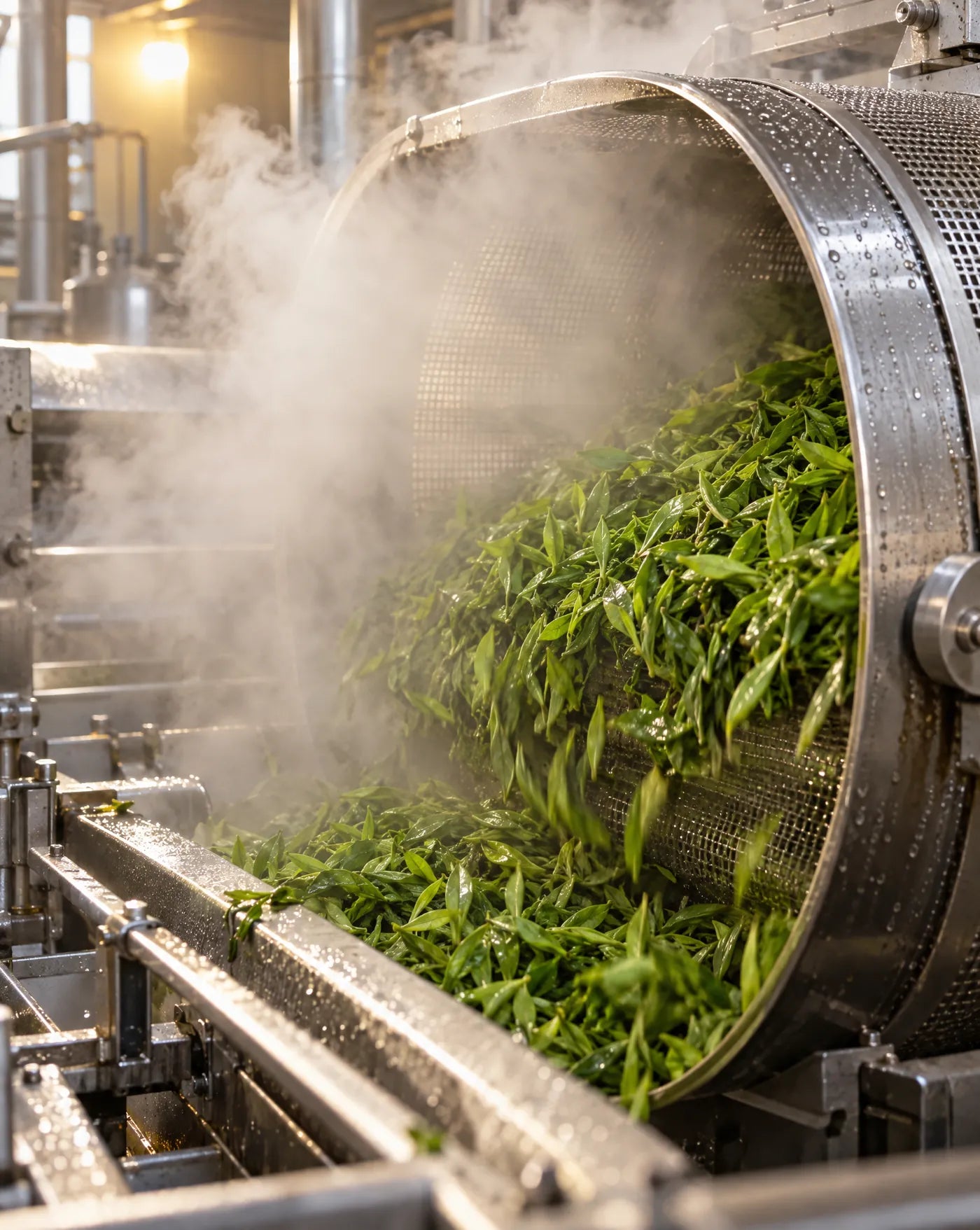
Steam stops the leaf turning brown
Fresh leaf goes into steam at about 100 °C. The heat kills the enzymes that would brown it, which is why Japanese tea stays green. This is the one step where the maker decides: a short steam for asamushi, two to three times longer for fukamushi.
Drag the handle, tap a step, or swipe across the leaf.
Water and heat figures are one factory's standard sencha process, from a Japanese patent; every factory tunes its own. Steaming leaves the leaf at about 76% water and drying takes it to 3 to 4%. Tea researchers give about 5% for finished crude tea. The first seven steps happen at the farm factory on the day of picking. Hand rolled sencha takes four to five hours to turn about 3 kg of fresh leaf into about 600 g of tea.
The fork in the road
Asamushi vs fukamushi: seconds in the steam.
Japan has no legal line between the styles. These are the ranges producers quote. Japan's agriculture ministry describes deep steaming as two to three times the usual time.
Time in the steamer, by style
Seconds. Ranges overlap because every factory and every leaf is different.
Teafy Asamushi is steamed for about 30 seconds and Teafy Fukamushi for roughly twice a standard sencha's time, as our growers state them.
What a longer steam changes
Softer leaf, finer pieces, a cloudier cup.
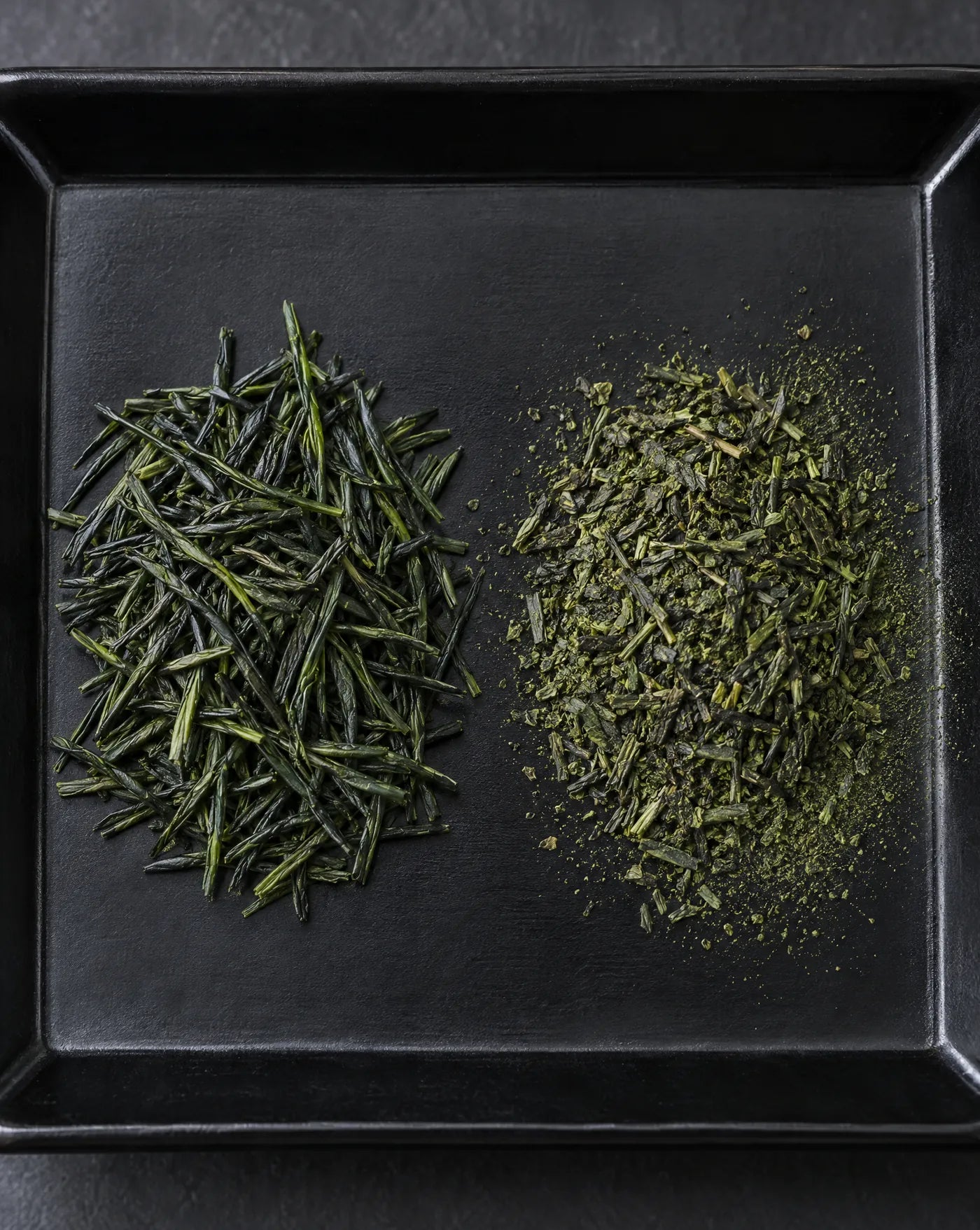
Steam softens the leaf. Short steamed leaf stays firm, so it rolls into long needles that open slowly in the pot. Long steamed leaf turns fragile and breaks into short pieces and fine particles during rolling.
Those particles are the whole story of fukamushi. They pass through the strainer and hang in the cup, which is why it pours deep green and tastes fuller, and why it needs a shorter steep. Japan's agriculture ministry also notes it suits cold brewing.
Asamushi
Clear, pale yellow green. Fresh aroma, a lively edge.
Futsūmushi
The everyday middle. Clear, a touch greener.
Fukamushi
Cloudy jade. Round, full, very little bite.
Tokumushi
Almost opaque. Thick body, aroma fades further.
Why two styles exist
Mountain leaf, plateau leaf.
The style follows the land. Our two senchas come from the two kinds of tea country Shizuoka is known for.
Thin leaf, short steam.
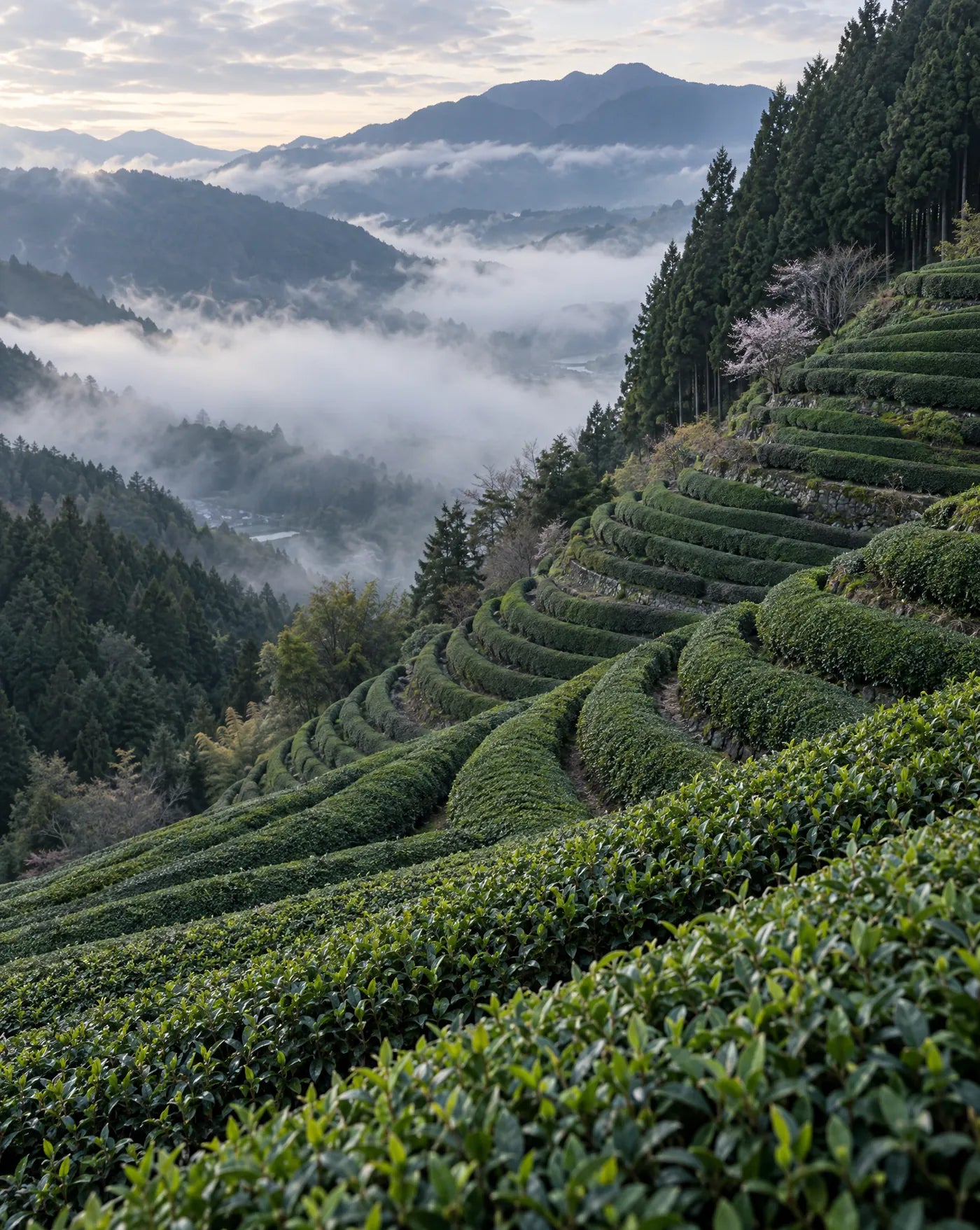
Mountain gardens are cooler, with mist and long nights, and the leaf grows slowly and stays thin. A short steam keeps its fresh aroma and whole needle shape. Our Asamushi comes from the high gardens of Haruno, in the Hamamatsu hills.
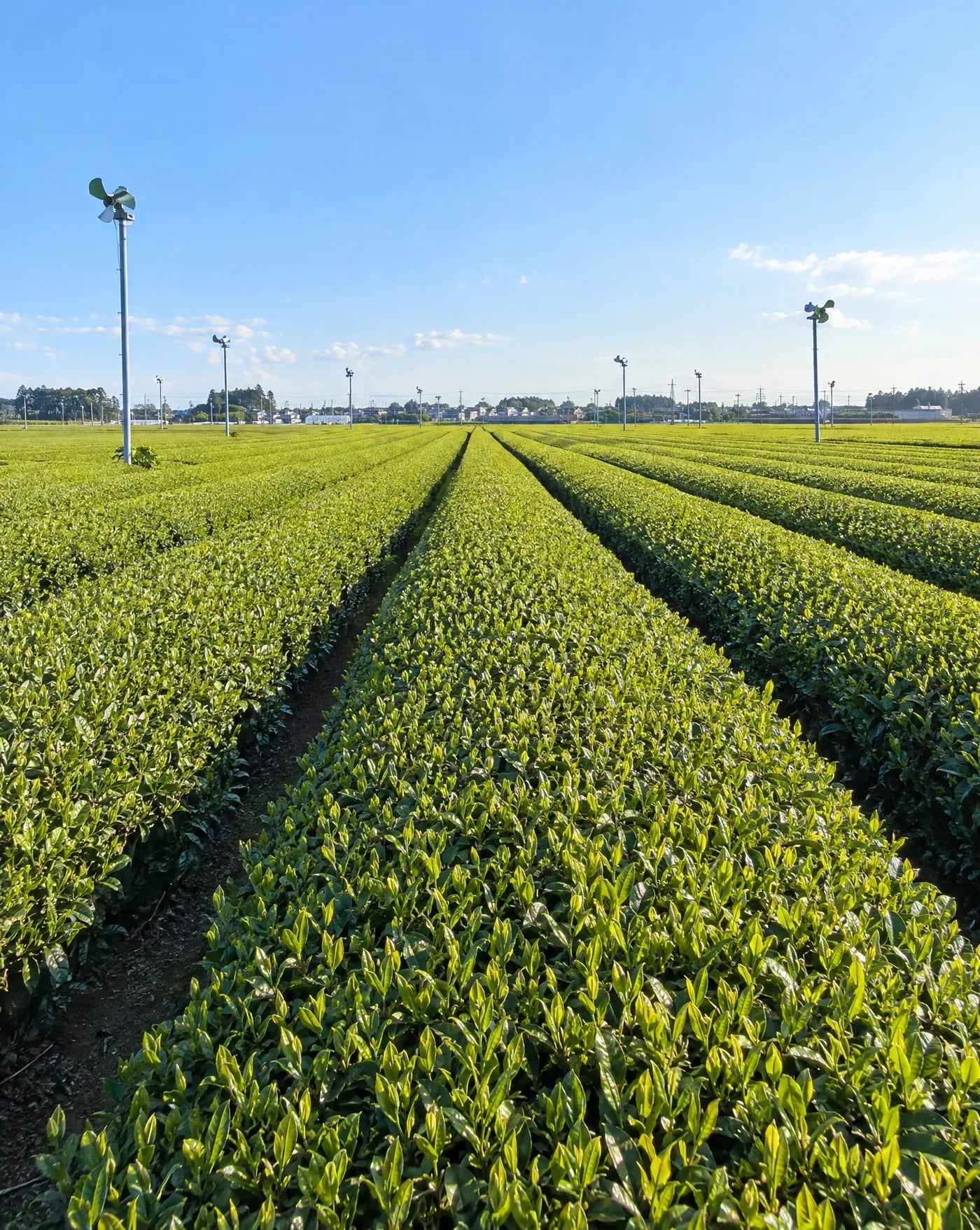
Thick leaf, long steam.
On the warm, sunny Makinohara plateau the leaf grows fast and thick, and a normal steam left it harsh. Growers around Kikugawa worked out from about 1952 that steaming far longer made it mellow, sweet and vivid green. Our Fukamushi is grown in Kikugawa.
How sencha got here.
- 1738
Rolled before drying
Nagatani Sōen of Ujitawara, near Kyoto, adds rolling to the old steam and dry method. The result is green, fragrant tea, and it becomes sencha.
- 1869
Makinohara cleared
Former samurai settle the Makinohara plateau and clear it for tea. It becomes the largest tea growing area in Japan.
- 1884
Machines arrive
Rolling by machine begins, replacing hours of hand work over a heated table.
- 1948
The drum steamer
The rotating mesh drum steamer is devised. Steam time becomes something a factory can set and repeat.
- About 1952
Deep steaming
Research around Kikugawa finds that long steaming tames the thick plateau leaf. Fukamushi spreads across Japan from there.
- 2023
Protected name
Deep steamed Kikugawa tea is registered as a Geographical Indication, the first tea in Shizuoka to be protected this way.
Sencha in numbers
Half of Japan's tea, a third of a coffee's caffeine.
Japan's crude tea output, 2024
Tonnes. Total 75,164 t. National Tea Producers' Federation.
Everything else covers bancha, kabusecha, gyokuro and the rest. Sencha by prefecture in 2023: Shizuoka 41%, Kagoshima 40%, Miyazaki 5%, all others 15%.
Caffeine per 100 ml, as brewed
Japan's Standard Tables of Food Composition, via the Food Safety Commission.
Each figure uses its own standard brew. Sencha: 10 g leaf, 430 ml, 90 °C, 1 minute. Gyokuro: 10 g, 60 ml, 60 °C, 2.5 minutes. More leaf, hotter water or a longer steep raises the number.
What tea judges look for
How Japan's tea judges score sencha.
At the national tea competition, judges look at the dry leaf on a black tray, then steep 3 g in a white bowl and smell, look and taste. Out of 200 points, 180 go to what is in the cup. Fukamushi is judged as its own class, with more points for taste.
Standard sencha
Points out of 200
Deep steamed sencha
Points out of 200
The words judges mark down.
Scoring works by taking points off for faults. These are some of the terms on the judges' sheet.
Judge your own at home.
- Dry leafTip some onto a dark plate. Asamushi should be long, even needles with a gloss. Fukamushi should be short and fine, but deep green, not grey or brown.
- Stems and dustA few pale stems are normal. Lots of yellow stem or a layer of grey dust means poor sorting.
- Smell the wet leafAfter the first steep, lift the lid. Fresh and green is good. Stewed, papery or smoky is not.
- LiquorAsamushi: clear and bright. Fukamushi: cloudy but vivid green. A brownish tinge in either means old or overheated tea.
- TasteSweetness and savoury depth first, a little grip after. Bitterness that stays is a fault or water that was too hot.
- Second steepGood sencha still tastes of something the second time. Thin and flat means weak leaf.
Tea houses blend some deep steamed tea into lighter tea to push the colour in the cup greener. Kagoshima's tea researchers have measured exactly how the colour shifts as the share of deep steamed tea goes up. A vivid green cup on its own tells you less than you might think.
Side by side
Our two senchas, side by side.
From our product pages. Genmaicha, explained · Hojicha, explained
Brew it like Japan does
How to brew sencha.
Start with our numbers, then adjust. Cooler water brings out sweetness, hotter water brings out bite. Pour every last drop so the leaf does not keep stewing.
Asamushi
- Leaf2.5 g, a heaped teaspoon
- Water180 ml at 80 °C
- Steep1 to 3 minutes
- Steeps2 to 3, hotter each time
Go down to about 70 °C for a softer, sweeter first cup. The first steep is the sweetest.
Fukamushi
- Leaf2.5 g, a heaped teaspoon
- Water180 ml at 80 °C
- Steep1 to 3 minutes
- StrainerFine mesh
Fine leaf gives up its flavour fast, so start at the short end. Swirl the cup before you drink, the particles are the best part.
Cold brew
- LeafA tablespoon
- Water1 litre, cold
- Fridge6 to 8 hours
- Keeps2 days
Softer and sweeter than hot sencha. Asamushi gives a clear glass, fukamushi a rich, savoury one.
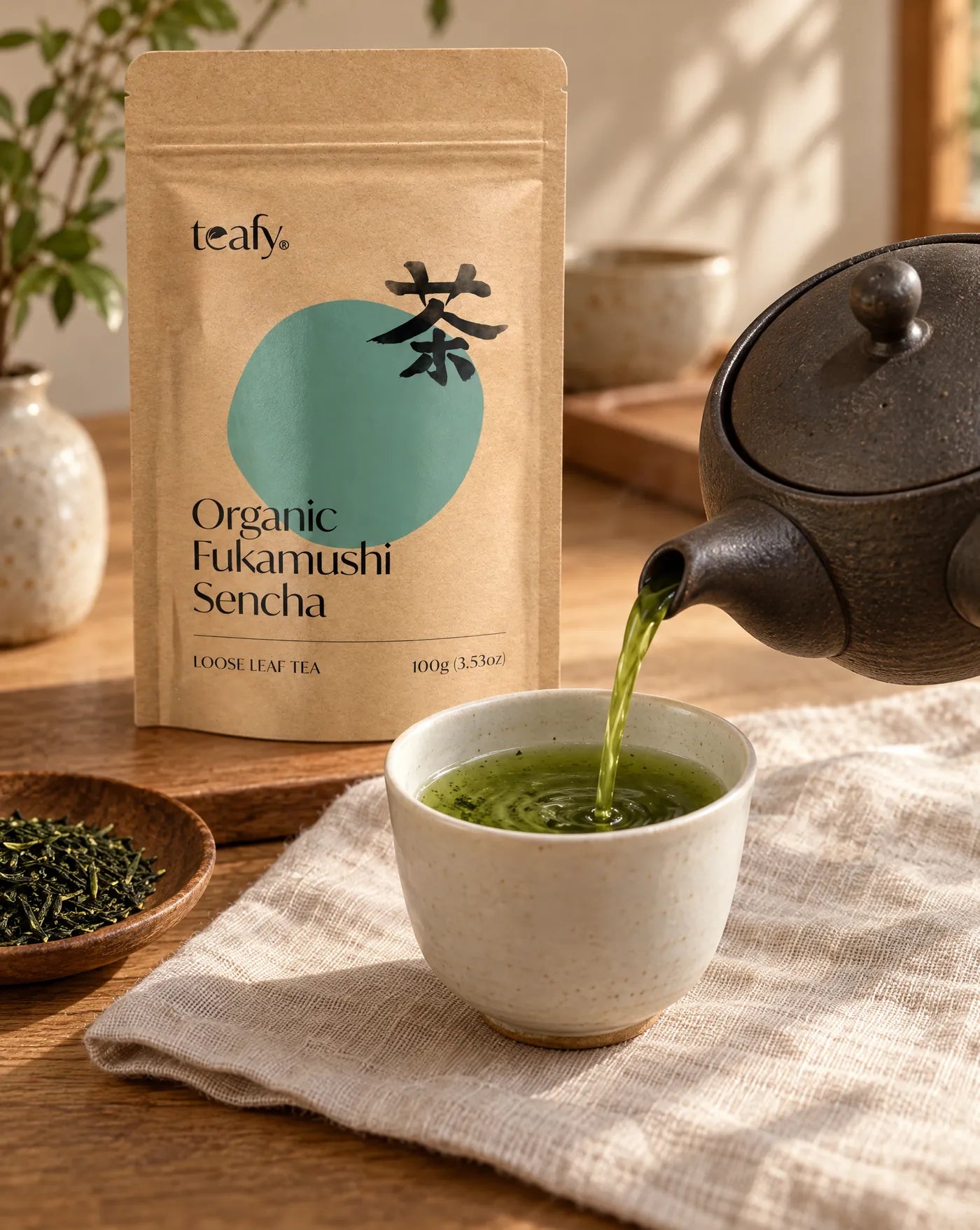
The pour
Every last drop.
Japanese tea teachers pour in turns between cups so each gets the same strength, then shake out the final drops. Leaf sitting in a half full pot keeps brewing, and the second cup pays for it.
Summer
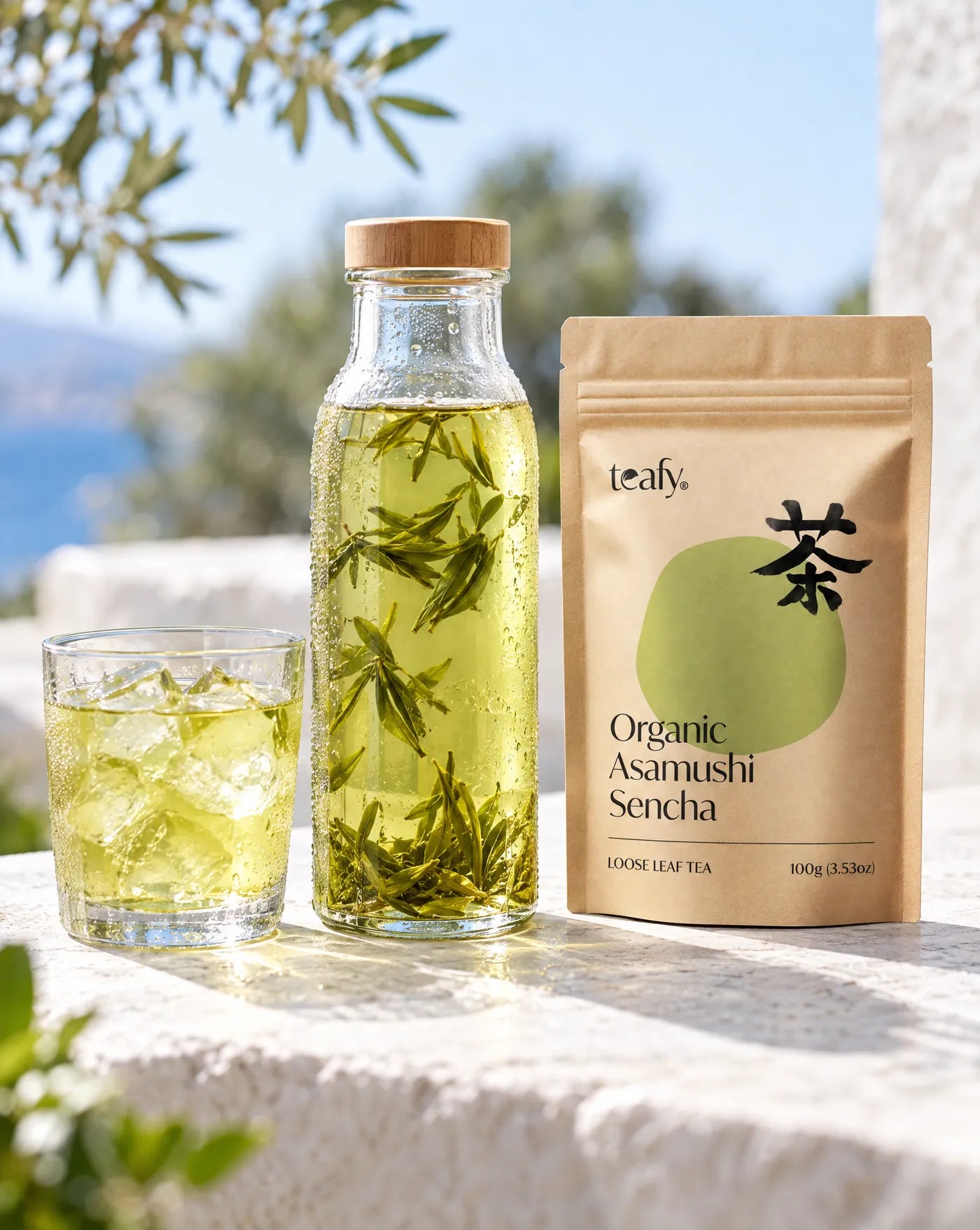
Cold brewed sencha.
Cold water extracts the sweet, savoury amino acids readily but very little of the bitter EGCG catechin, and less caffeine. That is why cold brewed sencha tastes so smooth, as research at Japan's national agriculture research organisation has shown.
Teafy sencha
One from the mountains, one from the plateau.
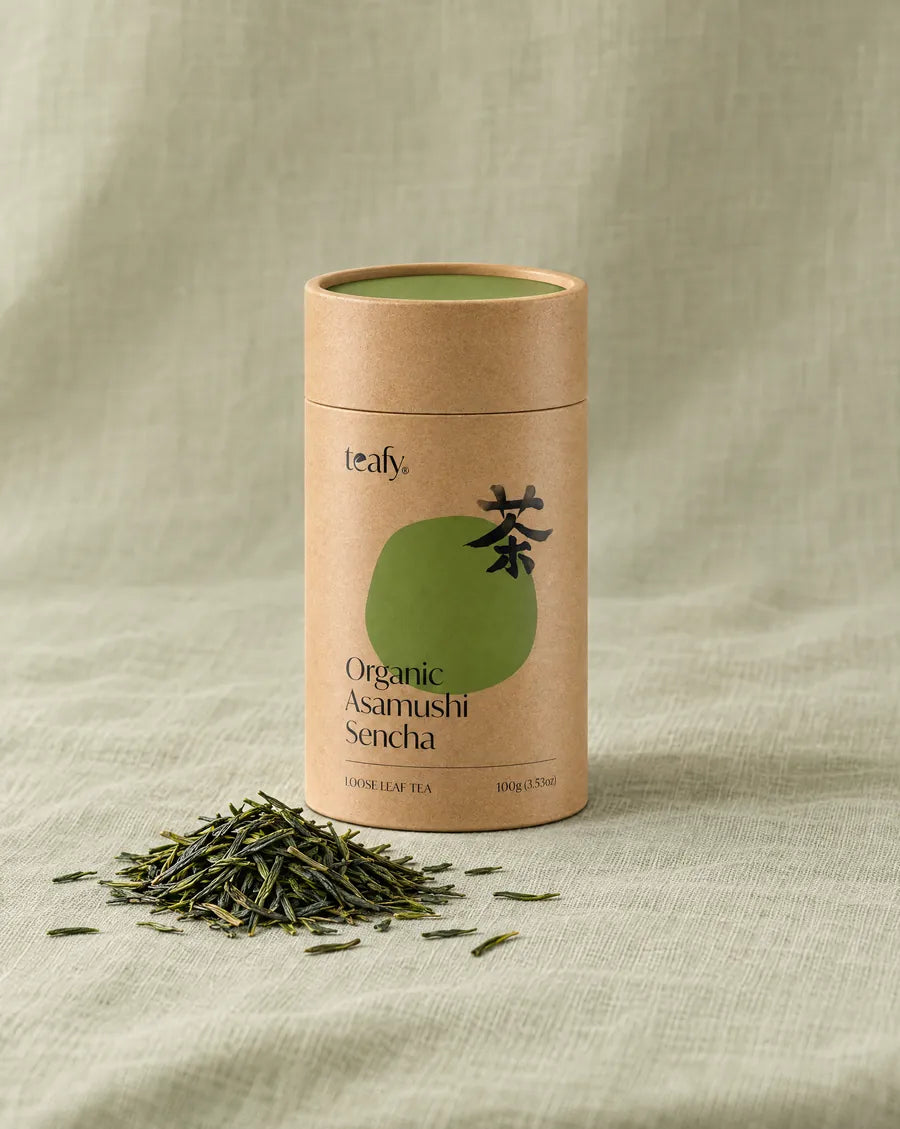
Asamushi Sencha
Light steamed, whole needle leaf from Haruno. Clear, bright and fresh. 100 g, about 40 cups.
Pouch $27.99 · Can $29.99
Shop Asamushi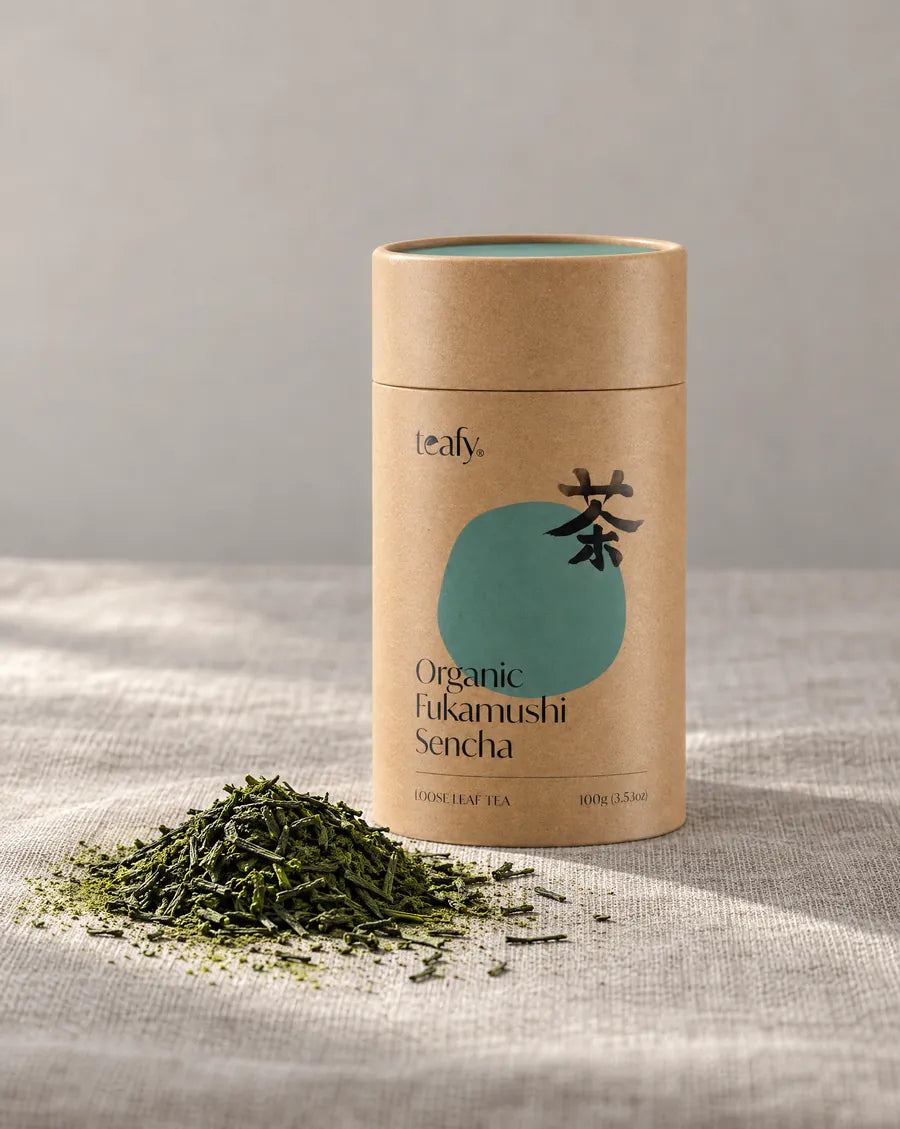
Fukamushi Sencha
Deep steamed leaf from Kikugawa. Cloudy jade, round and full. 100 g, about 40 cups.
Pouch $26.99 · Can $28.99
Shop FukamushiQuestions people ask
Sencha, answered.
What is sencha?
Sencha is Japanese green tea made from leaf that is steamed, rolled into thin needles and dried, then steeped in a pot. It is the most made tea in Japan, close to half of all tea produced there in 2024.
Which is better, asamushi or fukamushi?
Neither, they are different cups. Asamushi is light steamed: clear, bright and fresh with a lively edge. Fukamushi is deep steamed: cloudy, round and full with very little bite, and harder to brew badly. Japan's national tea competition even judges them in separate classes.
Why is fukamushi sencha cloudy?
Because the long steam makes the leaf fragile, so it breaks into fine particles during rolling. Those particles pass through the strainer and hang in the cup, giving the deep green colour and fuller taste. It is how the tea is meant to look.
How much caffeine is in sencha?
Japan's official food tables list brewed sencha at 20 mg per 100 ml, measured with 10 g of leaf in 430 ml of water at 90 °C for one minute. That is about 36 mg in a 180 ml cup brewed that way. Gyokuro is listed at 160 mg per 100 ml and drip coffee at 60 mg.
Is sencha the same as green tea?
Sencha is one kind of Japanese green tea, and the biggest one. Matcha, gyokuro, bancha, hojicha and genmaicha are all green tea too, made from the same plant in different ways.
Can you cold brew sencha?
Yes. Cold water pulls out the sweet amino acids readily but very little of the bitter EGCG catechin and less caffeine, so cold brewed sencha tastes softer and sweeter, according to research from Japan's national agriculture research organisation.
What is the difference between sencha and matcha?
Sencha leaf is steamed, rolled and dried, then steeped and strained. Matcha starts as shaded leaf that is steamed and dried flat without rolling, then milled into powder that you whisk and drink whole.
Sources
Where these facts come from.
- Ministry of Agriculture, Forestry and Fisheries (2023). Tea situation report: sencha output by prefecture, Shizuoka 41% and Kagoshima 40%. Source
- Aichi Prefecture (2025), citing the National Tea Producers' Federation: 2024 crude tea output, 36,511 t of sencha out of 75,164 t. Source
- Ministry of Agriculture, Forestry and Fisheries. Japanese tea types for export: deep steamed sencha is steamed two to three times longer, finer, shorter to brew and suited to cold brewing. Source
- MAFF Kanto Regional Agricultural Administration Office (2023). Deep steamed Kikugawa tea registered as a Geographical Indication; long steaming researched from about 1952. Source
- MAFF Geographical Indication register, No. 130: Kikugawa deep steamed green tea, registered 31 March 2023. Source
- Kyoto Prefectural Tea Research Institute. History of Uji tea: 1738 sencha method, 1884 machine rolling, 1948 rotating mesh drum steamer. Source
- Kyoto Prefecture landscape asset No. 24: Nagatani Sōen added rolling before drying to the old steam and dry method. Source
- Shimada City tea guide, Makinohara: settled and cleared for tea from 1869; thick leaf on the plateau and why deep steaming suits it. Source
- Japanese patent JPS6215170B2. Standard sencha manufacture: temperatures, times and leaf water at each stage. Source
- Yamaguchi Y., National Agriculture and Food Research Organization. Quality evaluation of Japanese green tea: national competition scoring, inspection method, defect terms, crude tea at about 5% water. Source
- Food Safety Commission of Japan (2018). Caffeine in food fact sheet, citing the Standard Tables of Food Composition in Japan 2015. Source
- Monobe M. (2018). Health functions of compounds extracted in cold water brewed green tea. JARQ 52(1), 1 to 6. Source
- Kagoshima Prefectural Institute for Agricultural Development, tea division. Liquor colour when light and deep steamed teas are blended. Source
- Teafy Asamushi Sencha and Fukamushi Sencha: origin, steam, firing, brewing. Source