
Lesson · Japanese tea
Genmaicha, Japan's toasted rice tea.
Green tea and roasted rice in one cup: toasty, gentle, and one of the lowest caffeine teas Japan makes. What it is, where it may have come from, and four ways to brew it.
EEric HuangTea instructor, TeafyUpdated 13 May 20266 min read
The short answer
Genmaicha (玄米茶) is Japanese green tea blended with roasted rice, usually about half and half. It tastes toasty and nutty with a light green finish, and it is one of the lowest caffeine green teas: about 10 mg per 100 ml of brewed tea, half that of sencha, according to Japan's official food composition tables.
In this guide
- Lesson 1: what genmaicha is
- Lesson 2: how it tastes
- Lesson 3: how much caffeine is in genmaicha?
- Lesson 4: three origin stories, and the honest answer
- Lesson 5: genmaicha, hojicha and matcha iri genmaicha
- Lesson 6: how to brew genmaicha
- Lesson 7: genmaicha benefits, honestly
- Lesson 8: choosing and storing genmaicha
- Questions people ask
- Sources
Lesson 1: what genmaicha is
Genmai (玄米) means brown rice. Cha (茶) means tea. Genmaicha is green tea, usually sencha or bancha, blended with roasted rice.
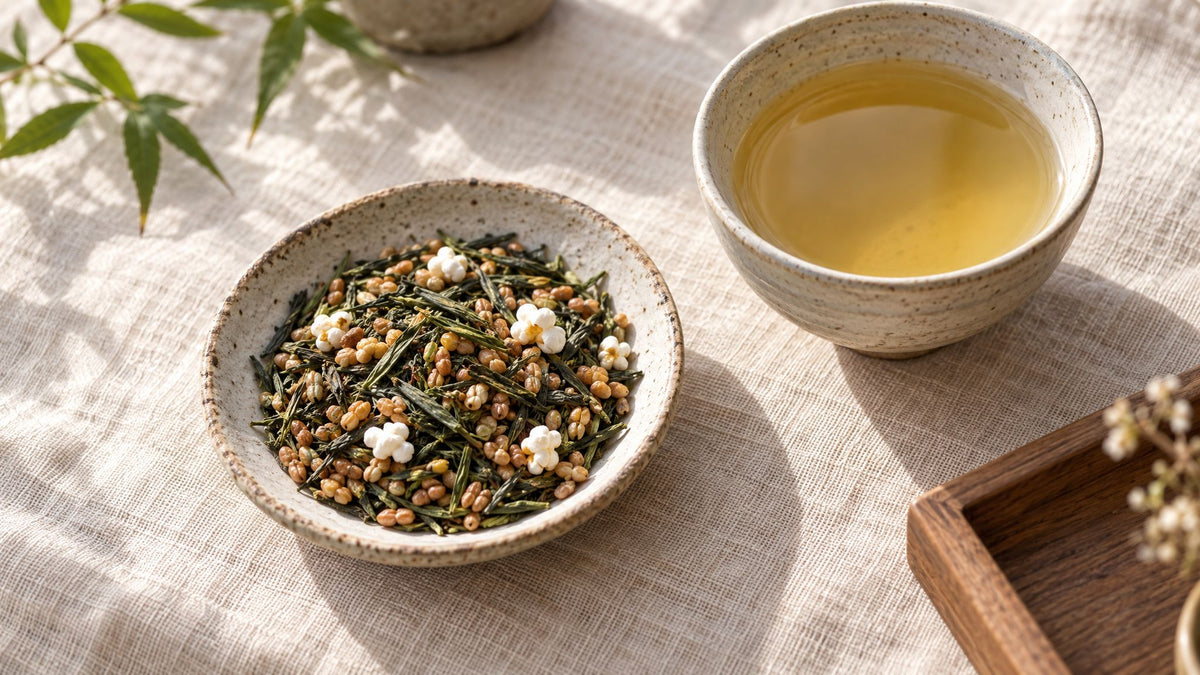
During roasting some grains pop open like tiny white popcorn. That is why people sometimes call it popcorn tea.
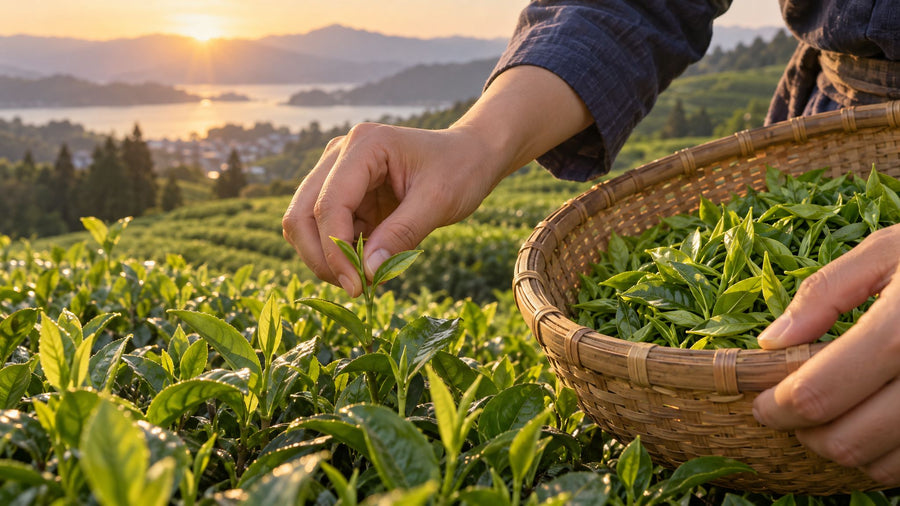
Ours is first flush chumushi sencha from our family farm in Shizuoka, blended 50/50 by weight with organic brown rice from Kagoshima and Miyazaki.
Lesson 2: how it tastes
Toasted rice leads: fresh popcorn, rice crackers, a little malt. The green tea follows with a soft, clean, slightly grassy finish.
There is very little bitterness, because half of the cup is rice. It stays mellow even when you brew it a little too long. That makes it a good first tea for people who think they do not like green tea.
Our tasting notes, scored 1 to 5.
Toasty rice, soft green finish.
Fresh and green.
Roasted, caramel, cocoa.
Lesson 3: how much caffeine is in genmaicha?
A typical 200 ml cup of genmaicha carries roughly 20 mg of caffeine. That is why it is a common afternoon and dinner tea in Japan.
Lesson 4: three origin stories, and the honest answer
Japanese tea houses tell three versions. Most place genmaicha in the late Taishō to early Shōwa era, around the 1920s and 1930s.
- The Kyoto mochi story. A Kyoto tea merchant roasted broken pieces of New Year kagami mochi, rice cakes offered at the household altar, and mixed them into tea so nothing went to waste. Japanese makers link it to shimatsu (始末), the Kyoto habit of using everything.
- The Osaka merchant story. A tea seller in Osaka mixed roasted dried rice into tea to stretch it and add flavour.
- The okoge story. In kaiseki cooking, hot water poured over scorched rice (okoge) at the end of a meal made a toasty drink that later met green tea.
Lesson 5: genmaicha, hojicha and matcha iri genmaicha
Lesson 6: how to brew genmaicha
Our pack guide is 2 g in 180 ml at 80°C for 1 to 3 minutes: gentle, clean and very hard to get wrong. Want the rice louder? Use more leaf and hotter water, around 85 to 90°C, for a shorter steep. Just keep it off the boil so the green tea does not turn bitter.
Lesson 7: genmaicha benefits, honestly
People search for genmaicha benefits. Here is what can be said plainly. It is a green tea, so it carries the same family of compounds as sencha, diluted by the rice. It is low in caffeine. Brewed plain, it has no meaningful kilojoules. And it is gentle enough to drink with food or in the evening.
What cannot be said: that the rice or the tea treats any condition. No good human trial shows that, and we do not claim it.
Lesson 8: choosing and storing genmaicha
- Named tea and rice. A good genmaicha says what tea and what rice it uses.
- Fresh toast. The rice should smell freshly toasted, not stale or oily.
- Green leaves. Not brown.
- Sealed, cool, dark. Toasted rice soaks up smells, so keep it away from spices and coffee.
- Best within a month or two once opened.
Monthly Google searches in Australia. Steady all year, a little higher from April to September.
Peak month for genmaicha: Apr. Quietest: Oct.
Google Ads Keyword Planner, Australia, all languages, Google Search. Monthly figures are Google estimates, rounded into ranges.Questions people ask
What is genmaicha?
Does genmaicha have caffeine?
Is genmaicha good before bed?
What is the difference between genmaicha and hojicha?
Is the rice in genmaicha brown rice?
Can you cold brew genmaicha?
Eric Huang
Tea instructor, Teafy
Eric is a Taiwanese tea instructor who teaches brewing technique. He writes lessons you can follow at the bench: ratios, temperatures, timing and the hand.
Sources
- Japan Standard Tables of Food Composition, 8th edition, 2023 supplement, via 全農 茶ガイド
- 宇治田原製茶場 via PR Times, 玄米茶の由来
- Teafy Genmaicha product specification
- Google Ads Keyword Planner, Australia, searches October 2025 to September 2026, checked 11 November 2026
We update this page when the numbers change, and date every change here.
Teas in this guide
Keep reading
 Genmaicha milk tea
 Hojicha latte recipe
 Cold brew green tea
 Shincha and the tea seasons