Teafy Genmaicha can beside a bowl of sencha leaf mixed with roasted brown rice and a cup of pale golden tea

Sencha and roasted brown rice · two regions of Japan

Genmaicha

Half green tea, half roasted brown rice, by weight. The rice leads with toast and warmth, the sencha follows soft and clean, and the cup lands at 10 to 30 mg of caffeine. Teafy blends it from the Shizuoka family farm where Teafy is the largest shareholder and rice roasted in the south.

50 / 50sencha to roasted rice, by weight. Most genmaicha is heavier on rice because rice is cheaper
8 roast levelsthe rice is roasted in small batches across eight progressive levels until some grains pop
10 to 30 mgcaffeine a cup. Less than half of straight sencha. A midday cup, not a nightcap
4.87from 506 verified reviews. About 40 cups a can at 70 cents a cup

Two ingredients

One tea from two places.

Genmaicha is a blend, so the honest page is one that tells you where both halves come from.

The leaf

Sencha, Shizuoka.

From the sixth generation family farm where Teafy is the largest shareholder. First flush, medium steamed in the chumushi style, which is the right steam for a blend: deep enough to give body against the rice, short enough that the leaf stays tidy and does not turn the cup cloudy. Blended to a leaf ratio we keep to ourselves.

Steam
Chumushi, middle depth
Harvest
First flush
Farm
Family farm, Shizuoka. Teafy is the largest shareholder
Role
Sweetness, quiet umami, the green under the toast

The rice

Brown rice, Kagoshima and Miyazaki.

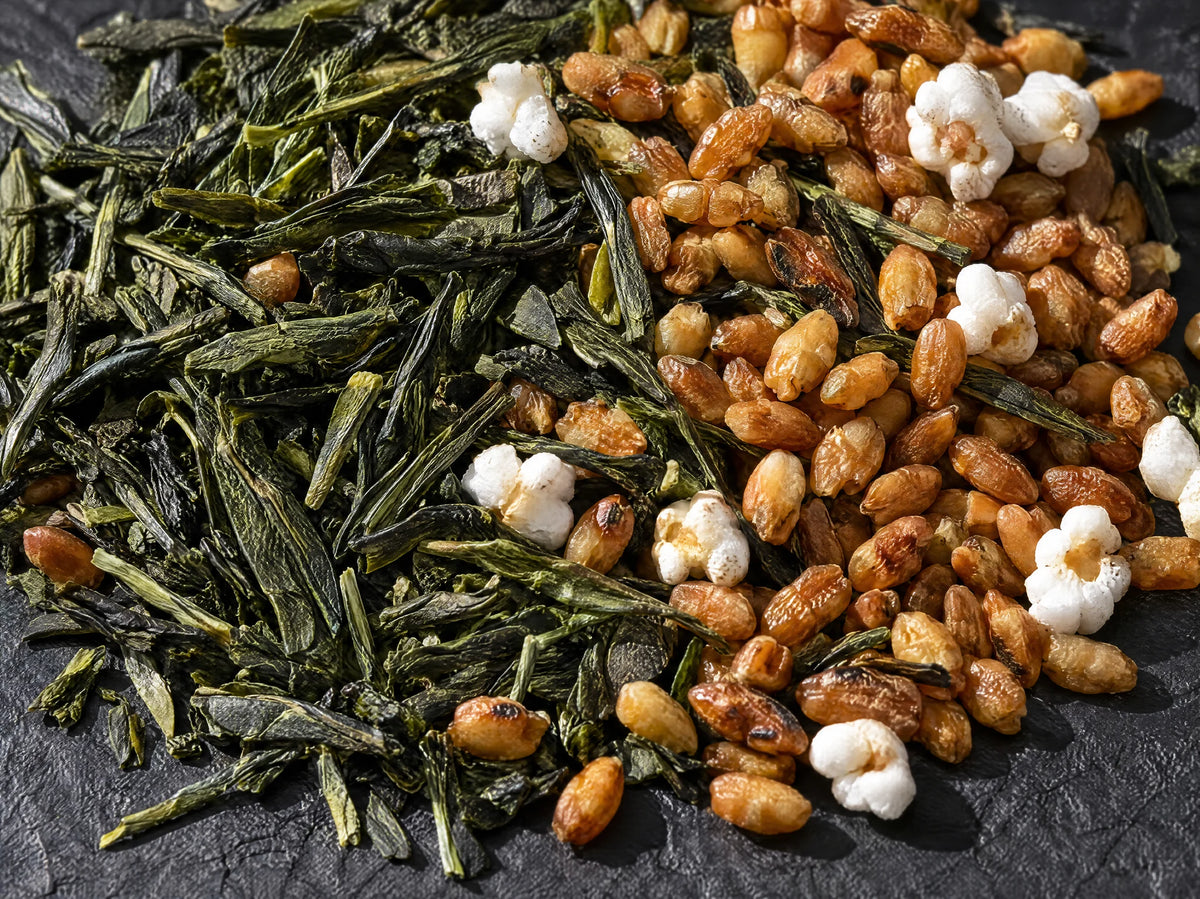
Organic genmai from two southern prefectures, roasted in small batches across eight progressive levels for even caramelisation, until some of the grains pop open into the white puffs you see in the can. Popped grains are a sign the roast went deep enough. Blended with the leaf at our partner facility in Japan.

Grain
Organic brown rice, whole
Roast
Eight levels, small batches
Origin
Kagoshima and Miyazaki
Role
Toast, warmth, nutty sweetness, body
Sencha 50%Roasted rice 50%

Blended 50 / 50 by weight. Rice is lighter than leaf, so by volume the can looks rice heavy. By the cup it is balanced, which is the point.

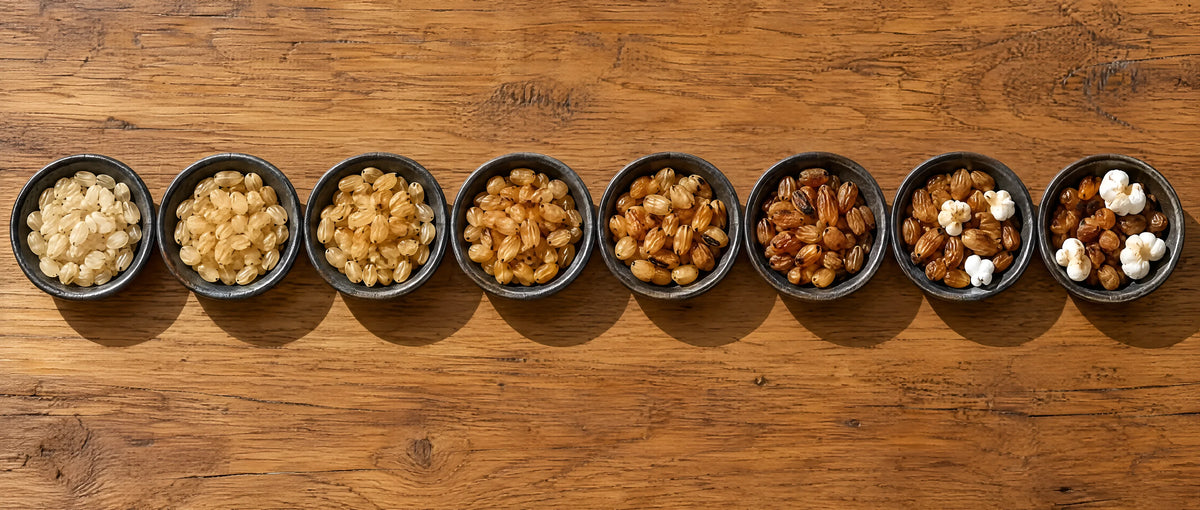
Eight levels

How far you roast the rice is the whole flavour.

Drag the ring across the saucers, or tap a level. The rice goes from raw to popped, and the cup goes from grassy to toast.

Eight saucers of brown rice grading from raw pale brown to deep golden roast with popped white grains
Drag me

Level 1 · raw

Pale, hard, smells of nothing. Brown rice straight from the mill. No flavour to give a tea yet.

Where Teafy lands

Across all eight. We do not stop at one level. The rice is taken through the ladder in small batches so every grain caramelises evenly, and the batch is pulled when a share of the grains have popped. Popped grains are the tell: a genmaicha with no white puffs in it was roasted fast and shallow, and tastes of it.

The story the rice tells

It was never the poor man’s tea. That is a story for tourists.

You will read that genmaicha was invented to stretch expensive tea with cheap rice. Tea merchants in Kyoto were selling roasted rice blends to people who could afford plenty of tea, because the rice does something the leaf cannot: it adds toast, warmth and body, and it takes the edge off caffeine. It is the tea Japanese families drink with food, at the table, with the kids.

The reason to buy a good one rather than a cheap one is the rice. Cheap genmaicha uses broken white rice roasted fast. Ours uses whole organic brown rice taken slowly through eight levels, blended half and half with a sencha that would sell on its own.

Close up of genmaicha: green sencha needles, golden roasted brown rice and popped white grains

Caffeine, a cup each

The afternoon tea.

Half the can is rice, which has no caffeine at all, so the cup starts at half strength before you even brew it.

Genmaicha10 to 30 mg a cup. Half rice, chumushi sencha, short steep
Senchaabout 20 to 30 mg a 2 g cup
Ceremonial matcha60 to 70 mg a 2 g bowl, whole leaf
Coffeeabout 95 mg a 240 ml cup

Genmaicha and matcha figures are from the Teafy product pages. Sencha is a general figure for a 2 g cup. Coffee is the USDA average for a 240 ml brewed cup. Genmaicha is low, not caffeine free: if you are very sensitive, treat it as a midday cup and keep hojicha for the evening.

How to make it

Three ways, and the one on the can is the first.

On the can

The pot.

2 g, a teaspoon180 ml80 degrees1 to 3 min

  1. One teaspoon into an infuser, kyusu or plunger. Include the rice, it is half the flavour.
  2. 180 ml at 80 degrees. Hotter than sencha is fine; the rice likes heat.
  3. One minute for light, three for strong. Pour it all out.
  4. Brew the leaf again. The second cup is often the best, the rice has opened.

Pale gold cup, toast first, green underneath.

2:00

Summer

Cold brew bottle.

10 g1 L cold water4 hours

  1. Five teaspoons into a litre bottle of cold filtered water.
  2. Four hours in the fridge, or overnight.
  3. Strain and keep cold. Two days.

Cold water pulls the toast and sweetness and almost none of the caffeine. The gentlest cup in the range, and the one to hand to kids.

4:00:00

With food

Ochazuke, the rice bowl.

Strong brewHot riceWhatever is in the fridge

  1. Brew genmaicha strong: 4 g, 150 ml, 90 degrees, 2 minutes.
  2. A bowl of hot cooked rice. Top with salmon, pickles, sesame, nori, a little soy.
  3. Pour the hot tea over the rice and eat it with a spoon.

This is what genmaicha is for in Japan. Late night, after a long day, the toast in the tea meets the rice in the bowl.

2:00

Shop genmaicha

One genmaicha, a can or a pouch, and two ways to try the farm.

Certified organic in Japan, the EU, the UK, the USA and Canada. Lab tested in Victoria. Cool room in Clayton South, same day dispatch before 2 pm Melbourne time.

Teafy Organic Japanese Genmaicha loose leaf tea in a tall kraft canister with an amber label

Japanese Genmaicha

Toasted rice first, soft sencha underneath, low astringency.

Best forAny timeWith food

Sencha and roasted rice · 100 g · about 40 cups

4.87(506)

Lab tested · Agrifood, April 2026

Choose your pack

Airtight can for the bench. Fully recyclable.

$27.99$0.70 a serve
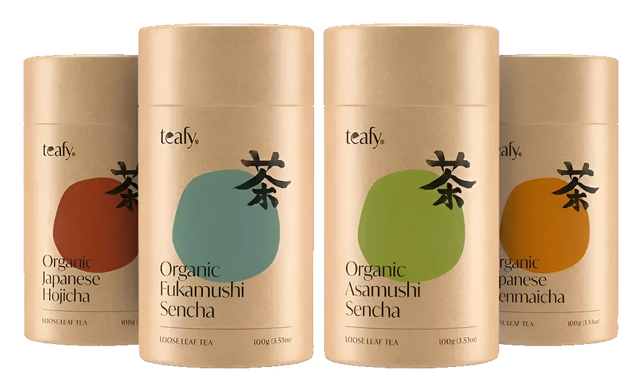
Four Teafy kraft canisters: Hojicha, Fukamushi Sencha, Asamushi Sencha and GenmaichaSave $10

Japanese Loose Leaf Can Bundle

All four loose leaf cans: asamushi, fukamushi, genmaicha, hojicha.

Best forTry everythingGift

4 × 100 g cans · save $10

Teas inside4.85(1,976)

$104.95$0.66 a serve

Published, not promised

Heavy metal results, with the rice in.

0.065Arsenic, mg/kg
0.016Cadmium, mg/kg
0.028Lead, mg/kg. The lowest of all eight Teafy teas
<0.010Mercury, below the limit of detection
Agrifood Technology, Werribee, Victoria. ISO/IEC 17025, NATA accreditation 2726. Report 485468, tested 26 to 31 March 2026, issued 7 April 2026. Tested as the finished blend, leaf and rice together. Retested at least every six months.

Read the numbers like a grader

Why arsenic is the one to watch in genmaicha.

Rice takes up more arsenic from paddy soil than almost any other crop, which is why the arsenic figure on a genmaicha is always higher than on the same sencha alone, and why we test the finished blend rather than the leaf. 0.065 mg/kg sits comfortably under food standards, and the lead figure is the lowest in our range because half the weight is rice from clean southern paddies. Read the full report and all eight teas.

Verified by Reviews.io

4.87506 verified buyers of Teafy Genmaicha · Teafy overall 4.95 from 516 company reviews
I really enjoyed the genmaicha. I like the combination of green tea and the roasted notes.
Noppadon C. · verified buyer · GenmaichaRead all 506 reviews

Questions we get asked

Genmaicha, answered.

What is genmaicha?

Japanese green tea blended with roasted brown rice. Teafy genmaicha is a first flush chumushi sencha from our Shizuoka farm, blended half and half by weight with organic brown rice from Kagoshima and Miyazaki that has been roasted across eight levels until some grains pop. It tastes of toast first and clean green tea underneath.

Does genmaicha have caffeine?

A little. 10 to 30 mg a cup, less than half of straight sencha, because half the blend is rice and rice has none. It is a midday or afternoon cup. For the evening, hojicha is lower again.

Why are there white puffed grains in it?

Those are rice grains that popped during roasting, the same way popcorn does. They are the sign the roast went deep enough. A genmaicha with no popped grains was roasted fast and shallow and will taste flat.

Is it gluten free?

Rice contains no gluten and the blend has two ingredients, sencha and brown rice, with nothing else added. It is not made in a certified gluten free facility, so if you are coeliac treat it as you would any product without that certification.

Was genmaicha invented as a cheap tea?

That is the popular story and the evidence for it is thin. Roasted rice blends were sold by established Kyoto tea merchants to ordinary households who wanted a warmer, lower caffeine tea to drink with meals. Good genmaicha has never been cheap to make well, because the rice has to be roasted slowly.

Can I eat the rice?

Yes. Some people eat the spent leaf and rice after brewing with a drop of soy. Better still, pour the strong brewed tea over a bowl of hot rice for ochazuke, which is the dish genmaicha was made for.

How should I store it?

Sealed, cool, dark. The roasted rice loses its aroma faster than the leaf, so use it within 30 days of opening. The airtight can is built for this; refill it from the pouch.

Is it organic and tested?

Both ingredients are certified organic in Japan, the EU, the UK, the USA and Canada, and the finished blend is tested for lead, arsenic, cadmium and mercury by an ISO 17025 laboratory in Victoria. The numbers are on this page.

Buy genmaicha in Australia

Organic Japanese genmaicha, Shizuoka sencha and southern roasted rice, shipped from Melbourne.

Teafy sells an organic loose leaf genmaicha in Australia made from first flush chumushi sencha grown on the sixth generation Shizuoka family farm where Teafy is the largest shareholder, blended half and half by weight with organic brown rice from Kagoshima and Miyazaki roasted across eight levels until some grains pop. Toasted, nutty and mellow with a clean green finish, 10 to 30 mg of caffeine a cup, and a cup that works hot, cold brewed or poured over rice.

Certified JAS, EU, USDA, Canada and UK Organic, tested as a finished blend for heavy metals by an ISO 17025 laboratory in Victoria with the results above, and packed to order from a cool room in Clayton South. Orders before 2 pm Melbourne time on a weekday ship the same day. Each 100 g can or refill pouch makes about 40 cups.

Also on this site: sencha, the same leaf without the rice, and hojicha, the roasted, lowest caffeine cup.

Type
Japanese green tea with roasted brown rice, loose leaf
Blend
50 / 50 by weight, chumushi sencha and roasted genmai
Origin
Sencha from Shizuoka; rice from Kagoshima and Miyazaki
Roast
Eight progressive levels, small batches, some grains popped
Brew
2 g, 180 ml at 80 degrees, 1 to 3 minutes
Caffeine
Very low, 10 to 30 mg a cup
Forms
100 g can $27.99, refill pouch $26.99
Certified
JAS, EU, USDA, Canada, UK Organic
Tested
Agrifood Technology, ISO 17025, April 2026

This afternoon

Toast in a cup.