Roasted Japanese green tea

Hojicha

Green tea that has been roasted until it turns the colour of toast. Sweet, nutty, almost no bitterness, and so low in caffeine that most people drink it after dinner. Teafy makes it two ways, both roasted in Shizuoka: a powder for lattes and a loose leaf for the pot.

16 to 30 mgcaffeine a serve, against 60 to 70 mg in a bowl of ceremonial matcha
Level 10roast, pulled at full depth then blended back to mid high
986verified reviews across the powder and the leaf, 4.8 average
Our farmsupplies part of the sencha leaf both hojichas are roasted from, since 2025
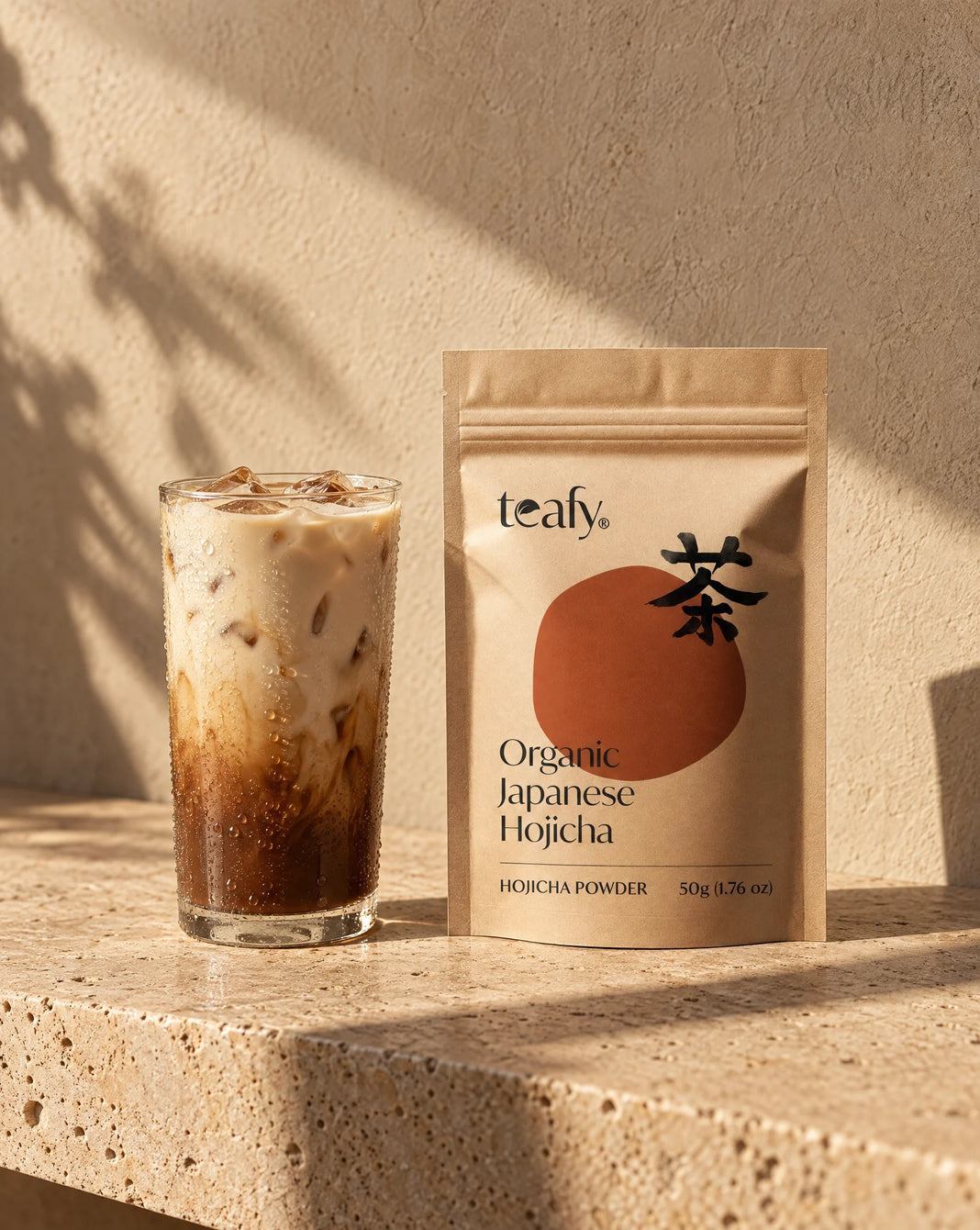
Teafy Hojicha Powder pouch beside an iced hojicha latte
Powder, for lattes
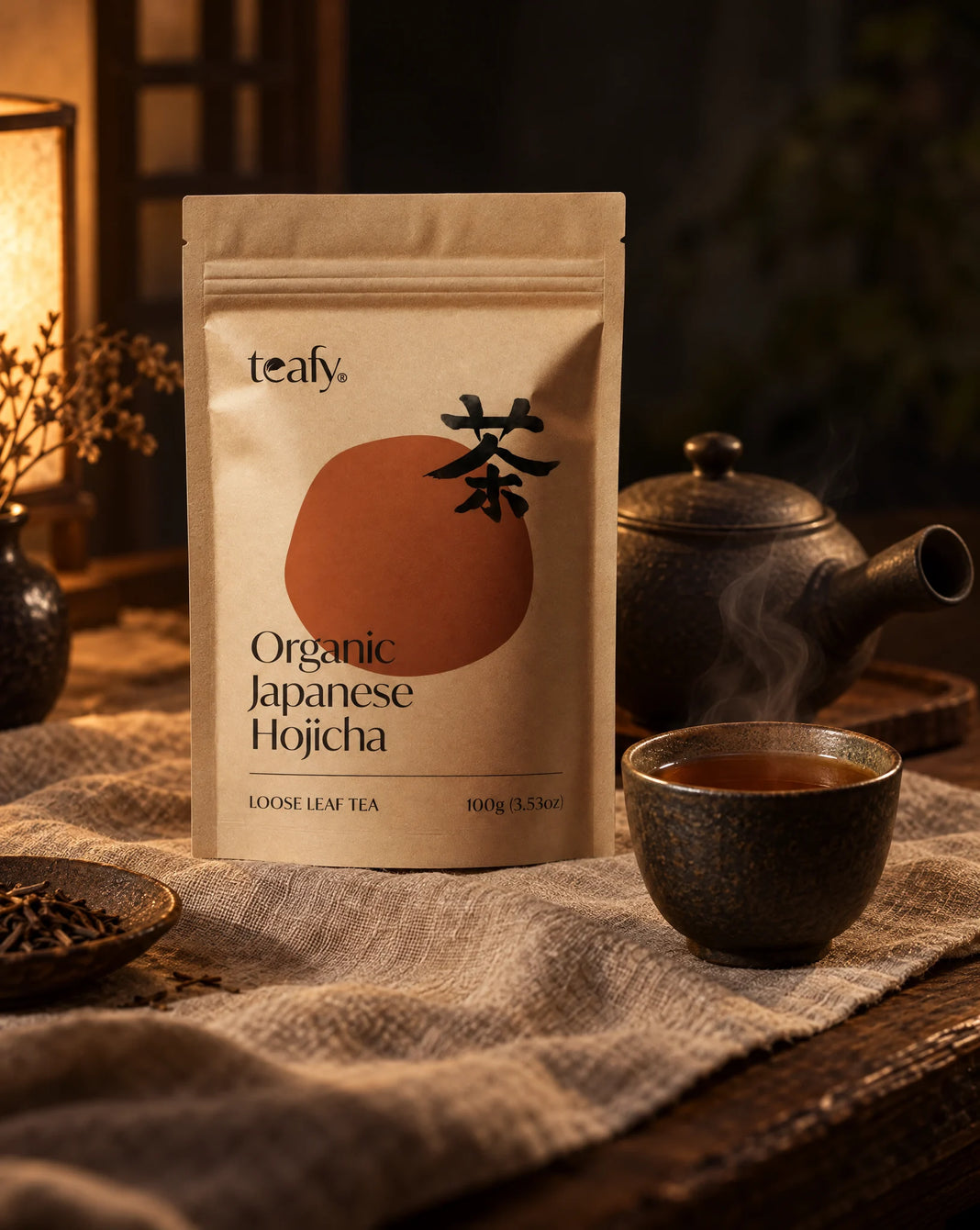
Teafy Hojicha Loose Leaf pouch with a cup of brewed hojicha and a kyusu teapot
Leaf, for the pot

Why it tastes the way it does

Drag the roast.

Hojicha starts as green sencha stems and leaf. Heat does the rest. Slide from raw to level 10 and watch the cup change.

Ten dishes of tea stems and leaf, from unroasted green through golden to the deep Teafy roast
Drag me
Teafy pulls at 10
1 raw35710 deep

Golden roast

Toasted grain, warm hay, a little honey. Bitterness is fading. This is the roast most supermarket hojicha stops at.

Where Teafy lands. We roast to level 10, the point where the stems go glossy and the sugars caramelise, then blend that deep roast back with a lighter batch to sit at mid high. You get the caramel and roasted nut of a hard roast without the ashy, burnt edge, and the lighter leaf keeps the cup sweet. Stems lead the blend because they carry less caffeine and more sweetness than the leaf.

The after dinner tea

How much caffeine is in hojicha?

Less than you think, and the roast is only half the reason.

Why it is low

Stems and a short steep.

  • Stems carry less caffeine than leaf. Our hojicha is stem forward, so it starts low before the roaster is even lit.
  • Roasting changes the flavour more than the caffeine. Japan’s standard food tables give brewed hojicha about 20 mg per 100 ml, the same as sencha. The roast makes the cup gentle; the stems keep it low.
  • You steep it for seconds, not minutes. Thirty seconds at 90 degrees pulls the sweetness out before much caffeine follows.

It is not caffeine free. If you are avoiding caffeine entirely, hojicha is still the lowest tea in our range, and the loose leaf is lower again than the powder because with powder you drink the whole stem.

How to make it

Four ways to brew hojicha.

Pick one. Each pane has a timer so you do not oversteep.

Hojicha Powder

The hojicha latte.

2 g powder30 ml water at 90 degrees200 ml milk3 minutes

  1. Sift a teaspoon of powder into a cup or bowl. Sifting stops the clumps.
  2. Add 30 ml of water just off the boil and whisk to a smooth paste. A bamboo chasen or a small milk frother both work.
  3. Steam or warm 200 ml of milk. Oat and full cream carry the roast best.
  4. Pour the milk over the paste. Sweeten if you like, it does not need it.

Good to know

Hojicha powder does not foam like matcha, so do not chase a head on it. Aim for a smooth, even brown. If the cup tastes thin, add half a gram more powder before you add sugar.

Cafés on our wholesale list use 3 g for a 12 oz cup.

0:30whisk until smooth

Hojicha Powder

Iced hojicha latte.

2 g powder30 ml water at 90 degreesIce to the top200 ml cold milk

  1. Whisk 2 g of powder with 30 ml of hot water in the bottom of a tall glass.
  2. Fill the glass with ice.
  3. Pour cold milk over the ice and stir once. The roast sinks and streaks through the milk, which is the look in the photo at the top of this page.

Good to know

Hojicha is naturally sweet, so iced it reads like a caramel cold brew without the coffee. A dash of maple works if you want dessert.

Make a batch: whisk 10 g of powder into 150 ml of hot water, keep it in the fridge for two days, and pour over ice and milk as you go.

0:20paste first, then ice

Hojicha Loose Leaf

A hot cup from the pot.

2.5 g leaf150 ml water at 90 degrees30 secondsThree steeps

  1. Warm the pot. Add 2.5 g of leaf, about a heaped teaspoon, per cup.
  2. Pour water at 90 degrees. Roasted tea likes it hotter than sencha. Boiled water rested for a minute is right.
  3. Thirty seconds, then pour everything out so the leaf does not keep steeping.
  4. Second steep 20 seconds, third steep 45. The second cup is often the best.

Good to know

Oversteeped hojicha goes flat rather than bitter, so a timer matters more here than with sencha. If your cup is pale, the water was too cool, not the steep too short.

A stainless infuser works, but the leaf wants room to open. A kyusu or a wide plunger gives a rounder cup.

0:30first steep

Hojicha Loose Leaf

Cold brew for the fridge.

5 g leaf500 ml cold water3 hoursKeeps 2 days

  1. Put 5 g of leaf in a bottle or jug and add 500 ml of cold filtered water.
  2. Three hours in the fridge, or overnight for a deeper cup.
  3. Strain the leaf out and keep the bottle in the fridge.

Good to know

Cold water pulls sweetness and very little tannin, so this is the gentlest hojicha you can make. It is also the one most people hand to kids and to anyone who finds hot tea too strong in summer.

Leaf does not need to be thrown out after one brew. Top the bottle up once more for a lighter second batch.

3:00:00fridge

Two hojichas, roasted in Shizuoka

Shop hojicha.

Both certified organic, both tested for heavy metals in Victoria, both shipped the same day from the cool room in Melbourne if you order by 2 pm Melbourne time.

Teafy Organic Japanese Hojicha powder in a kraft can with a rust red label

Hojicha Powder

Warm and naturally sweet, roasted nuts and light caramel.

Best forAfter dinnerLatte

Shizuoka · 50 g · 16 to 30 mg caffeine a serve

4.87(486)

Lab tested · Agrifood, April 2026

Choose your pack

Airtight can for the bench. Fully recyclable.

$27.99$1.12 a serve
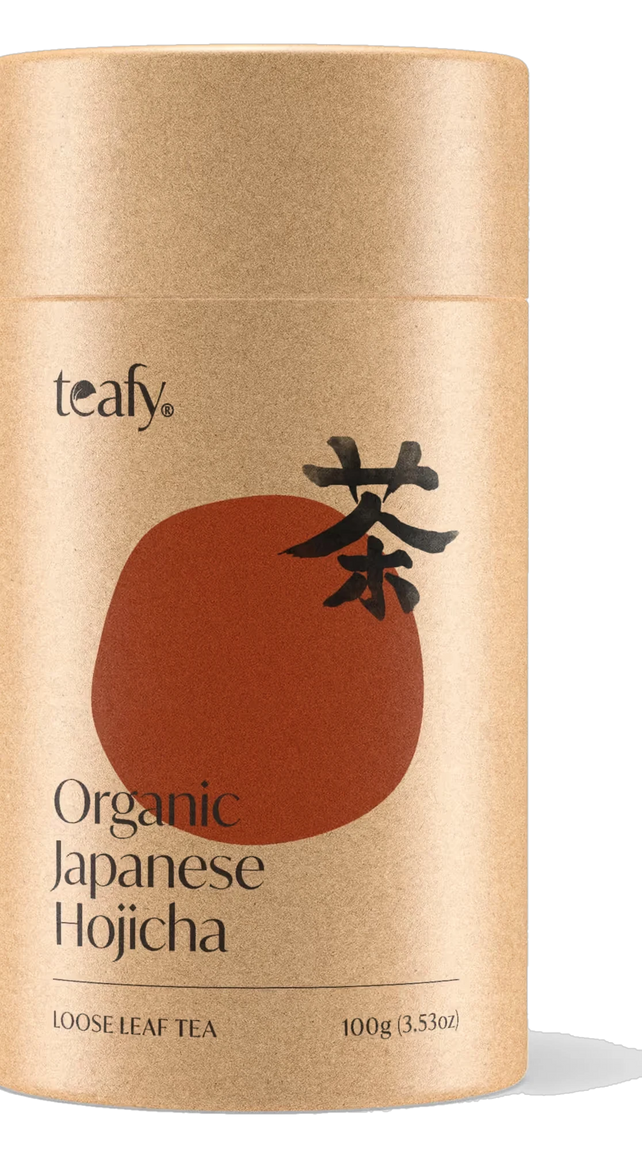
Teafy Organic Japanese Hojicha loose leaf tea in a tall kraft canister with a rust red label

Hojicha Loose Leaf

Roasted dark, chestnut, a soft citrus finish, no bitterness.

Best forEveningLow caffeine

Roasted · 100 g · about 40 cups

4.81(500)

Lab tested · Agrifood, April 2026

Choose your pack

Airtight can for the bench. Fully recyclable.

$27.99$0.70 a serve

What is different about ours

Hojicha the way Shizuoka drinks it.

Most hojicha in Australia is a light roast of leftover leaf. Ours is Shizuoka stem and leaf, roasted hard, blended back, tested here and kept cold until it ships.

From people who drink it

986 reviews, 4.8 average.

Verified by Reviews.io

4.84
Hojicha Powder
4.87 486 reviews
Hojicha Loose Leaf
4.81 500 reviews
Teafy overall
4.95 516 company reviews
The hojicha has a lovely roasted flavour. I enjoy having it in the evening and have been very happy with my purchase.
Victoria M. · verified buyer · Hojicha Loose Leaf
Read all hojicha reviews

Questions we get asked

Hojicha, answered.

Is hojicha caffeine free?

No, but it is the lowest caffeine tea we sell. A 2 g serve of Teafy hojicha powder has 16 to 30 mg, roughly a quarter of a cup of coffee and under half a bowl of ceremonial matcha. The loose leaf is lower again because you do not drink the stem itself.

What does hojicha taste like?

Roasted nuts, light caramel and toasted grain, with a sweetness that comes from the roast rather than sugar. There is almost no bitterness, which is why people who find green tea harsh usually like it. The loose leaf is lighter, with chestnut and a soft citrus finish.

Is hojicha a green tea?

Yes. It is Japanese green tea, usually sencha stems and leaf, roasted at high heat after the normal steaming and drying. The roast turns the green leaf brown and the cup amber, but it is never oxidised the way black tea is.

Powder or loose leaf, which should I buy?

Powder if you want lattes, iced drinks or baking. Loose leaf if you want a pot, a cold brew bottle, or the lightest cup. Both are roasted in Shizuoka to the same level 10. The chooser at the top of the page walks through it.

Can I drink hojicha at night?

Most of our customers do. It is the tea we recommend after dinner and the one cafés pour for people who are off coffee. If you are very sensitive to caffeine, the cold brew loose leaf is the gentlest way to drink it.

Does hojicha taste like coffee?

It sits closer to coffee than any other green tea, roasted, nutty and a little smoky, which is why a hojicha latte is the usual swap for an afternoon flat white. It is lighter in body and naturally sweeter, with none of the acidity.

How should I store it?

Roasted tea loses aroma faster than green tea, so keep it sealed, out of light, and away from the stove. The airtight can is built for the bench. Refill it from the pouch and use the powder within two months of opening, the leaf within three.

Is Teafy hojicha organic and tested?

Yes. Certified JAS, EU, USDA, Canada and UK Organic from the farm through to packing, and every batch is tested for lead, arsenic, cadmium and mercury by an ISO 17025 laboratory in Victoria before it goes on sale.

Keep reading

More from the roastery and the farm.

Buy hojicha in Australia

Organic Japanese hojicha, roasted in Shizuoka, shipped from Melbourne.

Teafy sells two organic hojichas in Australia: a stone milled hojicha powder for lattes, iced drinks and baking, and a hojicha loose leaf for the teapot and cold brew. Both are roasted to our own recipe in Shizuoka from stem and leaf, part of it sencha from the sixth generation family farm where Teafy is the largest shareholder, and taken to a level 10 roast for a sweet, nutty cup with 16 to 30 mg of caffeine a serve.

Every batch is certified organic in Japan, the EU, the UK, the USA and Canada, tested for heavy metals by an ISO 17025 laboratory in Victoria, and packed to order from a cool room in Clayton South. Orders placed before 2 pm Melbourne time on a weekday ship the same day, Australia wide, and both hojichas come as an airtight can or a recyclable refill pouch.

Hojicha is pronounced ho ji cha, and is also written houjicha or hojicha tea. It is the same tea whichever way you search for it.

Tonight

The tea for after dinner.