Steamed, rolled, dried and fired. The tea Japan drinks every day, and the one a grader learns to judge first. Teafy sells two, from two Shizuoka farms we buy from direct: a light steamed asamushi from the mountains at Haruno and a deep steamed fukamushi from Kikugawa. This page is how we cup them, grade them and brew them.
2 farmsHaruno and Kikugawa, Shizuoka, sourced direct
970verified reviews across both, 4.9 average
40 cupsfrom every 100 g, about 70 cents a cup
Asamushi · light steamed · clear cupFukamushi · deep steamed · cloudy cup
Seconds in the steam decide the whole cup.
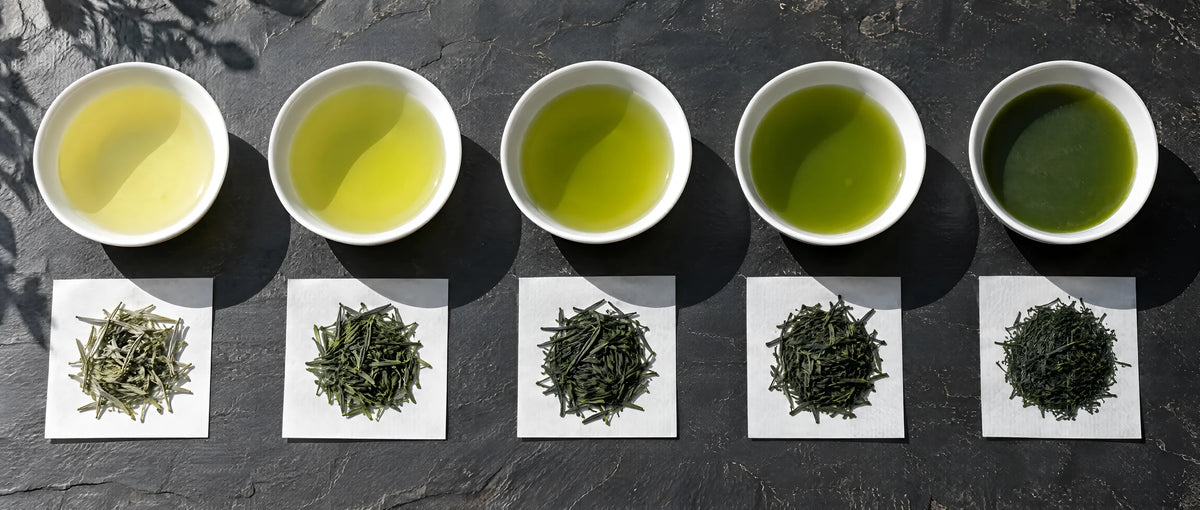
Fresh leaf comes off the bush in spring and is steamed within hours to stop oxidation. How long it sits in that steam is the biggest single choice in sencha. Short, and the leaf stays whole and needle like, the cup pours clear and the flavour is bright and lifted. Long, and the leaf breaks down into fine particles, the cup pours cloudy and the flavour turns full, round and deep. Drag the gauge.
Drag me
20 to 40 sasamushichumushifukamushi120 s and over
Leaf stays whole, needle shaped
Asamushi, about 20 to 40 seconds
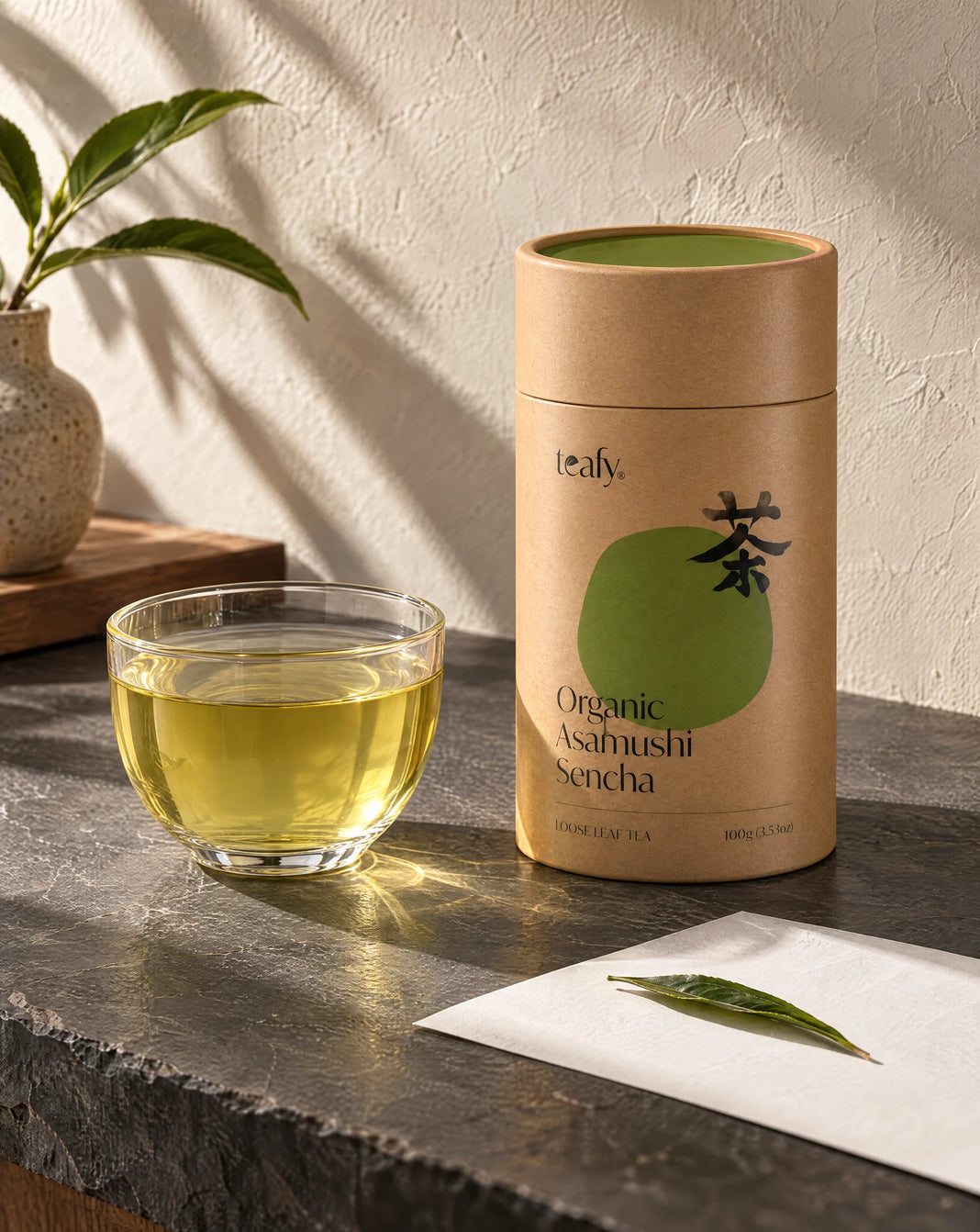
Clear, pale gold green cup. Bright, crisp, a light astringency that wakes the mouth, mountain aroma. This is the Teafy Asamushi from Haruno.
Teafy AsamushiHaruno, high mountain Shizuoka. Light steamed, whole leaf, finished with a level eight firing that lifts the aroma.
ChumushiMiddle steamed, roughly 40 to 60 seconds. The most common supermarket sencha in Japan. Teafy does not sell one, on purpose: the two ends of the gauge are more interesting.
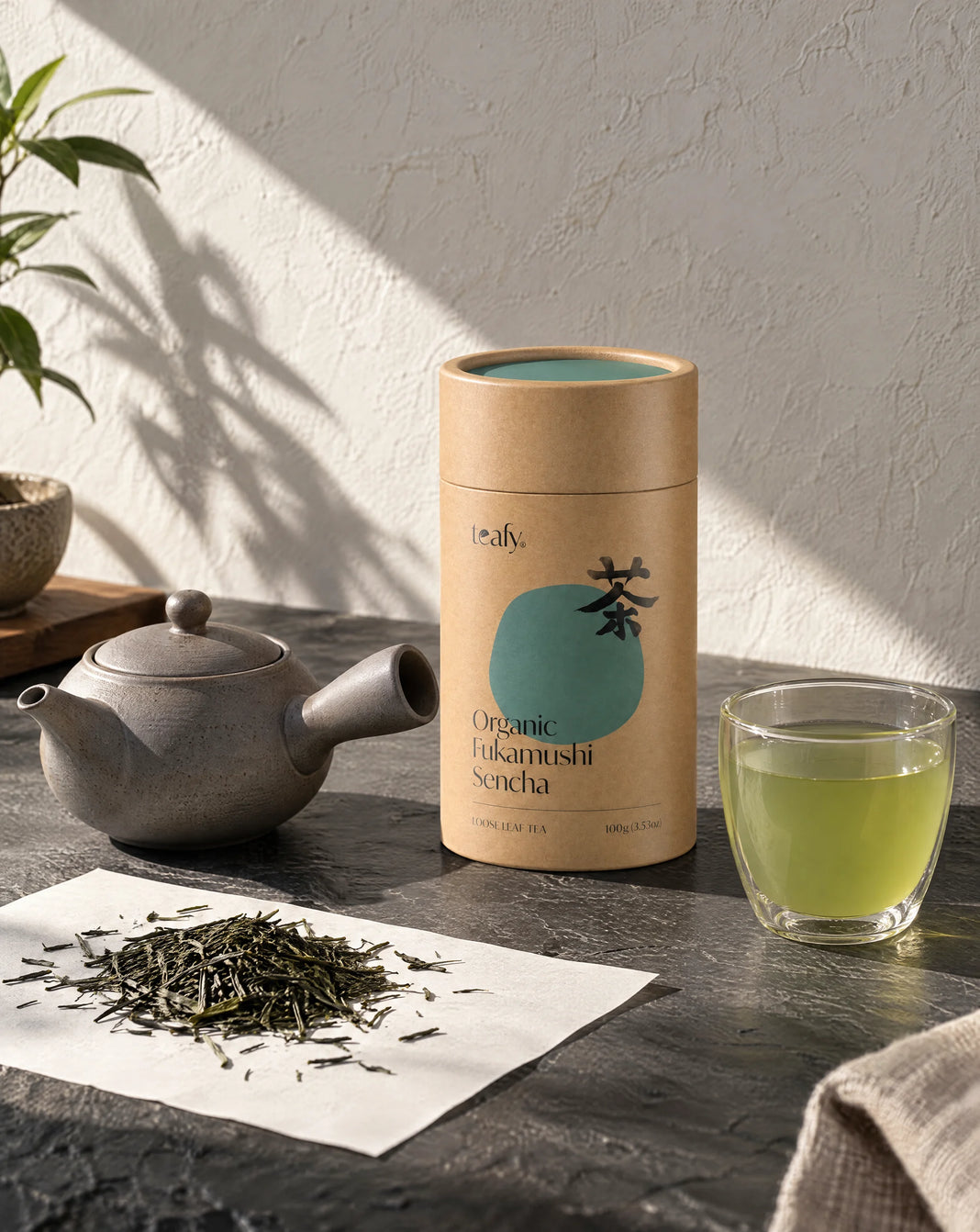
Teafy FukamushiKikugawa, Shizuoka, where deep steaming was pioneered. About twice the steam of a standard sencha, finished with a level six roast for a soft roasted scent.
Why Kikugawa steams deep. The flatland tea areas of central Shizuoka get strong sun and grow a thicker, more bitter leaf than the mountains. Deep steaming was developed there in the 1960s to soften that leaf. The mountain farms at Haruno never needed it, so they kept the short steam. Same prefecture, two answers to two different leaves.
Tip the leaf out. Count the stems.
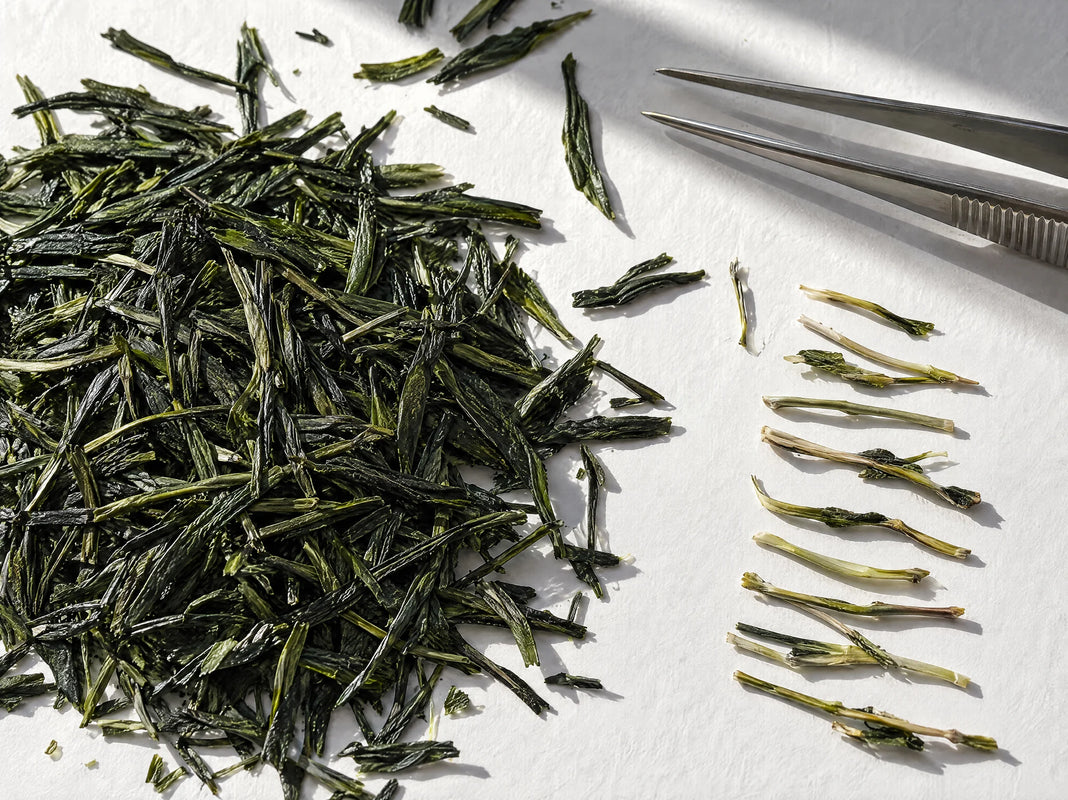
Before anyone at Teafy tastes a sencha lot, we spread it on white paper and read it dry. The leaf tells you where it is from, when it was picked and how carefully it was finished, before water touches it. The stem ratio is the part most buyers never look at.
1
Spread ten gramsWhite paper, flat light. Look for needle shape, an even dark green with a glossy sheen, and no dull brown or grey leaf mixed in.
2
Pick out the stemsPale, woody pieces. Weigh them. Under about 5 percent is tight sorting at the finishing plant. Over 15 percent and you are being sold stem at leaf prices.
3
Read the ratio by regionMountain farms like Haruno hand sort harder and pick a younger shoot, so the stem count runs low. Flatland machine harvests at Kikugawa pick more stem, which is one reason deep steaming suits them: stem softens in a long steam.
4
Know what stem does to the cupStem carries more L theanine and less catechin than leaf. A little stem makes a sweeter, softer, lower caffeine cup. That is why kukicha, the stem tea, is the sweetest sencha of all. Too much and the cup goes thin.
5
Smell the dry leafFresh steamed grass, seaweed, a touch of fired sweetness. Hay or cardboard means the lot has aged or was stored warm.
Teafy practice. Both senchas are finished from aracha, the rough tea our growers make, at a partner facility where the lots are sorted, stem and dust removed, blended to our own leaf ratio and given their final firing. The blend ratio is ours and stays ours. The stem count on the finished leaf is checked here in Clayton South on every arrival.
Boil the water. Find the faults.
Japanese tea appraisal is the opposite of a nice cup. The grader brews sencha far hotter and stronger than anyone would drink it, because heat pulls every flaw to the surface: bitterness, mustiness, an over fired edge, a steam that went too long. A tea that still tastes clean under boiling water is a tea you can trust at 70 degrees.
Bench setup3 g, 150 ml, boiling, 1 minute
Identical white bowls so liquor colour can be compared side by side. Lots are cupped blind, in a row, never one at a time.
What we look at firstThe wet leaf, not the liquor
Open leaf should smell of fresh steamed green, even in colour, with no red edges. Red edges mean the leaf bruised before steaming, usually from a long wait between picking and the factory.
LiquorClarity tells you the steam
Clear gold green is a short steam. Opaque jade is a deep steam. Dull, brownish or khaki is an old lot or an over fired one, whatever the label says.
Taste in orderUmami, sweetness, then the grip
Umami arrives first and should hold. Sweetness sits under it. Astringency is scored last and is only a fault when it dries the mouth rather than lifting it.
FinishThe firing shows at the end
Hi ire, the final firing, leaves a soft toasted sweetness on the finish. Too light and the tea smells grassy and raw. Too heavy and it tastes like hojicha.
Then the spent leafSqueeze it
Steeped leaf should be soft, uniform and bright. Hard stems and uneven colour mean a mixed lot. We photograph this for every batch we accept.
Steam testing at Teafy. Every sencha lot is cupped at four depths before it is bought, so the asamushi is confirmed light and the fukamushi confirmed deep by the cup, not by the paperwork. The results are logged against the batch code on your can.
The grader’s sheet for both teas.
Everything we score, side by side. Same water, same bowl, same day.
Light steamedAsamushi Sencha
Deep steamedFukamushi Sencha
Farm
Haruno, high mountain Hamamatsu, Shizuoka. One grower, sourced direct
Kikugawa, central Shizuoka. One grower, sourced direct
Steam
Short, about 20 to 40 seconds. Leaf stays whole and needle shaped
Long, roughly twice a standard sencha. Leaf breaks to fine particles
Liquor
Clear, pale gold green
Cloudy, dark jade, almost opaque
Dry leaf
Long dark needles, glossy, low stem count
Short broken leaf with fine powder, which is correct for the style
Aroma
Fresh mountain air, cut green, a light fired sweetness
Steamed green, seaweed, a soft roasted note
Umami
Clear and clean, builds slowly
Fills the mouth and holds
Sweetness
Light, under the brightness
Round, sits behind the body
Astringency
Light, lifts the mouth rather than drying it
Present and bold, stays round, never harsh
Final fire
Level eight firing, lifts the aroma
Level six roast, soft roasted scent
Caffeine
Medium. Below a bowl of ceremonial matcha, well below coffee
Low. Well under both
Teapot
Any kyusu, infuser or plunger. The whole leaf is easy
A kyusu with a fine mesh. Coarse infusers let the fine leaf through
Best as
Morning, with food, the first cup of the day
Hot or cold brew. The one to put in the fridge all summer
Reviews
4.85 from 505 verified buyers
4.88 from 465 verified buyers
Price
$29.99 can · $27.99 pouch · 100 g about 70 cents a cup
$28.99 can · $26.99 pouch · 100 g about 70 cents a cup
The method printed on the can works every time: one teaspoon, 180 ml, 80 degrees, one to three minutes, two or three brews from the same leaf. Below it is the way a tea master brews sencha at home, in three short steeps that each taste different. Both have a timer.
The everyday cup.
2 gOne level teaspoon of leaf into a kyusu, infuser or plunger. Fukamushi wants a fine mesh.
180 mlWater at 80 degrees. Boil, then wait about three minutes with the lid off.
1 to 3 minOne minute for a light cup, three for a strong one. Pour every drop out so the leaf stops steeping.
AgainGood for two or three brews from the same leaf, a little hotter each time.
Good to know. If the cup is bitter, the water was too hot or the steep too long, in that order. If it is thin, use more leaf, not more time.
1:30middle of the range
Three steeps, three different cups.
1st4 g, 120 ml at 70 degrees, 60 seconds. Cool water pulls umami and sweetness, almost no bitterness. The best cup of the three.
2ndSame leaf, 120 ml at 80 degrees, 15 seconds. The leaf is open now, so it is fast. Brighter, more grip.
3rd120 ml at 90 degrees, 45 seconds. Whatever is left. Clean and light. Then eat the leaf with a drop of soy, which is what the farmers do.
Why it works. Umami compounds dissolve at low temperatures, catechins need heat. Starting cool and climbing lets you taste them separately. Asamushi rewards this most. Fukamushi gives everything up fast, so shorten every steep by a third.
1:0070 degrees
Mizudashi, the fridge bottle.
8 gFour teaspoons into a one litre bottle. Fukamushi first choice, its fine leaf gives up colour and body in cold water.
1 LCold filtered water. Melbourne tap water is soft and works well.
3 hIn the fridge. Overnight for a deeper cup. Strain and drink within two days.
Why cold. Cold water pulls almost no caffeine or catechin, so cold brew sencha is sweet, smooth and gentle enough for the whole household. It is the summer cup at the farm.
3:00:00fridge
Water matters more than the pot.
SoftSencha wants soft water, low in minerals. Hard water flattens umami and turns the cup dull. Melbourne and Sydney tap water are both soft enough; Adelaide and Perth benefit from a filter.
FreshBoil freshly drawn water once. Reboiled water has lost its dissolved air and brews flat.
Cool itPour boiled water into the cups first, then from the cups into the pot. Each transfer drops it about 10 degrees. No thermometer needed.
The one number. 80 degrees for the everyday cup, 70 for the first of three steeps, boiling only when you are grading and want to see the faults.
3:00kettle to 80 degrees
970 reviews, 4.9 average.
Verified by Reviews.io
4.86
970 verified reviews across both senchas
Asamushi Sencha
4.85505 reviews
Fukamushi Sencha
4.88465 reviews
Teafy overall
4.95516 company reviews
The Asamushi Sencha has such a delicate, refreshing flavor profile.
Certified organic in Japan, the EU, the UK, the USA and Canada. Lab tested in Victoria. Cool room in Clayton South, same day dispatch before 2 pm Melbourne time.
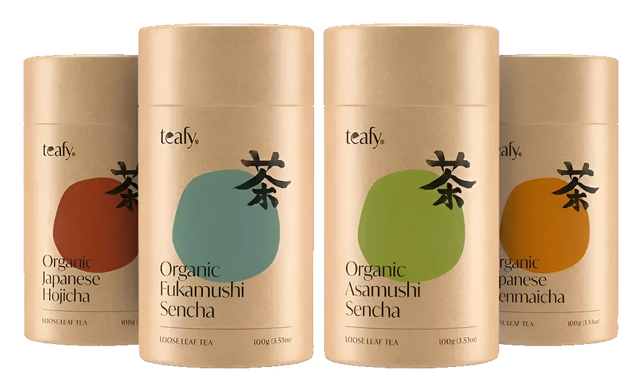
All four loose leaf cans: asamushi, fukamushi, genmaicha, hojicha.
Best forTry everythingGift
4 × 100 g cans · save $10
Teas inside4.85(1,976)
$104.95$0.66 a serve
Heavy metal results for both senchas.
Product
Arsenic
Cadmium
Lead
Mercury
Asamushi Sencha
0.012
below 0.010
0.051
below 0.010
Fukamushi Sencha
0.027
0.012
0.093
below 0.010
mg/kg of dry leaf. Agrifood Technology, Werribee, Victoria. ISO/IEC 17025, NATA accreditation 2726. Report 485468, tested 26 to 31 March 2026, issued 7 April 2026. Below 0.010 is the laboratory limit of detection. Retested at least every six months.
Why the fukamushi number is higher
Flatland soil, and you read it, you do not hide it.
Lead in tea comes from soil and from air borne dust settling on the leaf. Flatland farms near roads and towns run higher than mountain farms, which is exactly what these two numbers show, and both sit far under any food standard. We publish them because a number you can compare is worth more than the word tested. Read the full report and all eight teas.
Sencha, answered.
What is the difference between asamushi and fukamushi sencha?
Steam time. Asamushi is steamed briefly, so the leaf stays whole and the cup pours clear, bright and lifted. Fukamushi is steamed roughly twice as long, so the leaf breaks down fine and the cup pours cloudy, full and round. Same plant, same spring harvest, two different Shizuoka farms.
Why is my fukamushi cloudy, and why does leaf get through the strainer?
Both are correct. Deep steaming breaks the leaf into fine particles that stay suspended in the cup and carry most of the flavour. Use a kyusu with a fine mesh, pour every drop, and do not filter the cloud out. That is the tea.
How much caffeine is in sencha?
Less than matcha, because you brew the leaf rather than drink it. Teafy asamushi is medium, fukamushi is low, and both sit below a 2 g bowl of ceremonial matcha at 60 to 70 mg and well below a cup of coffee. Cold brewing pulls very little caffeine at all.
What is the stem test?
Spreading ten grams of dry leaf on white paper and separating the stems to see what share of the weight is stem rather than leaf. A low count means careful picking and sorting. A little stem sweetens the cup; a lot means you are paying leaf prices for stem. Every Teafy arrival is checked this way in Clayton South.
Why do you cup sencha with boiling water?
Because heat exposes faults. A grader wants to find bitterness, mustiness or an over fired edge before buying, not after. A sencha that stays clean under boiling water will be excellent at 70 to 80 degrees.
Is Teafy sencha organic and tested?
Yes. Certified JAS, EU, USDA, Canada and UK Organic from the farm through to packing, and every batch is tested for lead, arsenic, cadmium and mercury by an ISO 17025 laboratory in Victoria. The latest numbers are on this page.
How should I store it?
Sealed, cool, dark, away from the stove and anything that smells. Sencha picks up aromas and loses its own faster than roasted tea. Best within 30 days of opening. Unopened, keep it in the fridge in summer.
Which should I buy first?
Asamushi if you drink coffee black and like a clean, bright cup. Fukamushi if you take milk in coffee and like body, or if you want a cold brew for the fridge. The loose leaf can bundle has both with the genmaicha and hojicha.
Organic Japanese sencha, Shizuoka, shipped from Melbourne.
Teafy sells two organic loose leaf senchas in Australia, both spring first flush and both sourced direct from single growers in Shizuoka. Asamushi Sencha is light steamed in the high mountains at Haruno for a clear, bright cup with a fresh mountain aroma. Fukamushi Sencha is deep steamed at Kikugawa for a cloudy jade cup that is bold, round and full, and the best sencha in the range for cold brew.
Both are blended to a leaf ratio of our own, finished with a final firing, certified JAS, EU, USDA, Canada and UK Organic, tested for heavy metals by an ISO 17025 laboratory in Victoria with the results above, and packed to order from a cool room in Clayton South. Orders before 2 pm Melbourne time on a weekday ship the same day. Each 100 g can or refill pouch makes about 40 cups.
Also on this site: genmaicha, sencha with roasted rice, and hojicha, the roasted, low caffeine cup for the evening.
Type
Japanese steamed green tea, loose leaf
Styles
Asamushi, light steamed; fukamushi, deep steamed
Origin
Haruno and Kikugawa, Shizuoka, single growers
Harvest
Spring first flush
Brew
2 g, 180 ml at 80 degrees, 1 to 3 minutes, 2 to 3 brews