
Guide · Hojicha
Hojicha, explained.
Japan's roasted green tea. What the heat does to the leaf, why the cup is so gentle, and how a tea taster tells a good one from a tired one.
The short answer
What is hojicha?
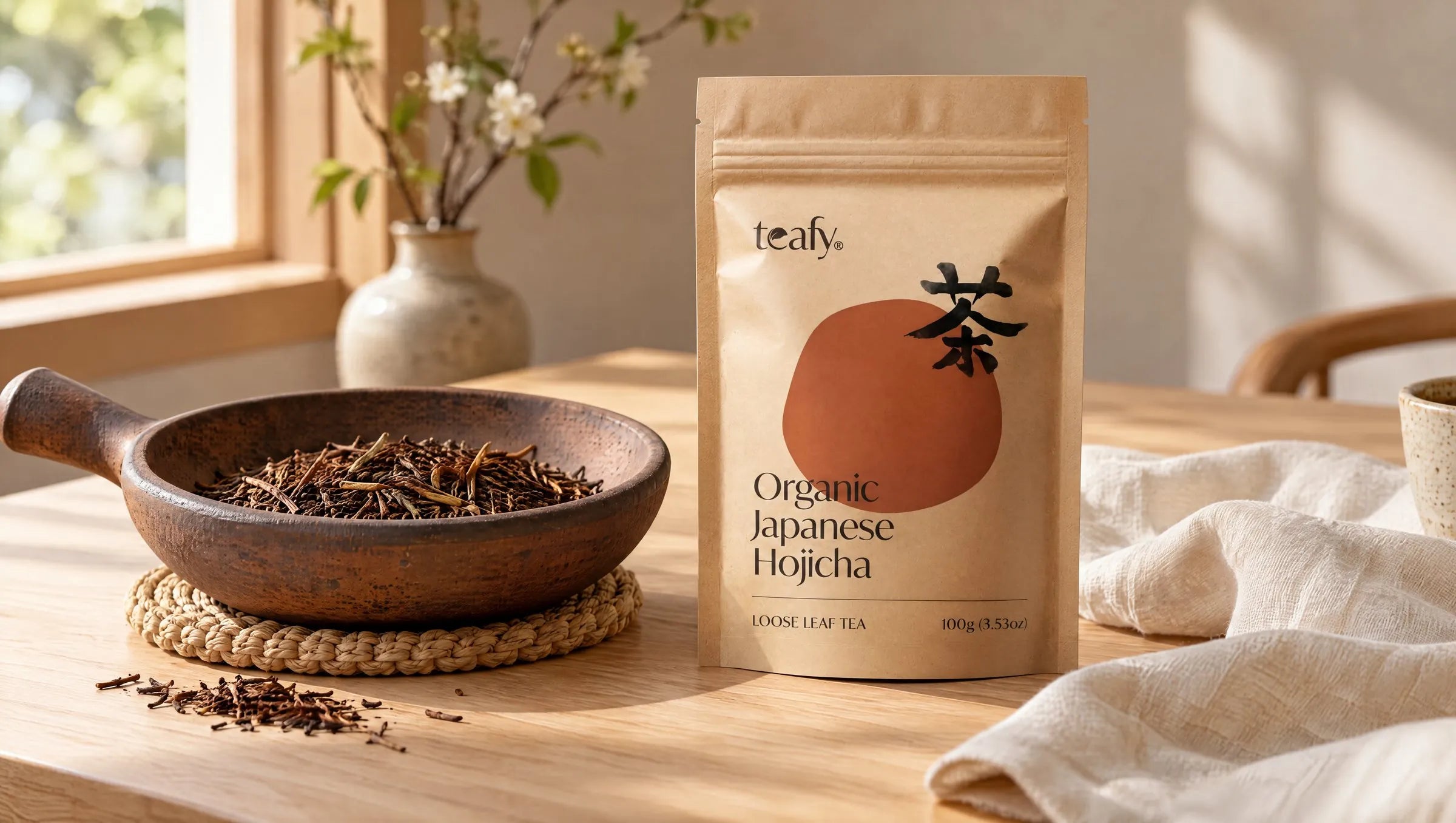
Hojicha (焙じ茶) means roasted tea. It is Japanese green tea, leaf and stems, roasted over high heat until it turns from green to red brown.
The roast is the whole story. It builds the toasty smell, strips out most of the bitterness and leaves a cup that tastes closer to caramel and roasted nuts than to green tea. That is why hojicha is the tea Japanese families often pour with dinner.
- Same plant as matcha. Camellia sinensis, steamed and dried like sencha.
- Then roasted. Usually between 160 and 200 °C.
- Made from stem and leaf. Often later season leaf and the stems sorted out of sencha.
- Low in caffeine. Mostly because of what goes in, not only the heat.
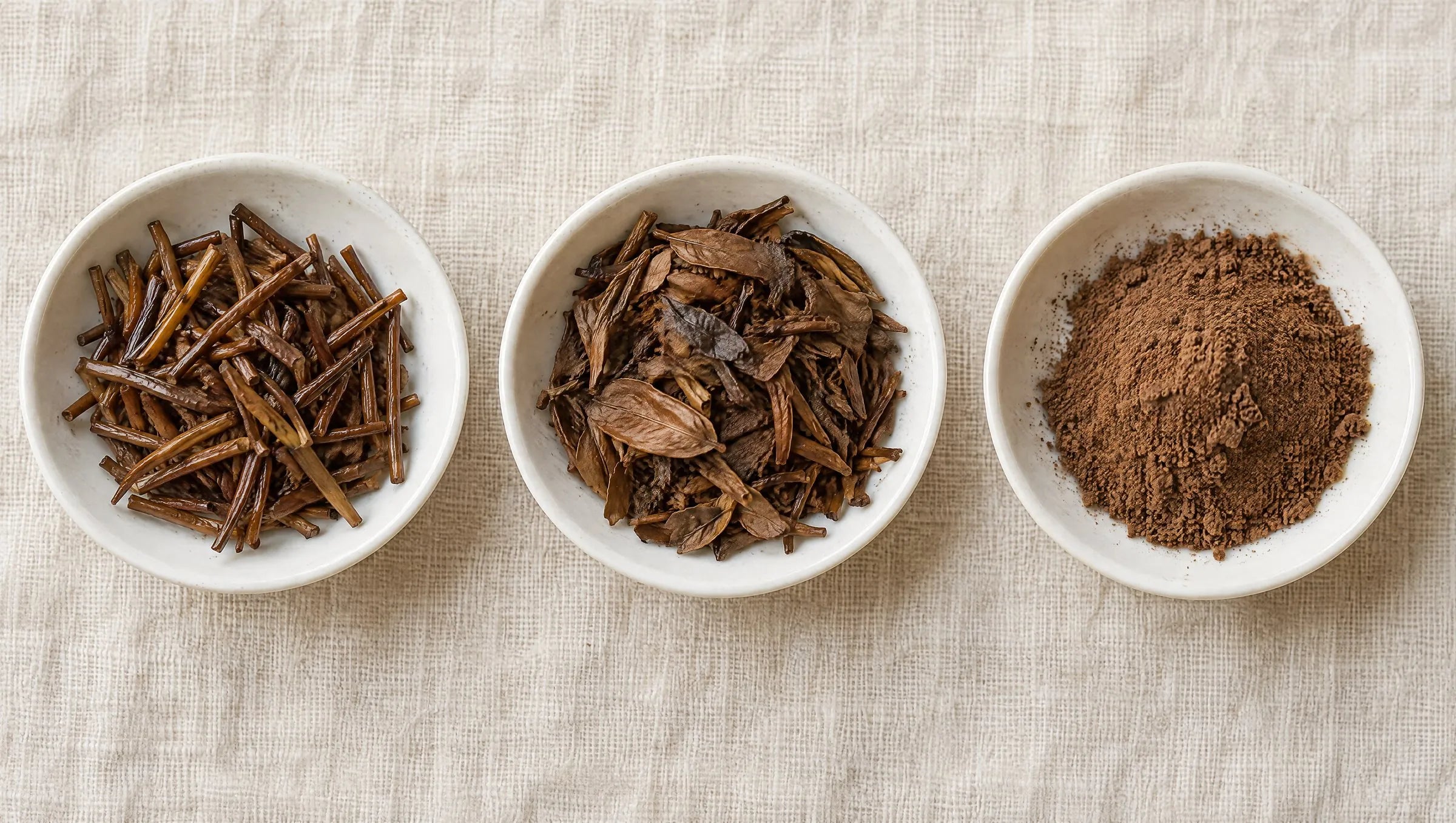
- Three forms. Stem (kukicha style), leaf, and powder for lattes.
Interactive · Drag to roast
What the roast does to the leaf.
Drag the handle from unroasted leaf to a deep roast and watch the leaf change. The bars show which way each part of the flavour moves, as measured in roasting studies on Japanese tea.
Steamed green tea, unroasted
The starting leaf is steamed and dried, the same way sencha and bancha are made. Fresh, green and vegetal, with the bite of its catechins intact.
Drag the handle, tap a temperature, or swipe across the colour panel.
Bars show direction and relative strength from the studies listed at the end, not lab values for one tea. Roasted aroma: Sasaki 2020, Applied Sciences 2021, 1973 Japanese study. Catechins and amino acids: Sasaki 2020.
The caffeine question
How much caffeine is in hojicha?
Less than coffee and far less than matcha or gyokuro, but not none. Japan's official food tables put brewed hojicha at about 20 mg of caffeine per 100 ml, level with everyday sencha. It is usually made from later season leaf and stems, which carry less caffeine than young spring leaf, and it is brewed with plenty of water.
Caffeine as Japan brews it
Per 100 ml, Japan's official food tables
Caffeine in a cup
A typical serve
Coffee: USDA average for a 240 ml brewed cup. Matcha: a 2 g bowl, at Japan's table value of 3.2 g caffeine per 100 g of powder. Sencha and hojicha: a 150 ml cup at Japan's table values. Caffeine varies with harvest, water temperature and steep time.
Know what you are buying
Stem, leaf or powder: the three hojichas.
A short history
Where hojicha comes from.
- Kanazawa
Roasted stem tea
Ishikawa prefecture has its own roasted stem tea, Kaga boucha. It shows roasting stems for tea was valued in Japan as a craft, not only as thrift.
- 1920s Kyoto
The merchant's story
The most told account: a Kyoto tea merchant roasted leaf he could not sell over charcoal, and the smell sold it. Written records from the time are scarce, so treat the details as tradition.
- Today
Powder and lattes
Milled hojicha powder made the roast a café drink. In Australia, people search for hojicha about 14,800 times a month on Google.
What tea tasters look for
How to judge a good hojicha.
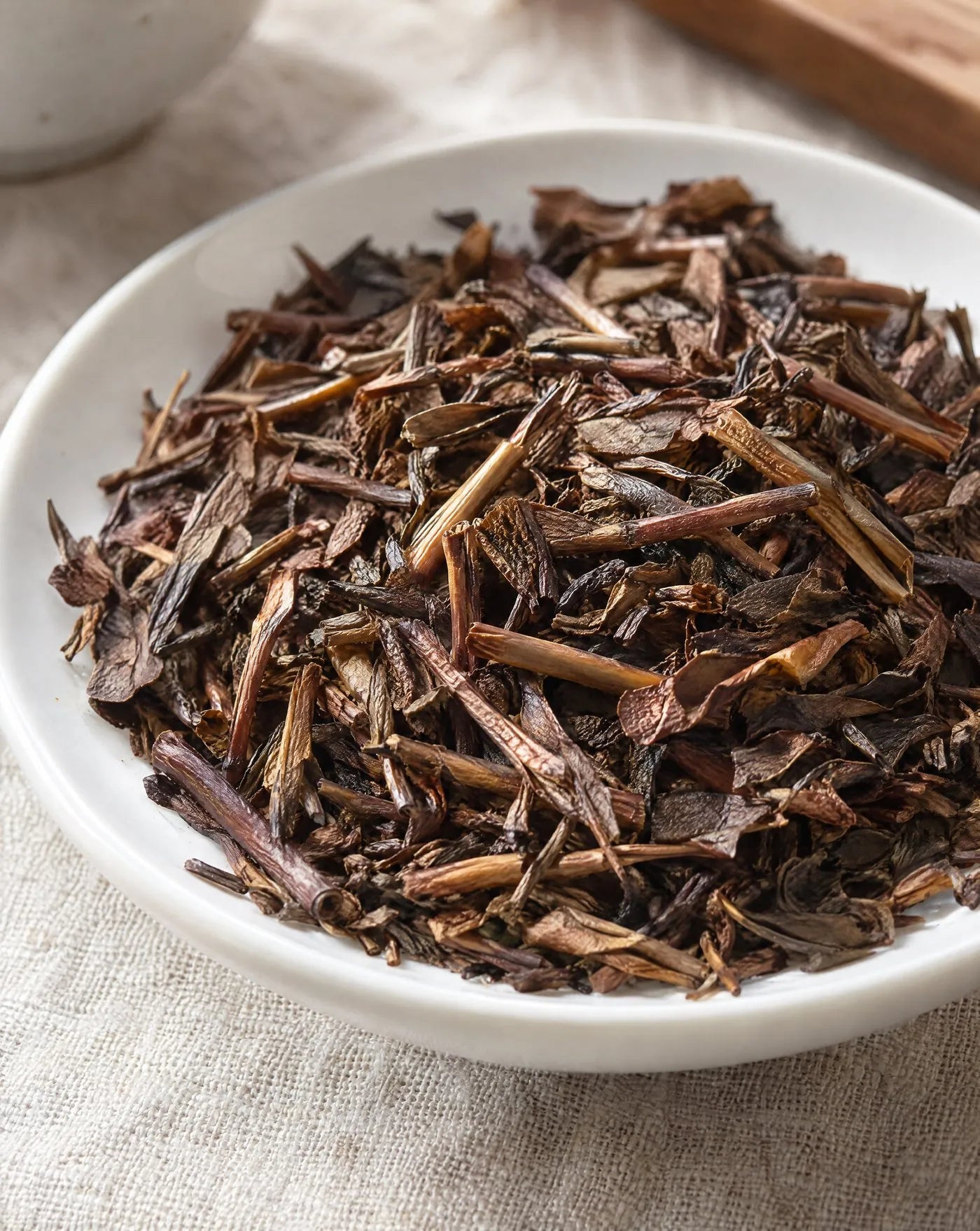
- ColourEven chestnut to red brown. Green patches mean an uneven roast, black specks mean scorching.
- StemsPlump and glossy. Studies found stems swell when heat reaches their core.
- SmellToasted grain and caramel. Ash or a sharp smoky edge means it went too far.
- LiquorClear amber to red brown, never muddy.
- TasteSweet finish, almost no astringency.
- FreshnessRoast aroma fades first. A flat, papery smell means old stock.
Side by side
Hojicha vs matcha.
Brew it like Japan does
How to brew hojicha.
Roasted tea likes hotter water than sencha and a shorter steep. Oversteeped hojicha goes flat rather than bitter, so a timer matters.
Teapot
- Leaf2.5 g a cup
- Water150 ml at 90 °C
- First steep30 seconds
- Second steep20 seconds
The second cup is often the best. Pour every last drop out between steeps.
Latte
- Powder2 g
- Water30 ml at 90 °C
- Milk200 ml
- WhiskTo a smooth paste
Oat and full cream carry the roast best. Full latte recipe
Cold brew
- Leaf5 g
- Water500 ml, cold
- Fridge3 hours
- Keeps2 days
The gentlest hojicha you can make. Cold water pulls sweetness and very little bitterness.
The evening cup
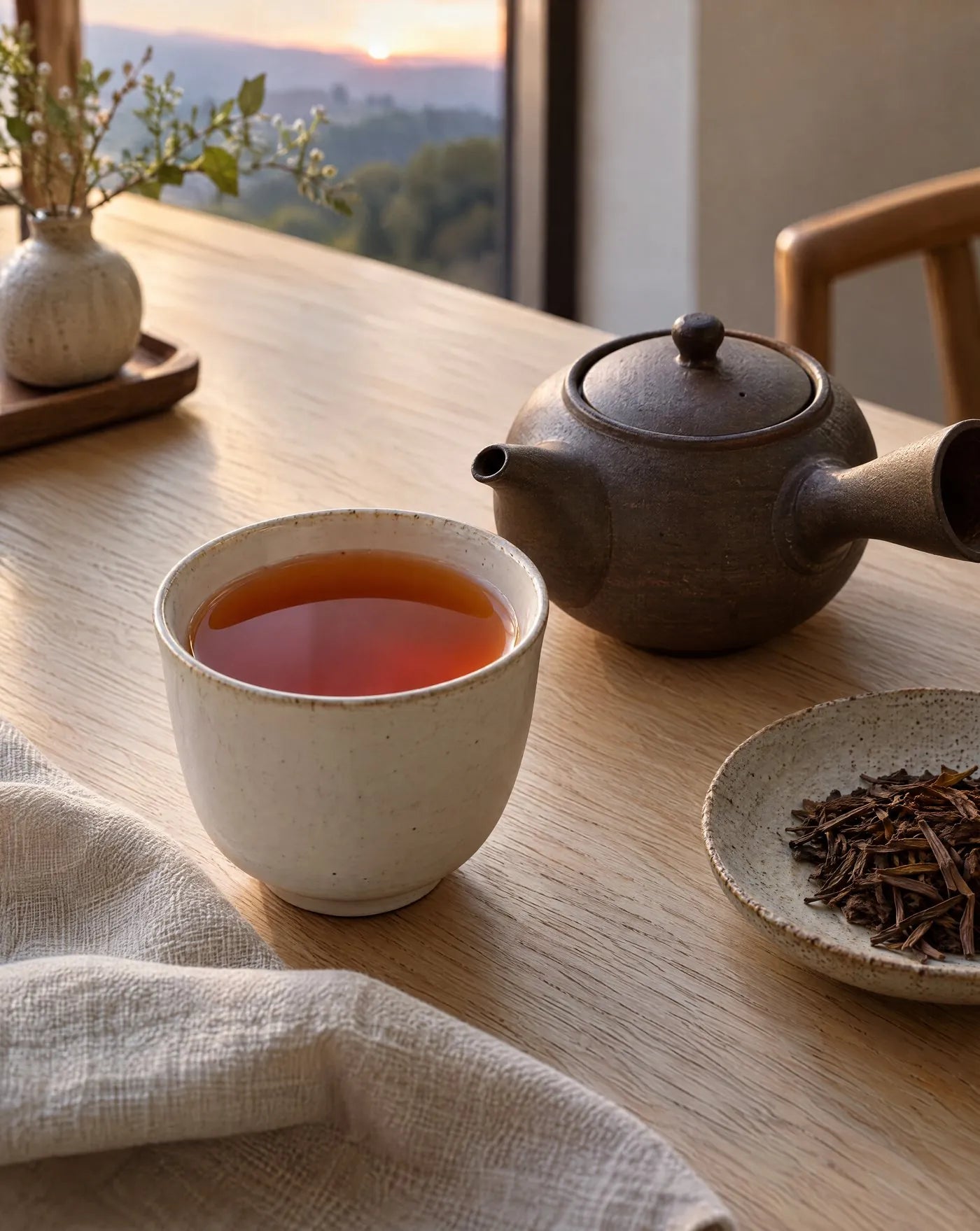
Clear, amber and sweet.
A well brewed hojicha should look like this: bright, clear amber with a red glow. If your cup is pale, the water was too cool, not the steep too short.
Teafy hojicha
Two hojichas, same roast.
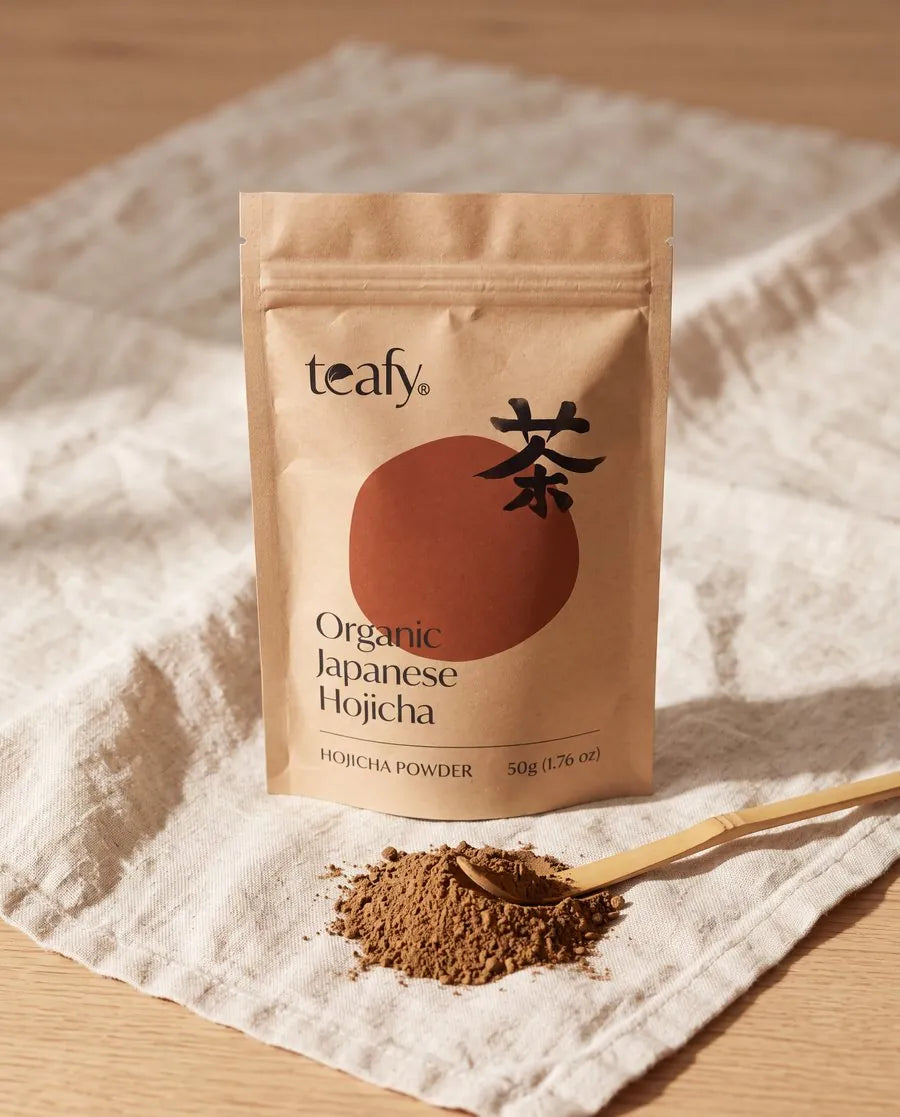
Hojicha Powder
Roasted stem and leaf milled fine for lattes and baking. 50 g, about 25 serves.
Pouch $25.99 · Can $27.99
Shop the powder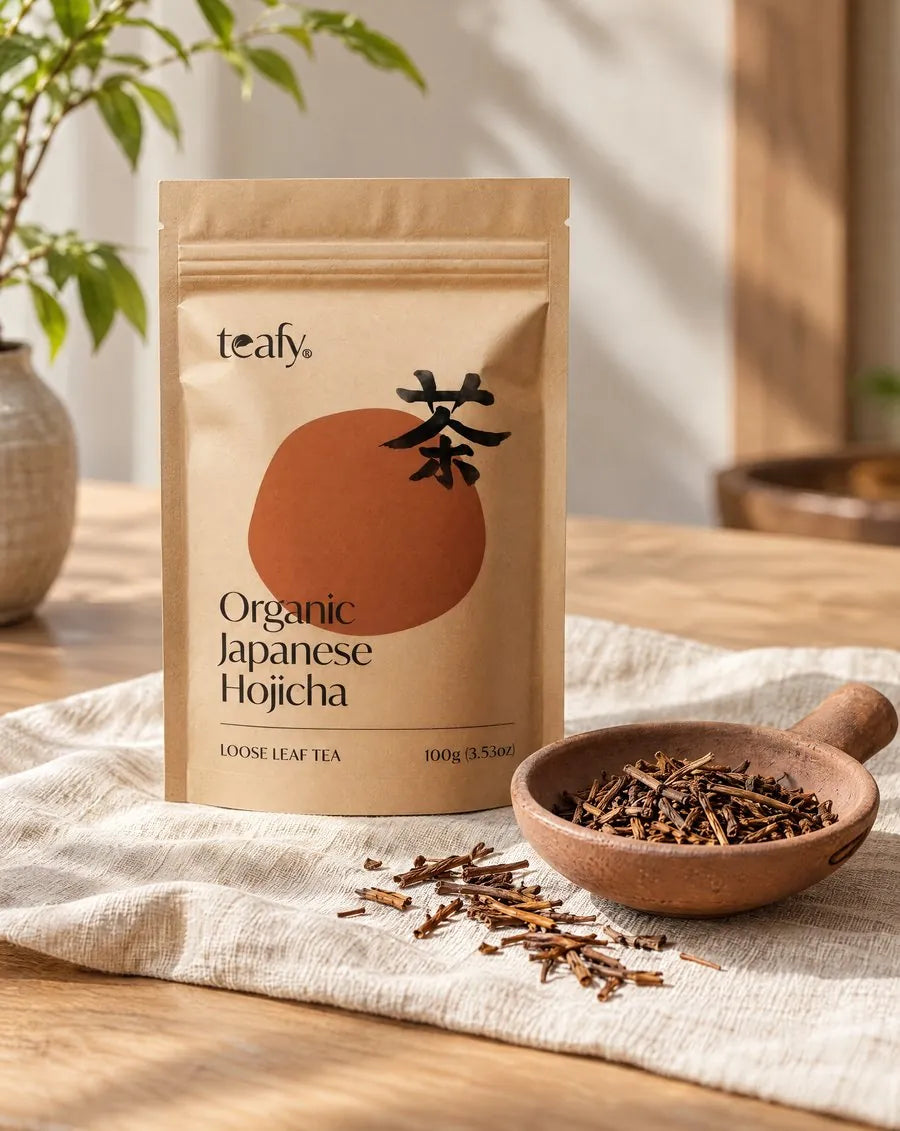
Hojicha Loose Leaf
Roasted stems and leaf kept whole for the pot. 100 g, about 40 cups.
Pouch $25.99 · Can $27.99
Shop the leafQuestions people ask
Hojicha, answered.
Is hojicha a green tea?
Yes. Hojicha comes from the same tea plant as sencha and matcha. The leaf and stems are steamed and dried like any Japanese green tea, then roasted. The roast changes the colour, smell and taste, not the plant.
Does hojicha have caffeine?
Yes, but less than coffee or matcha. Japan's official food tables put brewed hojicha at about 20 mg of caffeine per 100 ml, the same as everyday sencha, so a 150 ml cup has about 30 mg. A 2 g bowl of matcha has about 60 mg and a cup of brewed coffee about 95 mg. It is not caffeine free.
Why is hojicha good after dinner?
In Japan it is the tea many families pour with the evening meal and give to children and older relatives, because it is gentle and low in caffeine. If you avoid caffeine completely, hojicha still contains some.
What is the difference between hojicha and genmaicha?
Hojicha is green tea that has been roasted. Genmaicha is green tea mixed with roasted rice. Both taste toasty, but in genmaicha the toast comes from the rice and the tea leaf stays green.
Why does hojicha taste less bitter than green tea?
Bitterness in green tea comes mostly from catechins. Lab studies on roasted stem tea found catechins drop quickly at high roasting temperatures, while sweet, toasty aroma compounds rise.
Is hojicha powder the same as matcha?
No. Matcha is shaded green leaf milled to a powder. Hojicha powder is roasted stem and leaf milled to a powder. You whisk both into water or milk, but they taste completely different.
How should I store hojicha?
Airtight, cool and away from light. Roasted aroma is the first thing to fade, so close the pouch or can straight after each scoop and use it within a few weeks of opening.
Sources
Where these facts come from.
- Sasaki T. and others (2020). The effects of roasting conditions on the physical appearance traits and aroma and taste components of roasted stem tea. Food Science and Technology Research 26(5), 643 to 654. Source
- Volatile flavour compounds and pyrazine formation in roasted Bancha and Sencha at 160, 180 and 200 °C. Applied Sciences (2021) 11(17), 8217. Source
- Volatile components of raw and roasted green tea, Nippon Shokuhin Kogyo Gakkaishi (1973) 20(6), 283 to 286. Source
- Ministry of Education, Culture, Sports, Science and Technology (2020). Standard Tables of Food Composition in Japan, eighth edition: caffeine in brewed gyokuro, sencha, hojicha and genmaicha, and in matcha powder. Source
- USDA FoodData Central, coffee, brewed (about 95 mg caffeine per 240 ml cup). Source
- Teafy heavy metal testing, Agrifood Technology report 485468 (April 2026). Source