
Guide · Lab results
Heavy metals, every number.
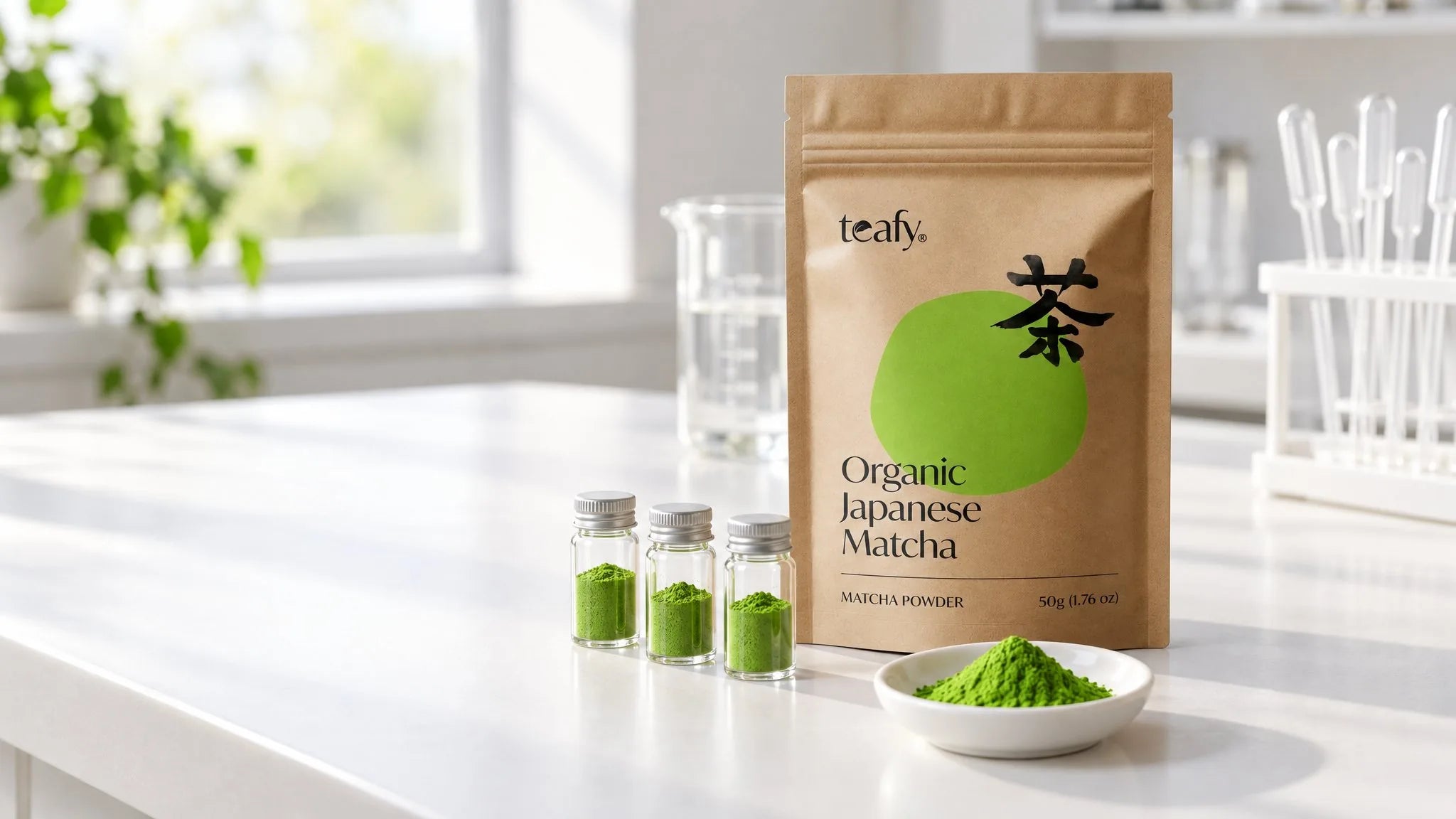
In March 2026 we sent all eight Teafy teas to a NATA accredited lab in Werribee for lead, arsenic, cadmium and mercury. Here is every result, what the numbers mean in a bowl, and how to read any brand's lab report.
The short answer
Does matcha contain heavy metals?
Yes, in trace amounts, like other foods grown in soil. The question that matters is how much, so we publish the number for every tea.
Australia's food standards note that lead and cadmium are found throughout the environment and at low levels in many foods. Across our eight teas, lead ran from 0.028 to 0.093 mg/kg, arsenic from 0.012 to 0.068 and cadmium up to 0.017. Mercury was below the lab's reporting limit of 0.010 mg/kg in every one.
- Lab. Agrifood Technology, Werribee, Victoria.
- Accreditation. NATA 2726, ISO/IEC 17025.
- Method. The lab's TP/394, by ICP MS.
- Tested. 26 to 31 March 2026. Report 485468, issued 7 April 2026.
- Units. Milligrams per kilogram of tea, as supplied.
Eight teas, four metals
The whole range, not a best one.
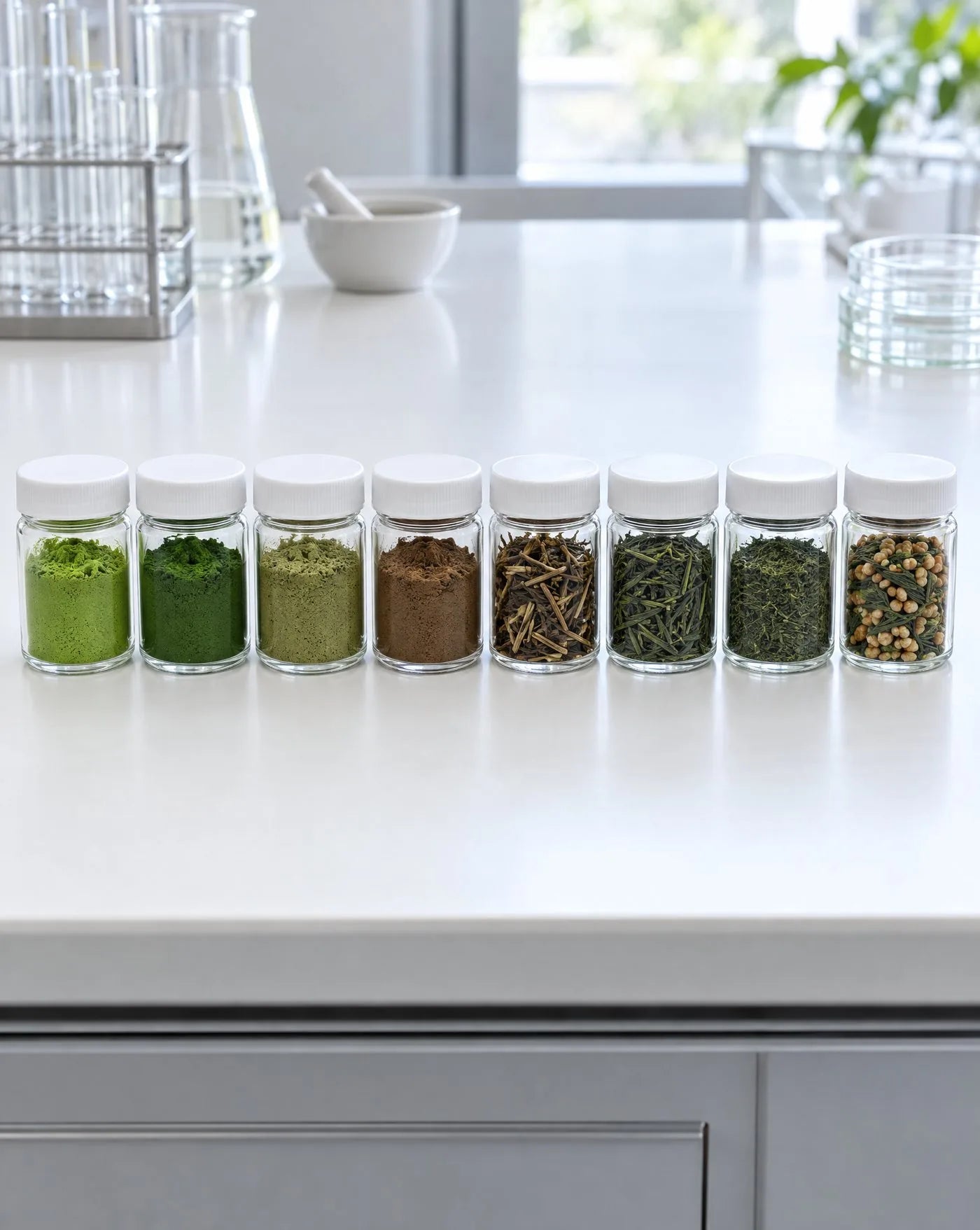
Brands often publish one result for their best seller. We sent everything we sell: three matchas, a hojicha powder and four loose leaf teas.
Each result describes the sample the lab received. Tea is a crop, so a new harvest can come in a little higher or lower, which is why the date and report number sit next to every figure on this page.
Interactive · Our results
All eight teas, all four metals.
Pick a metal. Every bar is a figure from report 485468, drawn on the same scale of 0 to 0.1 mg/kg.
Lead, mg/kg. Highest: Fukamushi Sencha, 0.093.
Agrifood Technology, report 485468. Striped bars are below the lab's 0.010 reporting limit.
Every number, in one table.
All values mg/kg. ICP MS measures the total amount of each element, not the chemical form it is in, so arsenic here is total arsenic.
The spread is narrow: our highest lead, 0.093 in Fukamushi Sencha, is about three times our lowest, 0.028 in Genmaicha. Kyoto Uji and Genmaicha had the most arsenic, 0.068 and 0.065. No tea stood apart from the rest on every metal.
Interactive · World tea limits
Our tea against tea limits worldwide.
Australia, New Zealand, the EU and the UK set no metal limit for tea. Many tea markets do. Pick a metal to see our highest result next to every official tea limit we could verify, on the same scale.
Lead, mg/kg of dry tea
Our highest lead result is 0.093 mg/kg. The strictest tea limit is 2.0.
Official texts are listed in the sources. Limits apply to tea as sold. Singapore's cadmium and mercury figures are its general limits for all foods. The US sets no limit for tea; it publishes daily lead reference levels instead, which you will find in the next section.
Every batch result is checked against these tea limits before the tea goes on sale. A batch that went over them would not be sold by Teafy. In March 2026, the closest any of our teas came was about one twentieth of the strictest lead limit.
Interactive · In your bowl
A bowl of matcha, in micrograms.
mg/kg is the same as micrograms per gram. So 0.067 mg/kg of lead means 0.067 µg in every gram of tea, or 67 parts per billion. Pick a tea and a serve to see what that adds up to.
A bowl of usucha is about 2 g. A latte is 3 to 4 g. A pot of loose leaf is about 2.5 g a cup.
0.142µg of lead
in 2 g of Kyoto Uji Matcha. With powder you drink all of it.
- Lead a day
- 0.142 µg
- Arsenic per serve
- 0.136 µg
- Cadmium per serve
- 0.034 µg
- Share of FDA's daily lead reference for adults, 8.8 µg
- 1.6%
- Share of California's Proposition 65 daily level, 0.5 µg
- 28% per serve
FDA's interim reference levels are 2.2 µg of lead a day for children and 8.8 µg for women of childbearing age, across everything they eat. California's Proposition 65 sets a warning level of 0.5 µg a day. Both are daily benchmarks for total intake, not limits for one product.
Whole leaf or brewed
With matcha, you drink the leaf.
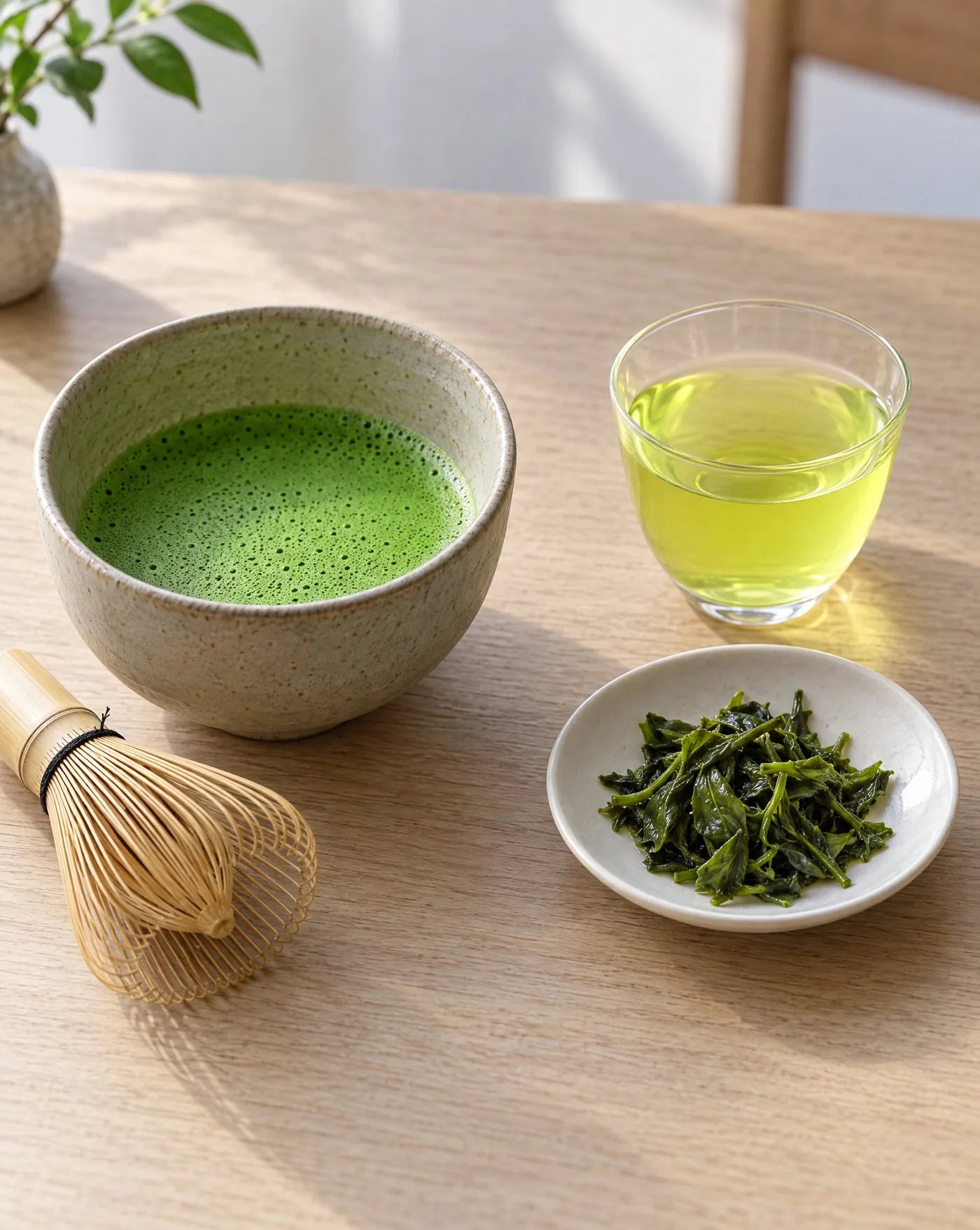
Whisked matcha is the whole leaf, so whatever the powder holds goes into the bowl. With loose leaf tea, most of the leaf stays in the pot.
Studies measure how much moves across. In one, between 10.2% and 70.4% of five metals moved from oolong into a 10 minute boiling brew. In another, 65 to 80% of the elements measured stayed in the leaves after brewing. So per gram our matcha and loose leaf results are similar, but per cup, the matcha figure is the one you actually drink.
Interactive · Not detected is not zero
Why no tea reads zero.
Every lab has a reporting limit: the smallest amount it will give as a number. Anything below it is written as not detected, or as below the limit. Slide the limit up and watch our real lead results disappear.
Our lab reported from 0.010 mg/kg. Drag right to see what a less sensitive limit would show.
At this limit, all eight show a real number.
- Kyoto Uji Matcha0.071
- Ceremonial Matcha0.067
- Superior Culinary Matcha0.070
- Hojicha Powder0.049
- Hojicha Loose Leaf0.064
- Asamushi Sencha0.051
- Fukamushi Sencha0.093
- Genmaicha0.028
What the science finds.
When labs use sensitive ICP MS testing, trace metals turn up in tea after tea. These are some of the clearest studies.
Three questions to ask any tea seller.
- What is the actual number for lead in your current batch, in mg/kg?
- Which lab tested it, and what is its accreditation number?
- What is that lab's reporting limit for each metal?
Usually because of the test, not the tea. In a 2018 study, a less sensitive atomic absorption method reported lead in Japanese sencha as below its detection limit, while ICP MS surveys find lead in nearly every sample. A lead free or not detected label is not wrong as such: it simply means below that lab's limit. The number and the limit together are what tell you how clean a tea is, which is why we publish both.
From the soil
It starts in the soil, so that is where the care starts.
Why tea has metals at all
Roots take up what the soil holds.
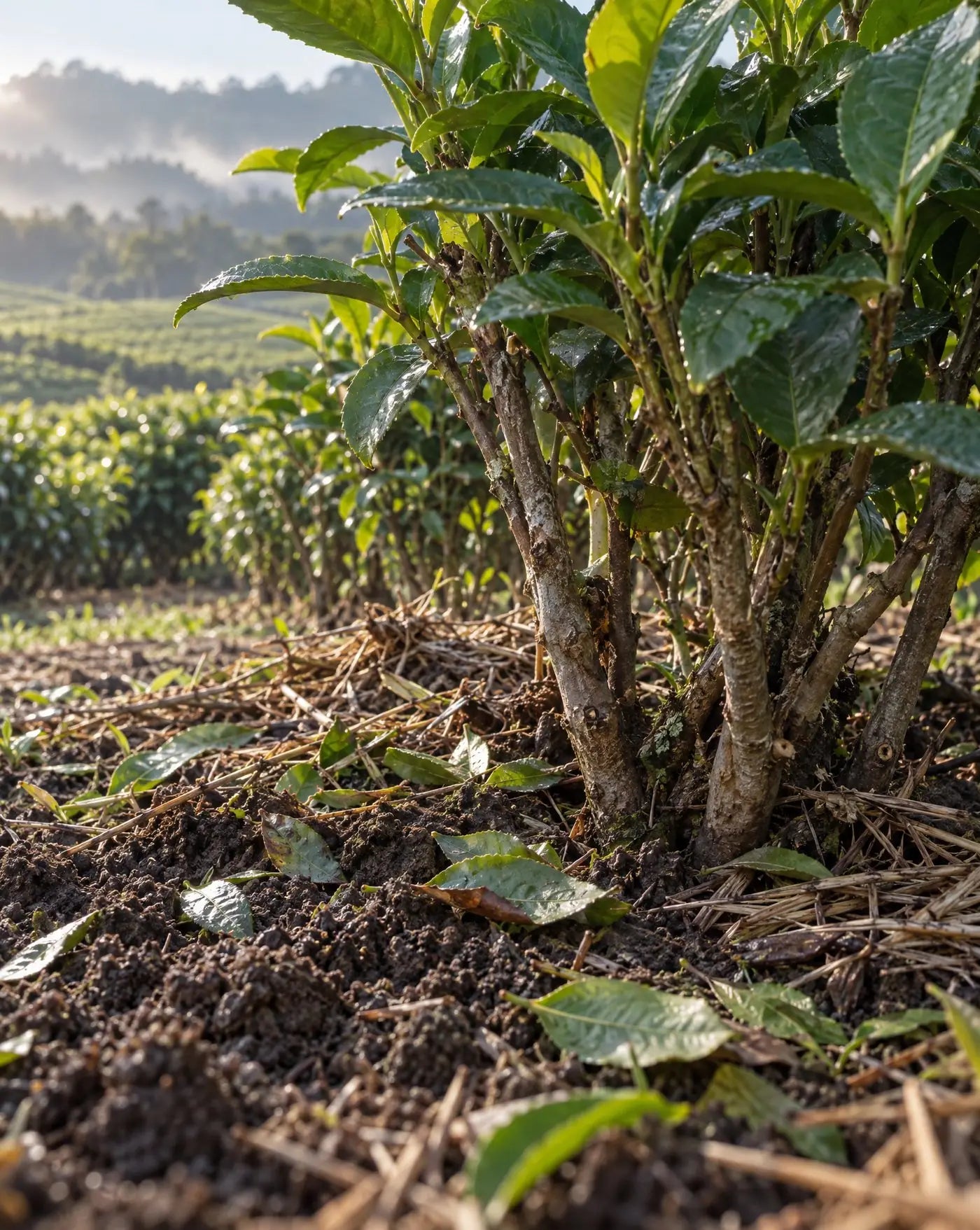
Tea plants take up trace metals from soil and fertilisers. Most of it stays low in the plant: in one study, fine roots held about 32 times the lead of young leaves, and how much reaches the leaf depended on the soil and the variety.
The biggest lever is soil acidity. Japanese tea soils are naturally very acidic, and Shizuoka's research institute reports more than 80% of its tea fields at pH 4 or below. As pH falls, lead becomes easier for roots to take up.
The Japanese way to a clean leaf.
Our tea grows in organic JAS certified soil. Our growers use every one of these methods that the organic rules allow, adjusted each season to the early weather, wind, temperature and rain, because each of those changes a harvest, in taste and in trace metals alike.
- Keep the soil from turning too acidic. Japanese tea research centres advise lime where soil calcium runs low. In field trials, liming acidic tea soil cut lead in new shoots by about 20 to 50% within two to three years.
- Chagusaba, the grass mulch. A Shizuoka tradition recognised by the UN as a Globally Important Agricultural Heritage System in 2013: grass cut from nearby meadows is laid between the rows in autumn and winter. Shizuoka's Tea Research Center found it leaves the soil more porous and better drained.
- Natural feeding only. Heavy nitrogen feeding acidifies tea soils. Organic JAS rules allow only natural fertilisers and natural liming materials, such as rapeseed cake, fish meal, oyster shell lime and dolomite. Conventional farms in Japan can also use lime nitrogen, a factory made fertiliser that organic rules do not allow.
- Pick the new shoots. Tea is made from the newest leaf at the tips of the bush, as far from the roots, where lead concentrates, as the plant allows.
- Then test the finished tea. Lead reaches tea through the roots and also settles on leaves from rain, dust and air, and studies find levels shift from season to season. Good farming lowers the risk, but only a lab result shows the number, so every batch is tested.
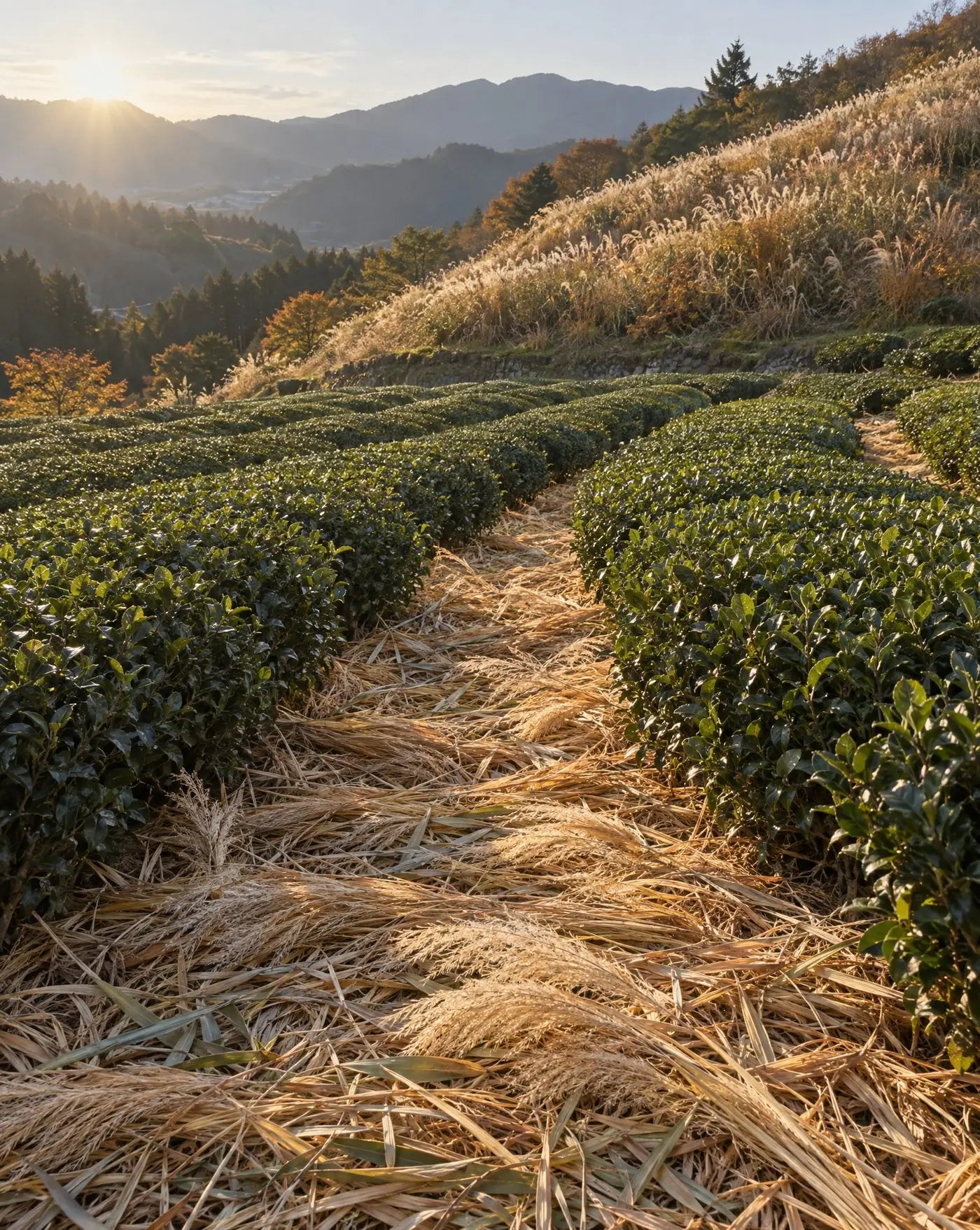
Chagusaba
Grass from the hills, laid by hand.
Around Kakegawa, Kikugawa and Shimada, growers keep meadows of susuki grass beside their tea. Each autumn the grass is cut, dried and spread between the rows, where it feeds the soil, holds moisture and keeps it from washing away.
The meadows themselves are kept by the cutting, and they shelter rare plants and insects found nowhere else. It is slow, old fashioned work, and it is part of why Shizuoka tea is grown the way it is.
In 2010 Europe's food safety authority found no evidence of a threshold below which lead has no effect. Regulators in Australia and Europe set contaminant limits on the principle of as low as reasonably achievable. That is the standard we hold ourselves to, and why we publish the number rather than a pass or fail.
How we test
Every batch, tested.
Our lab uses ICP MS, which is widely used to measure trace metals in food. The sample is first dissolved, usually in acid. A plasma then turns its atoms into ions, and a mass spectrometer sorts and counts them by weight. That is how a lab can report a few hundredths of a milligram in a kilogram of tea.
Our report is reproduced in full, as the lab requires, so you can check every figure on this page against it.
- LabAgrifood Technology, Werribee Laboratory, Victoria
- AccreditationNATA 2726, ISO/IEC 17025 (2017), accredited since 1989. You can look it up on the NATA register.
- MethodTP/394, the lab's own method, by ICP MS
- Report485468, job J2603 2961, issued 7 April 2026, with the NATA accreditation mark
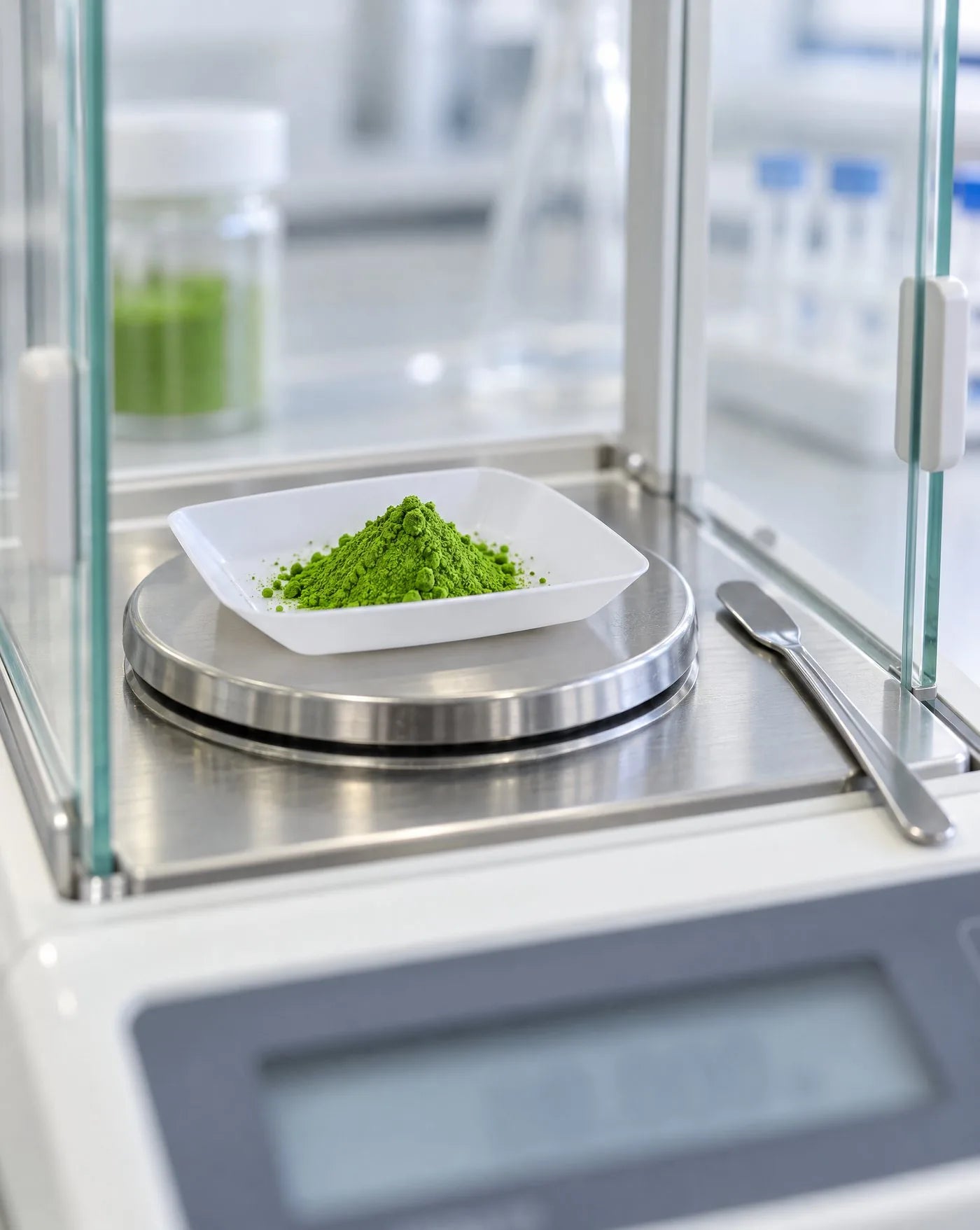
From the report
Four teas, numbers on the table.
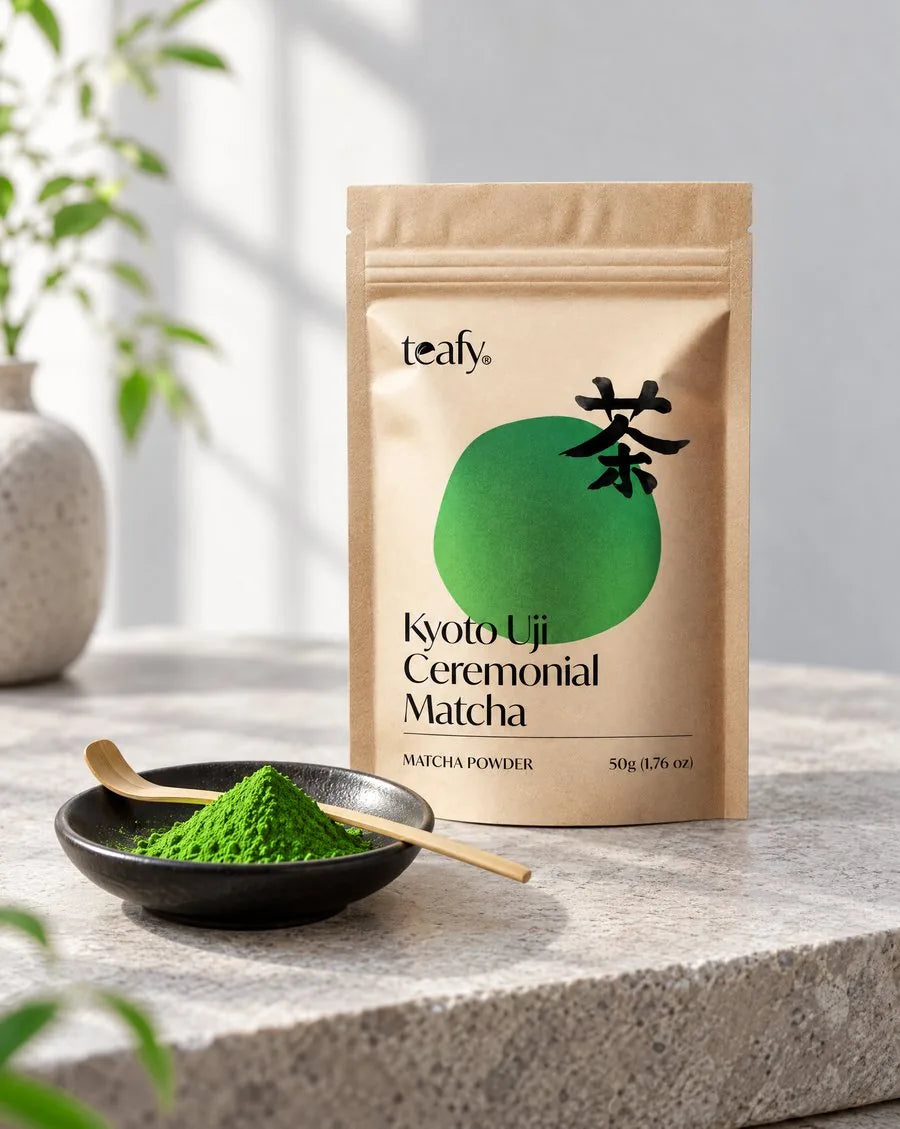
Ceremonial
From our family farm in Shizuoka, stone milled. Lead 0.067 mg/kg.
Pouch $31.99 · Can $32.99
Shop Ceremonial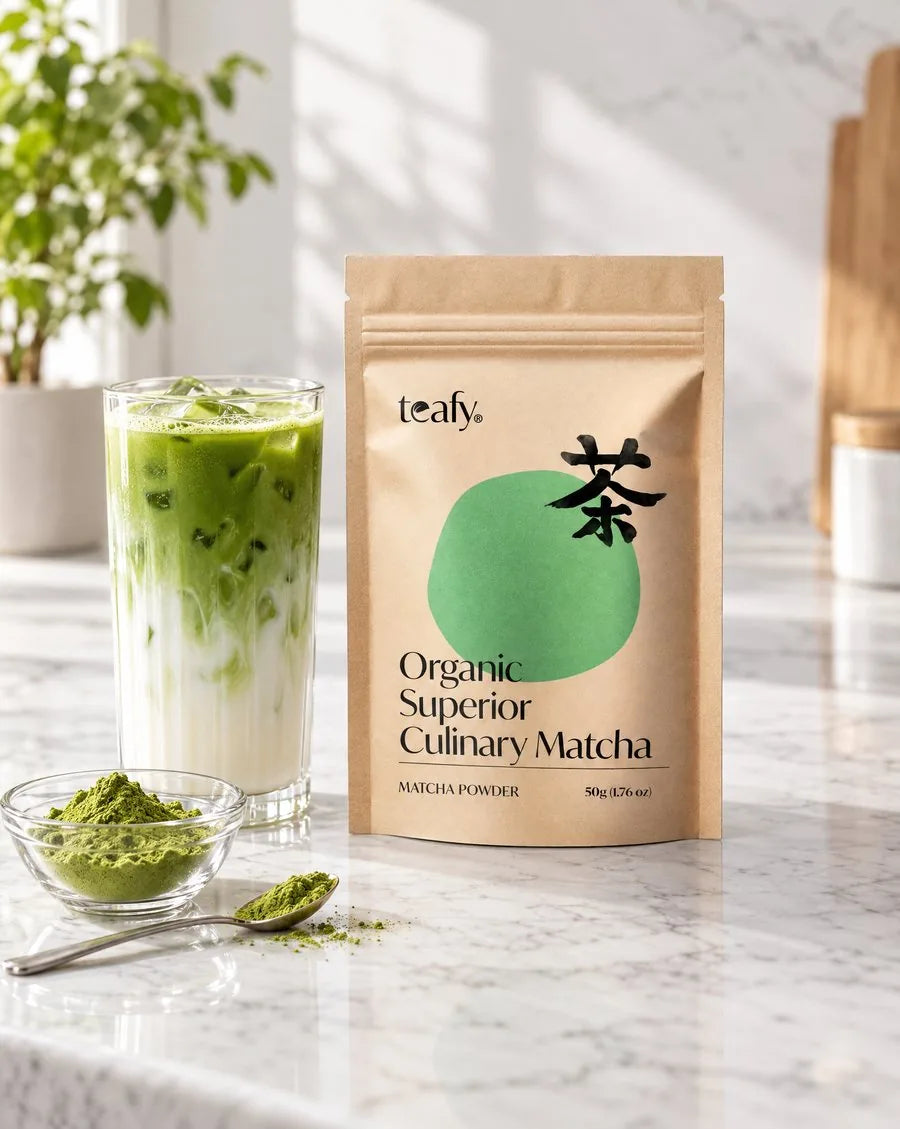
Questions people ask
Heavy metals, answered.
Does matcha contain heavy metals?
Yes, in trace amounts, like other foods grown in soil. Studies using sensitive ICP MS testing find lead, arsenic and cadmium in essentially every tea sample. In our March 2026 tests, Teafy's three matchas measured 0.067 to 0.071 mg/kg of lead, and mercury was below the lab's 0.010 mg/kg reporting limit in every tea.
Can any tea be heavy metal free?
Not in a scientific sense. Tea plants take up trace metals from soil and air, and surveys of 120 green teas in 2025 and 51 retail teas for the UK Food Standards Agency found lead in every dry tea sample. A result of not detected means the amount was below that lab's reporting limit, not zero.
How do Teafy's results compare with tea limits around the world?
China, India and South Korea allow up to 5.0 mg/kg of lead in leaf tea, and Singapore, Malaysia, Indonesia and South Korea's powdered tea limit is 2.0 mg/kg. Our highest lead result, 0.093 mg/kg, is about 21 times below the strictest of these. Australia, New Zealand, the EU and the UK set no metal limit for tea.
What is the lead level in Teafy matcha?
Ceremonial Matcha 0.067 mg/kg, Kyoto Uji 0.071 mg/kg and Superior Culinary 0.070 mg/kg, from Agrifood Technology report 485468, issued 7 April 2026. A 2 g bowl of our Ceremonial holds about 0.13 micrograms of lead.
How often does Teafy test?
Every batch. Each first harvest we buy is secured as one batch and stored in sealed containers. If a batch sells out, the next batch is tested before it goes on sale, and every result is checked against the tea limits shown on this page.
Is matcha higher in heavy metals than loose leaf tea?
Per kilogram, our matcha and loose leaf results sit in the same range: lead from 0.028 to 0.093 mg/kg across all eight teas. The difference is in the cup. With matcha you drink the whole leaf. With loose leaf, published studies find only part of the metals move into the brew.
What does not detected mean on a lab report?
It means the amount was below that lab's reporting limit, not that it was zero. A lab reporting from 0.010 mg/kg and a lab reporting from 0.1 mg/kg can test the same tea and give different answers. Always ask for the limit behind a not detected result.
Who tests Teafy's tea?
Agrifood Technology's Werribee laboratory in Victoria, NATA accreditation 2726, accredited to ISO/IEC 17025. Our report carries the NATA accreditation mark, and the metals were measured with the lab's method TP/394 by ICP MS.
Sources
Where these facts come from.
- Agrifood Technology Pty Ltd, Werribee. Analysis report 485468 for Teafy, job J2603 2961: lead, arsenic, cadmium and mercury in eight teas, analysed 26 to 31 March 2026, issued 7 April 2026, method TP/394 by ICP MS, NATA accredited. Source
- National Association of Testing Authorities, Australia. Scope of accreditation: Agrifood Technology, Werribee Laboratory, accreditation 2726, ISO/IEC 17025 (2017), accredited since 5 September 1989. Source
- China: GB 2762 2022, maximum levels of contaminants in foods, lead in tea 5.0 mg/kg, in force 30 June 2023, as summarised by the USDA Foreign Agricultural Service. Source
- South Korea: Ministry of Food and Drug Safety, Food Code 5.9 1, teas: lead 5.0 mg/kg in leaf tea and 2.0 mg/kg in solid and powdered tea. Source
- India: FSSAI compendium, Food Safety and Standards (Contaminants, Toxins and Residues) Regulations 2011, lead in tea 5.0 mg/kg on dry matter. Source
- Singapore Food Agency. Heavy metals in food: tea, lead 2 and arsenic 1 mg/kg; other foods, cadmium 0.2 and mercury 0.05 mg/kg. Source
- Malaysia: Food Regulations 1985, Regulation 38 and Fourteenth Schedule: tea, arsenic 1, lead 2, mercury 0.05, cadmium 1 mg/kg. Source
- Indonesia: BPOM Regulation 9 of 2022 on heavy metal contaminants in processed food: coffee, tea and infusions, arsenic 1.0, lead 2.0, mercury 0.03, cadmium 0.20 mg/kg. Source
- Thailand: Ministry of Public Health Notification 414 (2020), standards for contaminants in food: cadmium in dried tea 0.3 mg/kg. Source
- Australia New Zealand Food Standards Code, Schedule 19: lead limits for brassicas, cereals, fruit and vegetables; no entry for tea. Source
- Commission Regulation (EU) 2023/915, consolidated, and Regulation (EU) 2015/1005 recital 7: no lead limit for tea yet; one should be set when data allow. Source
- UK Food Standards Agency and Fera (2015). Analyses of lead levels in tea, report FS102115: 51 retail teas, lead 0.125 to 2.56 mg/kg in dry tea; the UK has no lead limit for tea. Source
- US Food and Drug Administration. Lead in food and foodwares: interim reference levels of 2.2 µg a day for children and 8.8 µg a day for women of childbearing age. Source
- California OEHHA, Proposition 65: maximum allowable dose level for lead, 0.5 µg a day. Source
- Fan J. and others (2025). Heavy metals in green tea cultivated in the Hangzhou area. Scientific Reports 15, 19405: lead, arsenic and cadmium detected in all 120 samples, all within limits. Source
- Heavy metal contamination and health risk assessment of tea in Guangzhou, China (2026). Journal of Food Composition and Analysis: six metals detected in 96 to 100% of 50 teas, all within Chinese limits. Source
- Hu C. and others (2023). Heavy metals contamination in tea across China. Toxics 11, 662: meta analysis of 227 papers, mean lead 1.09 mg/kg. Source
- Koch W. and others (2018). Green tea quality evaluation based on its catechins and metals composition. Molecules 23, 1689: with atomic absorption, lead in Japanese sencha was below the method's detection limit. Source
- Han W. and others (2007). Effect of liming and seasonal variation on lead concentration of tea plant. Chemosphere 66, 84 to 90: liming acidic tea soil cut lead in new shoots by about 20 to 50% in field trials. Source
- Ye J. and others (2022). Relationship of soil pH value and soil Pb bio availability and Pb enrichment in tea leaves. Journal of the Science of Food and Agriculture: lead in tea leaves rose as soil pH fell. Source
- Chen Y. and others (2010). Lead contamination in different varieties of tea plant and factors affecting lead bioavailability. Journal of the Science of Food and Agriculture 90, 1501 to 1507: fine roots held about 32 times the lead of young leaves. Source
- Shizuoka Prefectural Research Institute of Agriculture and Forestry: more than 80% of Shizuoka tea field soils are strongly acidic, pH 4 or below. Source
- Ministry of Agriculture, Forestry and Fisheries. Shizuoka's chagusaba tea and grass system, a Globally Important Agricultural Heritage System since 2013. Source
- Shizuoka Tea Research Center (2015). Soil physical properties in chagusaba fields: grass mulched fields had higher porosity and better water permeability. Source
- Japanese Agricultural Standard for organic plants, Appendix 1, permitted fertilisers and soil improvers, as listed by Okinawa Prefecture: natural calcium carbonate, quicklime, slaked lime, oil cakes and others. Source
- JA Kagoshima (2018). Fertilisers and soil improvers compatible with organic JAS, including a tea fertiliser, rapeseed cake, oyster shell lime and dolomite. Source
- Zen-Noh. Lime nitrogen: calcium cyanamide made from limestone, coke and nitrogen in an electric furnace. Source
- Prediction and health risk assessment of copper, lead, cadmium, chromium and nickel in Tieguanyin tea (2022). Foods 11, 1593: 10.2 to 70.4% transfer into a 10 minute boiling brew. Source
- European Food Safety Authority (2010). Scientific Opinion on Lead in Food. EFSA Journal 8(4):1570: no evidence of a threshold for critical effects. Source