
Guide · Japanese tea
Japanese tea, explained.
One plant and a handful of decisions: steam or fire, sun or shade, roll or lay flat, roast or mill. Here is how each choice makes a different tea, with Japan's own numbers on every one.
The short answer
What is Japanese tea?
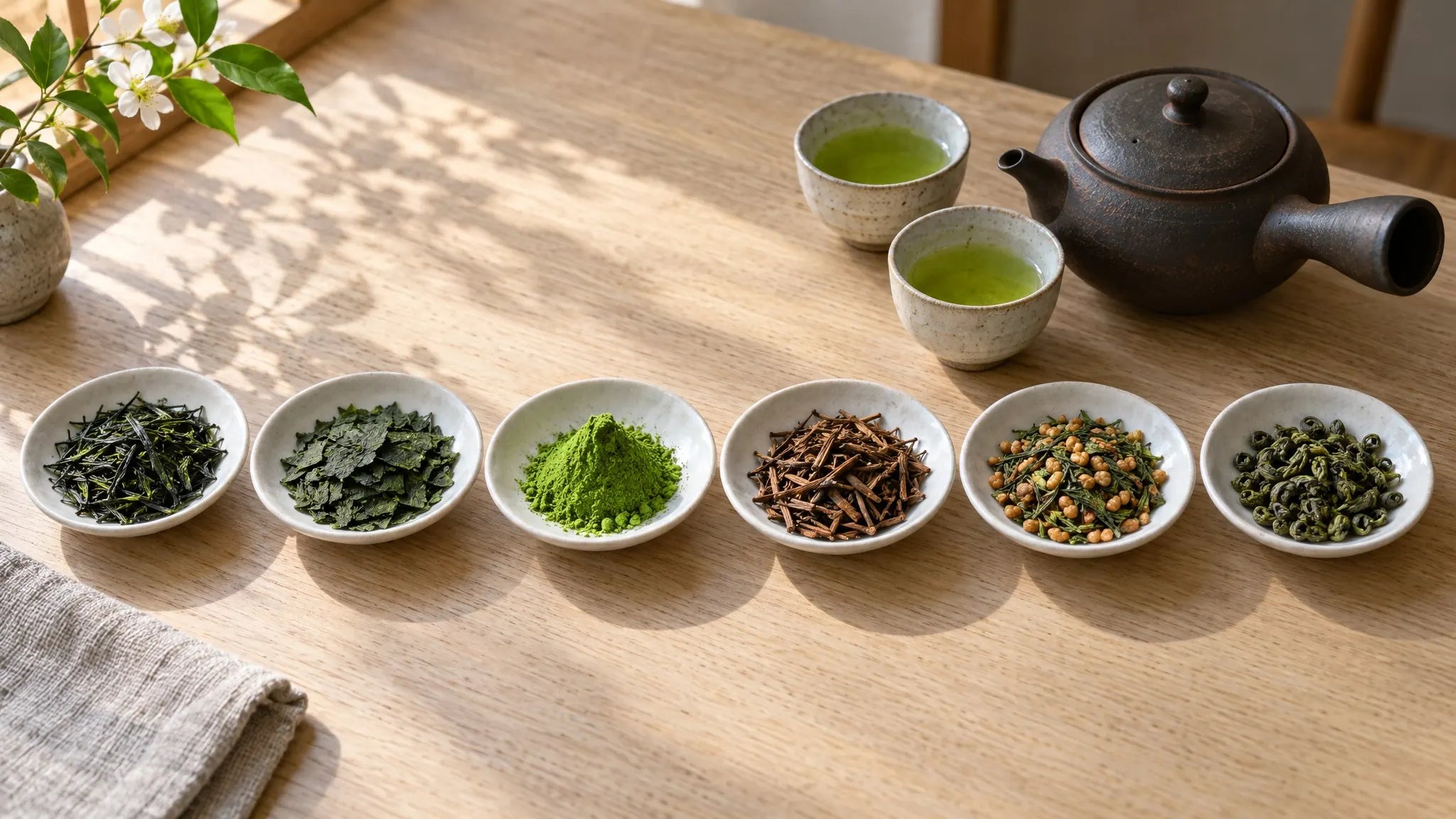
Japanese tea is leaf from the tea plant, Camellia sinensis, grown in Japan and almost always made as green tea: heated soon after picking so it never oxidises.
Japan heats most of its leaf with steam. That is the house style, and it is why the cups are so green, fresh and savoury. Everything else, from gyokuro to matcha to hojicha, comes from a few more choices made on the farm and in the factory.
- Picked. Up to four times a year, from spring to autumn.
- Heated. Steamed, or in a few places fired in an iron pan.
- Shaped. Rolled into needles, left in curls or dried flat.
- Made into crude tea. Aracha, made close to the farm.
- Finished. Sorted and blended, and sometimes roasted, closer to market.
Aracha and shiagecha
Every tea is made twice.
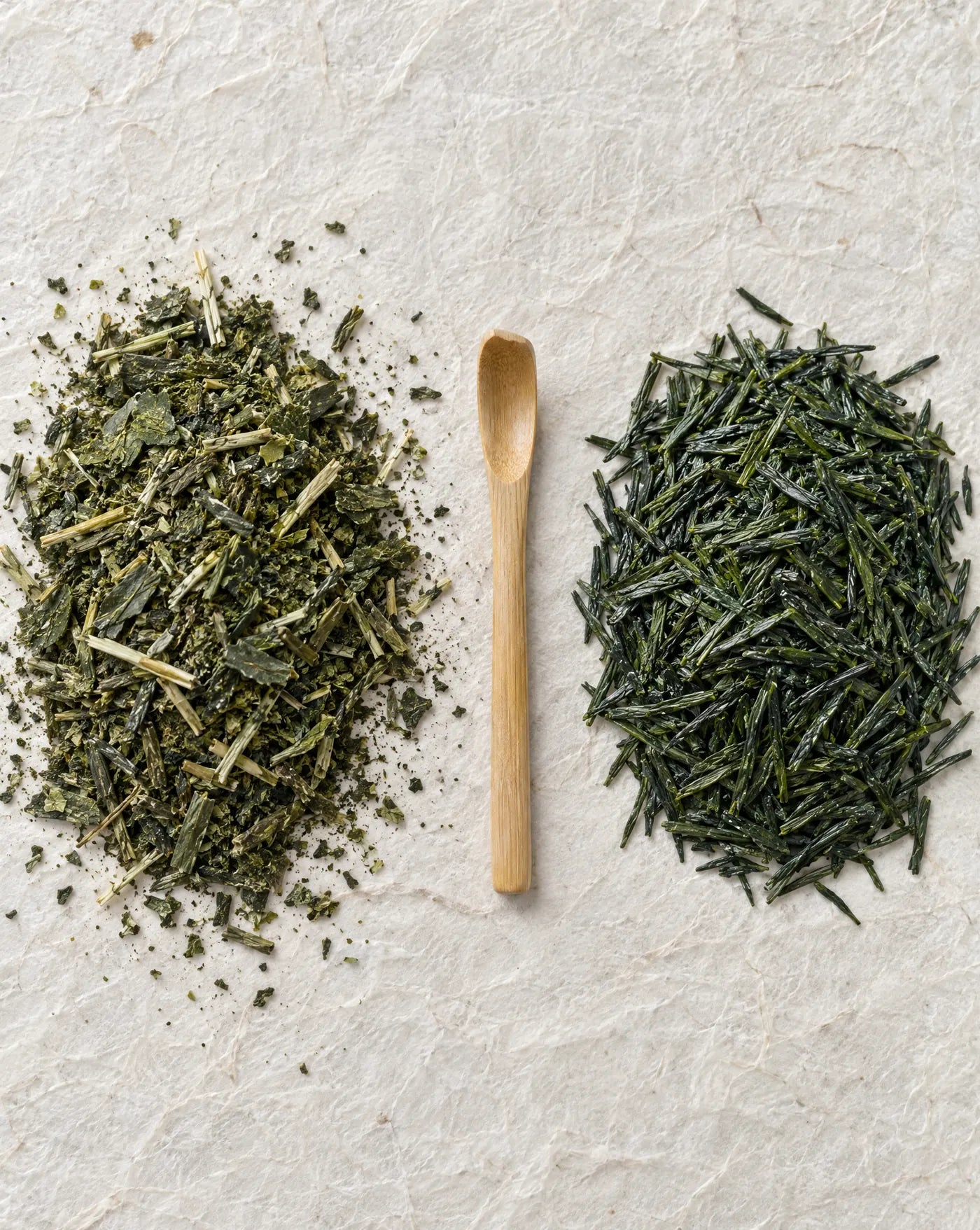
Fresh leaf cannot wait, so it is steamed, rolled and dried in the growing district into aracha, crude tea: uneven, with stems and fine pieces still in it. Japan values its whole tea crop at this stage, 76.3 billion yen of crude tea in 2024.
Crude tea is then sorted, cut and blended into shiagecha, finished tea, which is what goes into a packet. Who does that second step, and how carefully, is part of why two sencha from the same district can taste so different.
Interactive · Make a tea
Four choices, every Japanese tea.
Pick how the leaf is heated, shaded, shaped and finished. Choices that do not make a real tea grey out. The numbers come from Japan's agriculture ministry and its standard food tables.
01How is the leaf heated?
02How long is it shaded?
03How is it shaped?
04Anything after?
Sencha
煎茶 · sen cha
Grown in open sun, steamed, rolled into fine needles and dried. Japan's everyday tea and about half of everything it makes. Steam it briefly for asamushi, two to three times longer for fukamushi.
- Share of Japan's crude tea, 2024
- 49.7%
- Caffeine, as brewed
- 20 mg per 100 ml
- How Japan brews it
- 70 °C for top grades, 90 °C for everyday, 90 s
Share: MAFF, The tea situation, March 2026, 2024 crop. Caffeine: Japan's Standard Tables of Food Composition 2020, each tea brewed its own standard way. Brewing: MAFF's guides for tea exporters. The share bar is drawn against half of Japan's tea.
The family
Half sencha, and a long tail of specialists.
How Japan's 2024 crop split by type, and how much caffeine ends up in the cup.
MAFF, The tea situation, March 2026. Shares of 2024 crude tea; the last row is what remains after the five named types. Caffeine from Japan's standard tables, per 100 ml brewed their way.
Steam, or fire
The rare pan fired one.
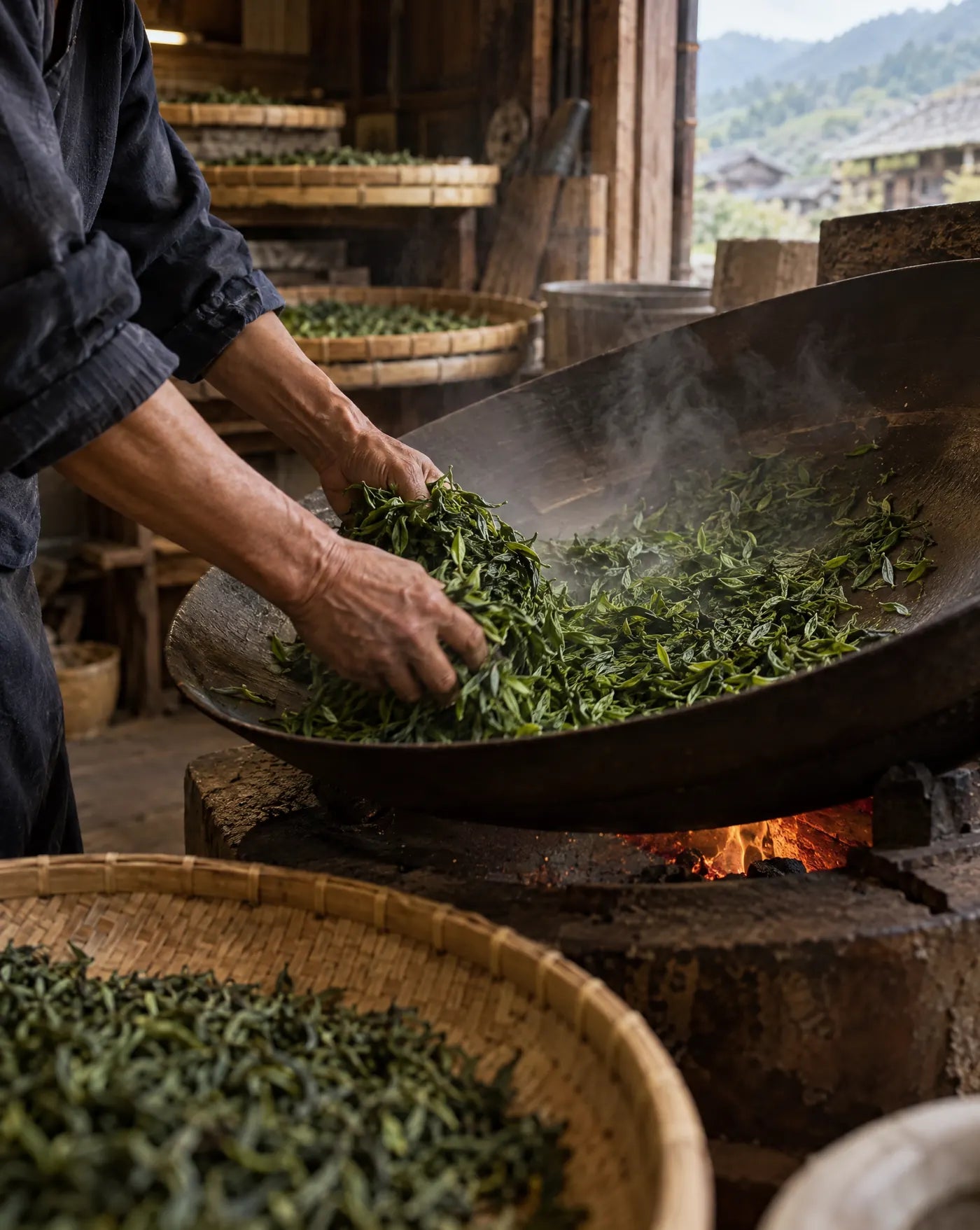
Most Japanese green tea is steamed. Kamairicha is the exception: the leaf is tossed in a hot iron kama instead, which gives a toasty aroma.
It is a Kyushu tradition and a small one. Japan's agriculture ministry names Miyazaki as its largest producer, and brews it like sencha: 70 °C for top grades, 90 °C for everyday leaf, about 90 seconds.
The harvest
First flush is worth four times autumn.
Ichibancha
The leaf the plant saved all winter.
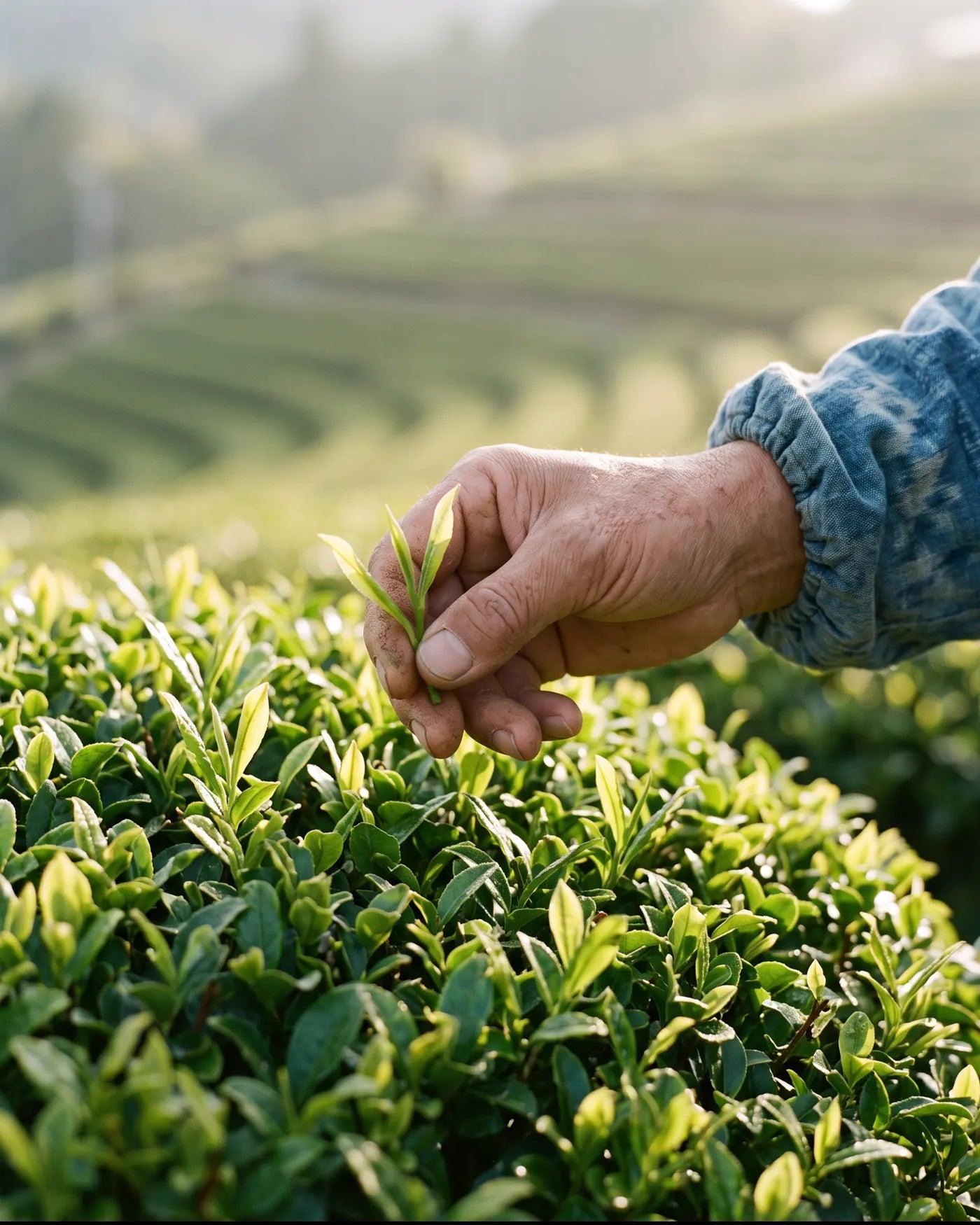
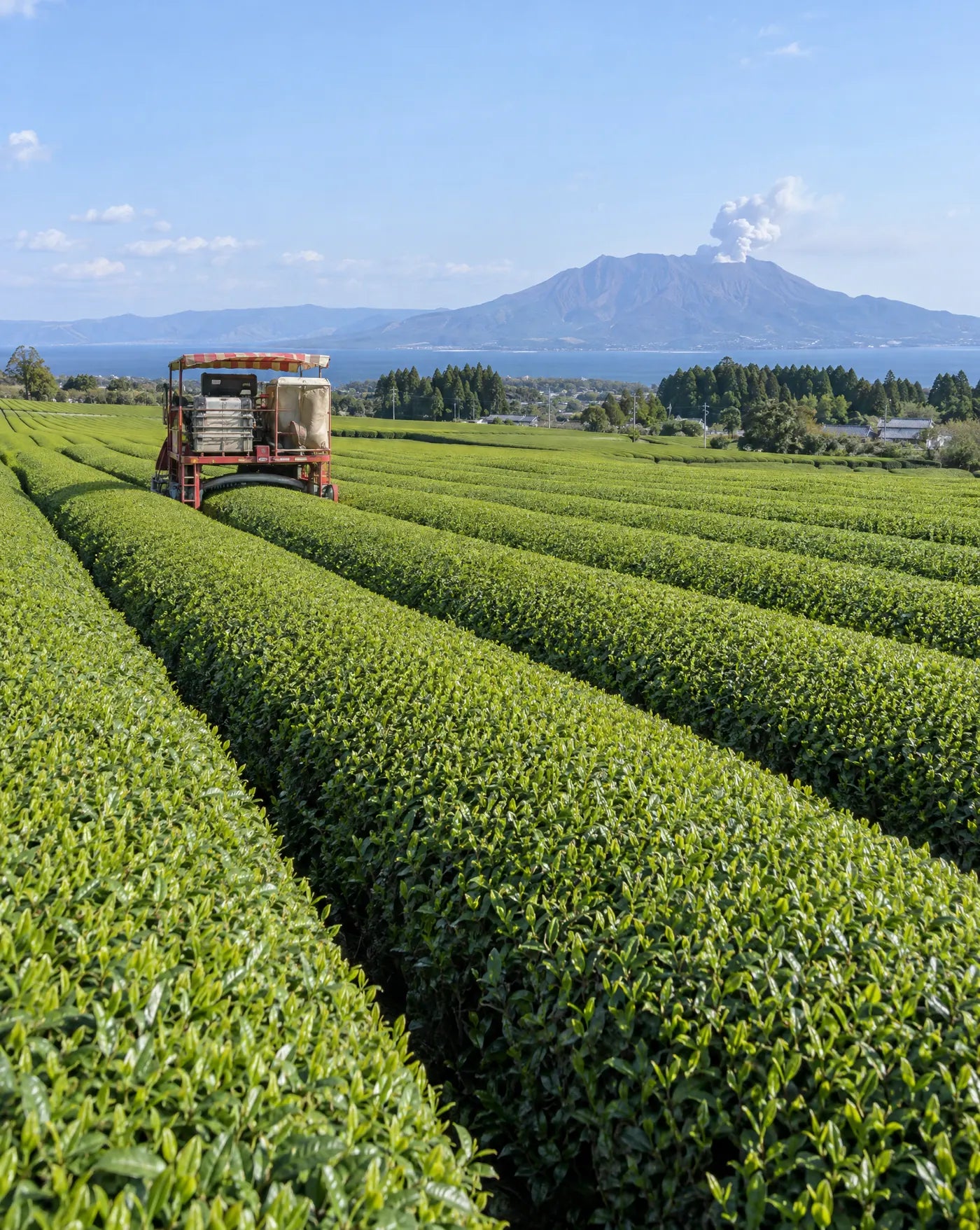
Tea bushes are picked up to four times a year. The first picking in spring, ichibancha, is the one Japan prizes: in 2024 it was 39% of the crop but sold for far more per kilo than anything picked later.
Taste follows. Research at Shiga's agricultural centre found later pickings carry more catechins, the compounds behind bite, and fewer of the amino acids behind sweetness and umami. Our sencha, genmaicha and ceremonial matchas are all spring first flush.
Japan's crude tea by picking, 2024
Tonnes. National Tea Producers' Federation, via MAFF.
Japan's statistics file the last picking as autumn and winter bancha, the everyday leaf.
Where it grows
Kagoshima has overtaken Shizuoka.
For as long as Japan has kept tea statistics, Shizuoka made the most. In 2024 Kagoshima, at the southern tip of Kyushu, passed it for the first time, and stayed ahead in 2025. Shizuoka still has the most land under tea, about a third of Japan's.
- KagoshimaJapan's largest tencha grower, with a wide spread of cultivars.
- ShizuokaMostly sencha, especially deep steamed fukamushi. Third for tencha and kabusecha. Where the leaf for every Teafy loose leaf tea is grown.
- MieFirst for gyokuro and kabusecha.
- KyotoSecond for gyokuro and tencha. Uji is here.
- FukuokaThird for gyokuro.
- MiyazakiFirst for kamairicha.
Crude tea by prefecture, 2025
Tonnes. Total 73,372 t. National Tea Producers' Federation.
Where Japan's green tea went, 2025
Share of export volume. MAFF.
Australia sits inside everywhere else.
Caffeine, honestly
Hojicha has as much as sencha.
Japan publishes official caffeine figures for its teas. Some of them surprise people, including tea sellers.
Caffeine per 100 ml, as brewed
Japan's Standard Tables of Food Composition 2020, via MAFF.
Each uses its own standard brew. Gyokuro: 10 g leaf, 60 ml, 60 °C, 2.5 minutes. Sencha: 10 g, 430 ml, 90 °C, 1 minute. Hojicha and genmaicha: 15 g, 650 ml, 90 °C, 30 seconds. Matcha powder: 3.2 g per 100 g, or 48 mg in a 1.5 g bowl.
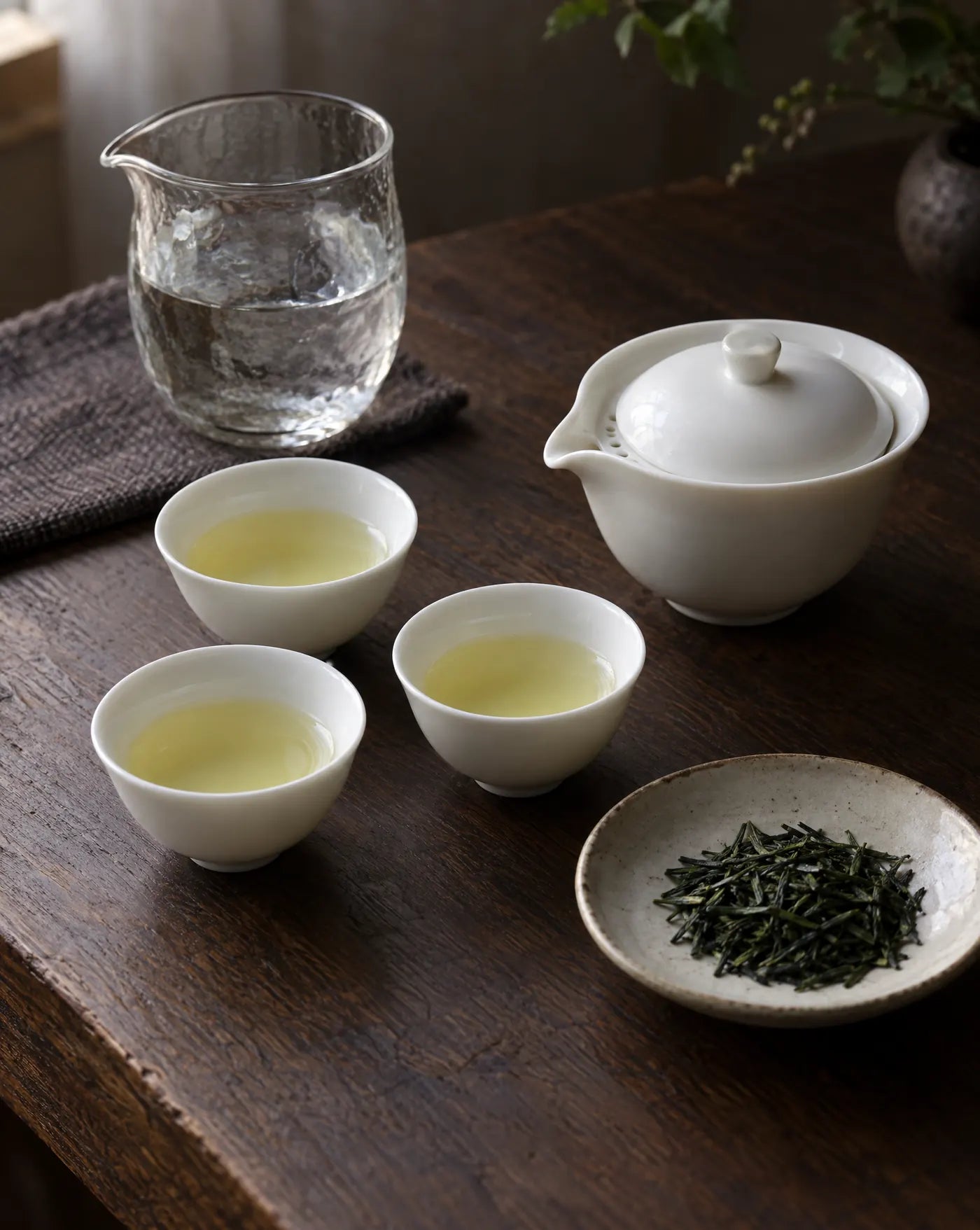
Roasting changes the flavour far more than the caffeine: Japan's tables give brewed hojicha the same 20 mg per 100 ml as sencha. Hojicha made mostly from stems, like ours, starts lower because stems carry less caffeine than leaf. Gyokuro tops the chart because it is brewed strong in very little water, but it is sipped from cups of about 40 ml.
How to brew
Japan's own brewing guide.
These are the methods Japan's agriculture ministry gives tea exporters. The rule underneath them all: the finer and more shaded the leaf, the cooler the water.
Sencha
- Leaf2 to 3 g per 100 ml
- Water70 °C top grade
- Time90 s
- SecondHotter, about 45 s
Everyday sencha takes 90 °C.
Fukamushi
- Leaf2 g per small cup
- Water70 °C top grade
- Time30 s
- SecondHotter, about 20 s
Fine leaf brews fast. Use a fine strainer.
Gyokuro
- Leaf2 to 3 g a person
- Water50 to 60 °C
- Time150 s
- SecondHotter, about 60 s
Tiny cups of about 40 ml.
Hojicha, genmaicha, bancha
- Leaf2 to 3 g per 100 ml
- WaterBoiling
- Time30 s
- SecondPour straight away
Brewed hot for aroma.
Ministry of Agriculture, Forestry and Fisheries, brewing guides for Japanese tea exporters. Our packs give a gentler starting point for some teas, such as genmaicha at 80 °C for one to three minutes. Both work, so taste and adjust. Pour every last drop: tea left in the pot keeps brewing and over brews the next steep.
Water in Australia
Melbourne water is softer than Japan's.
Green tea likes soft water. A national survey of 665 taps across Japan found an average hardness of about 49 mg/L. Melbourne's reservoirs run from about 9 to 38 mg/L, softer still, and well under the 60 mg/L that Australian water authorities class as soft.
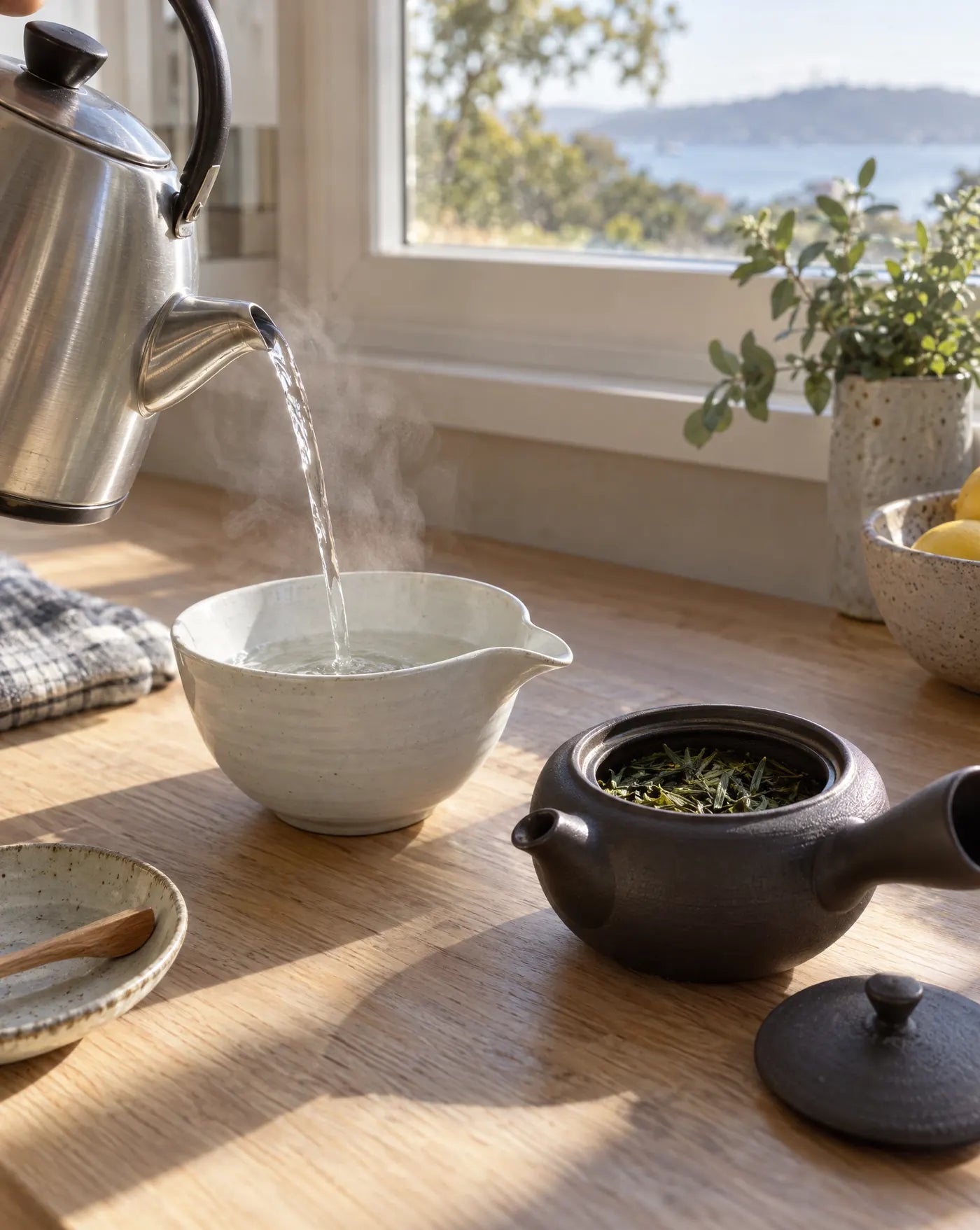
So in Melbourne, filtered tap water is a close match for what Japanese tea is brewed with at home. To cool boiling water to about 70 °C, pour it into a cup or cooling bowl first, then into the pot.
Teafy loose leaf
Four ways into Japanese tea.
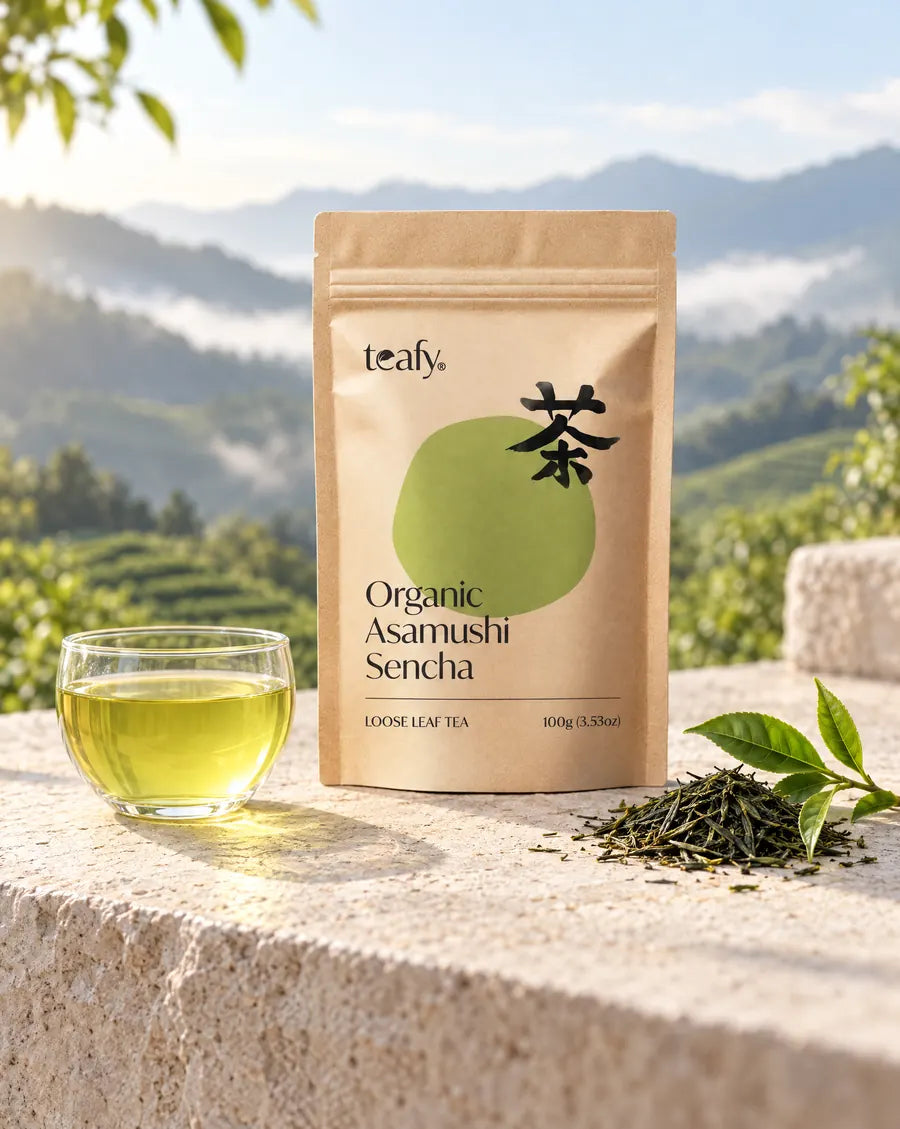
Asamushi Sencha
Briefly steamed first flush from the Haruno mountains, Shizuoka. Clear, bright and lively.
Pouch $27.99 · Can $29.99
Shop Asamushi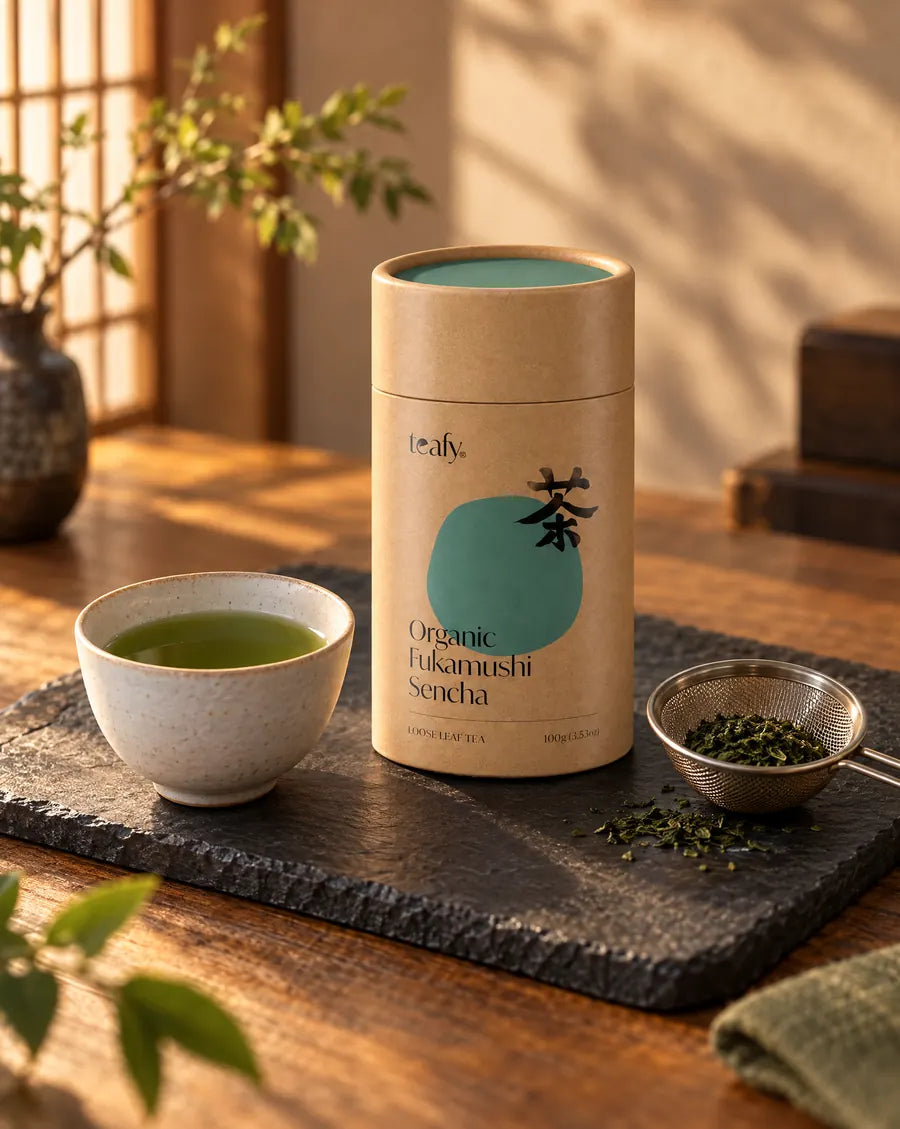
Fukamushi Sencha
Deep steamed first flush from Kikugawa, Shizuoka. Cloudy jade, round and full.
Pouch $26.99 · Can $28.99
Shop Fukamushi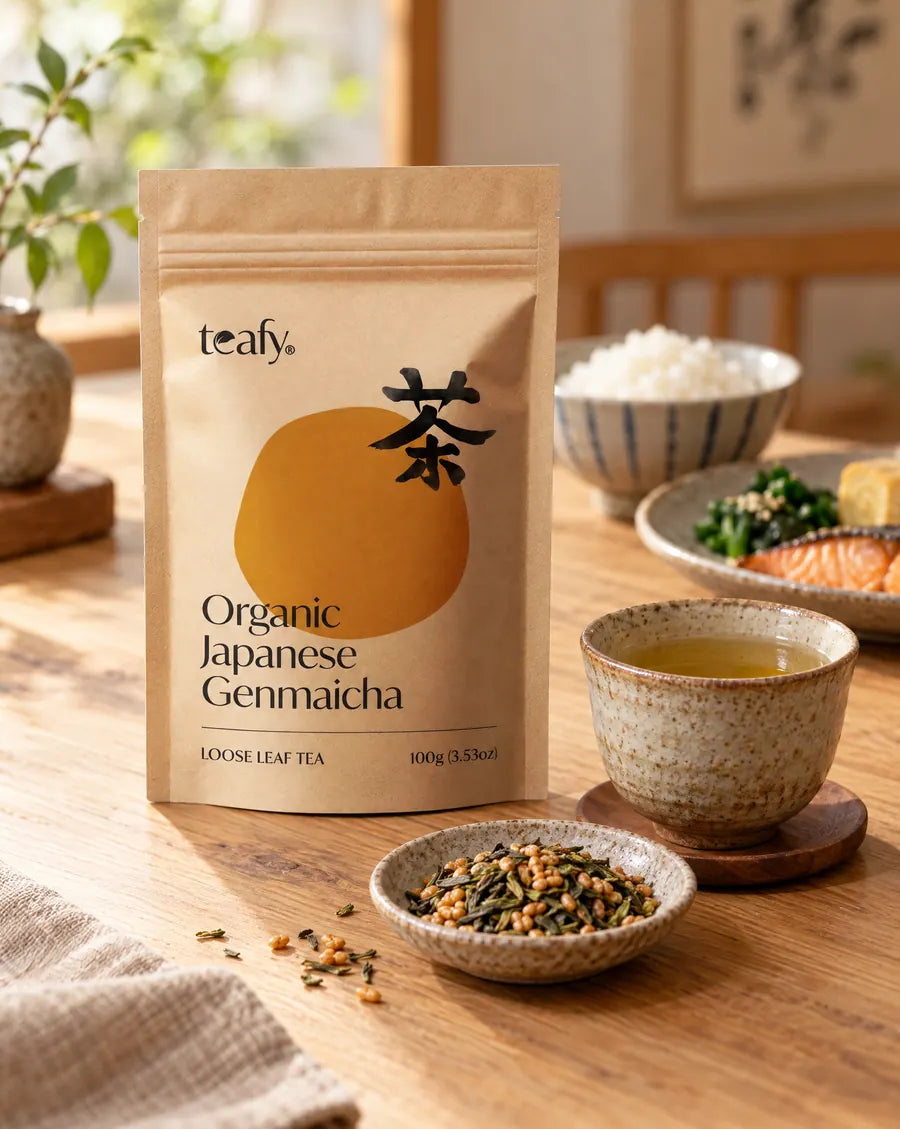
Genmaicha
First flush sencha with roasted brown rice, half and half. Toasty, gentle, 10 to 30 mg of caffeine a cup.
Pouch $25.99 · Can $27.99
Shop Genmaicha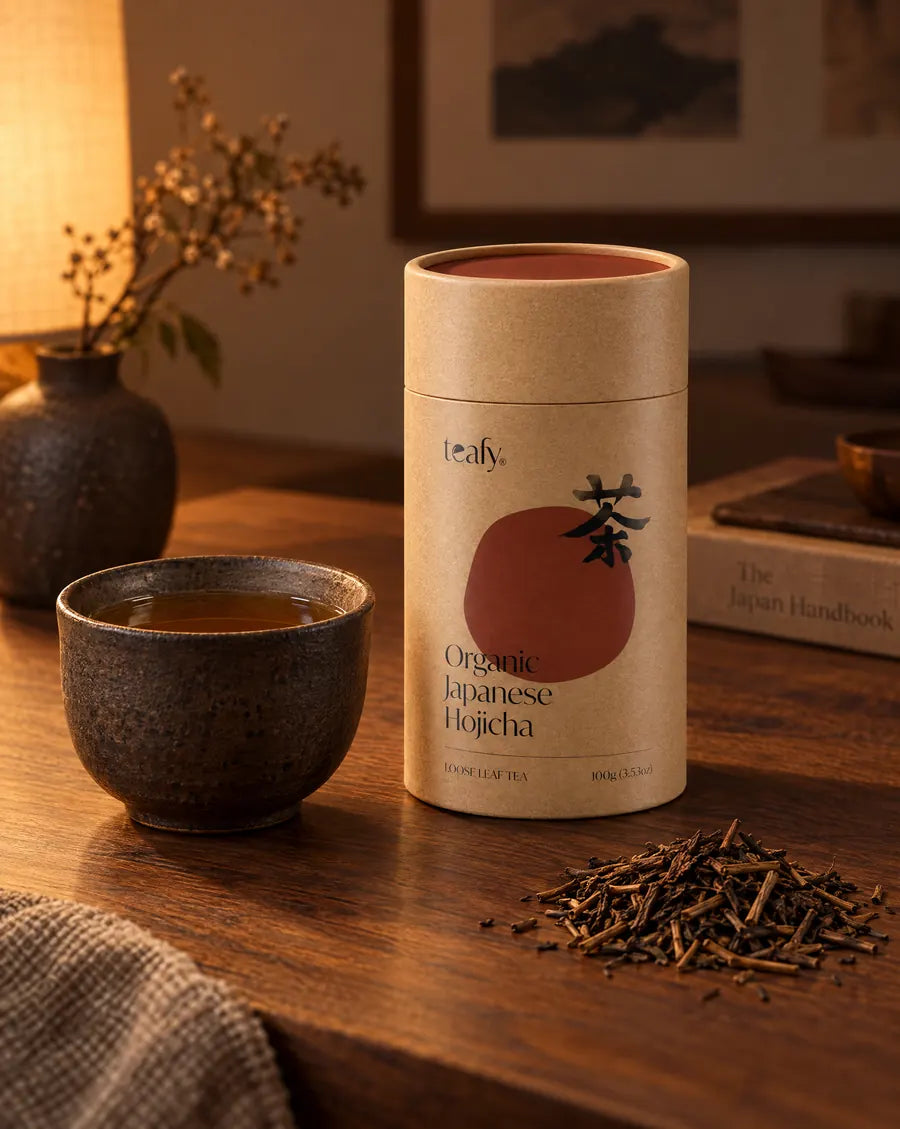
Hojicha
Stems and sencha from Shizuoka, roasted dark. Chestnut, toast and a soft citrus finish.
Pouch $25.99 · Can $27.99
Shop HojichaQuestions people ask
Japanese tea, answered.
Is all Japanese tea green tea?
Very nearly. Japan's agriculture ministry tracks its tea by green tea type, and sencha alone was 49.7% of Japan's crude tea in 2024. Most of it is steamed within hours of picking, which keeps the leaf green. Pan fired kamairicha and roasted hojicha start as green tea too.
Which Japanese tea has the most caffeine?
Per 100 ml, gyokuro. Japan's standard tables list it at 160 mg, because it is shaded and brewed strong with little water, though it is drunk in very small cups. Matcha is next: 48 mg in a 1.5 g bowl made with 70 ml, because you drink the whole leaf. Sencha and hojicha are both 20 mg per 100 ml, and genmaicha 10 mg.
Is hojicha low in caffeine?
Lower than coffee, but Japan's standard tables give brewed hojicha the same 20 mg per 100 ml as sencha. Hojicha made mostly from stems, like ours, tends to sit lower because stems carry less caffeine than leaf. It is not caffeine free.
What is the difference between sencha and gyokuro?
Shade and temperature. Sencha grows in open sun. Gyokuro is covered for about 20 days before picking, which raises umami and lowers bite, and it is brewed at only 50 to 60 °C for two and a half minutes.
What is first flush, or ichibancha?
The first picking of the year, in spring. It was 39% of Japan's tea in 2024 and is the most prized picking of the year. Later pickings carry more catechins and fewer amino acids, so they taste firmer and less sweet.
What water should I use for Japanese tea in Australia?
Soft water. Melbourne's tap water is very soft, about 9 to 38 mg/L of hardness depending on the reservoir, softer than Japan's average of about 49 mg/L, so filtered tap water is a close match for what Japanese tea is brewed with at home.
Which Japanese tea should a beginner start with?
Genmaicha if you want easy and comforting, fukamushi sencha if you want a classic green cup that is hard to get wrong, hojicha for the evening, and matcha if you want the whole leaf. All four are in our range.
Sources
Where these facts come from.
- Ministry of Agriculture, Forestry and Fisheries (March 2026). The tea situation: tea types, share of 2024 crude tea, output by flush, Kagoshima first in 2024 and 2025 since records began, and green tea exports. Source
- Aichi Prefecture (2026), citing the National Tea Producers' Federation: 2025 crude tea output 73,372 t, sencha 35,332 t, tencha 6,278 t, and output by prefecture. Source
- Aichi Prefecture (2025), citing the National Tea Producers' Federation: 2024 crude tea output 75,164 t. Source
- Ministry of Agriculture, Forestry and Fisheries. Caffeine in foods, from Japan's Standard Tables of Food Composition 2020: gyokuro, sencha, hojicha, genmaicha, oolong, black tea, coffee and matcha, with the brewing method behind each figure. Source
- Ministry of Agriculture, Forestry and Fisheries. Japanese tea for export, brewing guides: sencha, deep steamed sencha, gyokuro, kamairi tamaryokucha, bancha, genmaicha and hojicha. Source
- Ministry of Agriculture, Forestry and Fisheries. Japanese tea for export, brewing guide part 2: gyokuro, kamairi tamaryokucha and bancha. Source
- Shiga Prefecture Agricultural Technology Promotion Center (2007). Research Report 46: catechins are higher and amino acids lower in second, third and autumn leaf than in first flush. Source
- Hori M., Shozugawa K., Sugimori K. and Watanabe Y. (2021). A survey of monitoring tap water hardness in Japan and its distribution patterns. Scientific Reports: mean 48.9 mg/L, median 46.0 mg/L across 665 sites. Source
- Melbourne Water. Water quality: hardness by reservoir, 9 to 38 mg/L. Source
- Sydney Water. What's in your water: water under 60 mg/L of calcium carbonate is considered soft. Source
- Shizuoka Prefecture (2026). Tea growing area, 2025: Shizuoka 11,600 ha of 33,400 ha nationally, 34.7%. Source
- Ministry of Agriculture, Forestry and Fisheries (2023). Output by tea type and prefecture: kamairicha led by Miyazaki, 154 t, 72%. Source
- Teafy Asamushi Sencha, Fukamushi Sencha, Genmaicha and Hojicha: origin, harvest, steaming, roast and brewing. Source