
Field notes · Origin
Matcha cultivars, explained.
Every tea bush in Japan belongs to a named cultivar, like grapes in wine. The ones you will see on matcha tins, what each brings to the bowl, and what single cultivar really means.
HHiro OkumuraTea farmer, TeafyPublished 11 November 20265 min read
The short answer
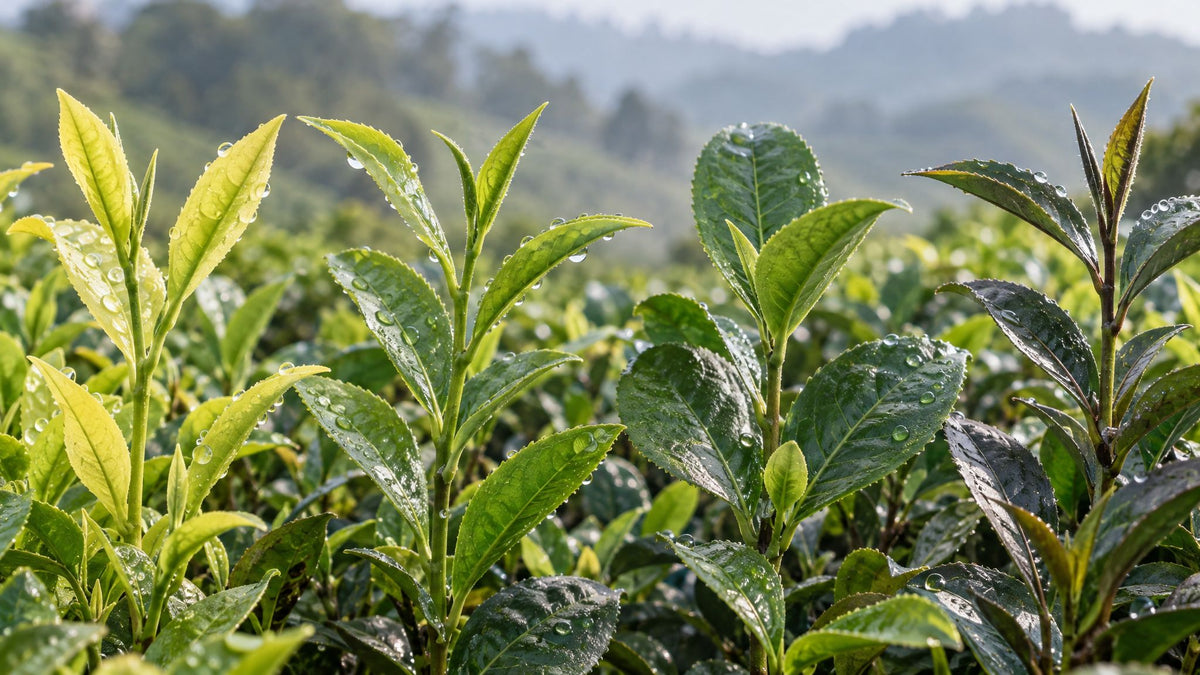
A tea cultivar is a named variety of the tea plant, Camellia sinensis, grown from cuttings so every bush is the same plant. Matcha cultivars include Okumidori, Saemidori, Samidori, Asahi, Gokō and Yabukita. Okumidori buds late and takes shade well, giving deep green colour and mellow sweetness. A single cultivar matcha uses one variety; most matcha is a blend for consistency.
In this guide
What a cultivar is
All tea comes from one species, Camellia sinensis. In Japan, almost all of it is the small leaf sinensis kind, which handles cold winters.
Over the twentieth century Japanese researchers bred and registered named varieties. They selected for budding time, frost resistance, colour and flavour. Today the national research body NARO keeps the records.
Cultivars are grown from cuttings, not seed. A seed grows into something new each time. A cutting grows into the same plant as its parent. So a field of one cultivar is thousands of copies of one bush. Same timing. Same flavour.
Cultivars you will see on matcha tins
General characteristics. Flavour also depends on farm, shading, harvest and milling.
How growers commonly describe them, scored by us from 1 to 5. Farm and harvest change every one.
Deep green and mellow.
Bright, sweet, soft.
Balanced, with more bite.
Why budding time matters
A cultivar's budding time decides when its spring flush is ready. Early cultivars like Saemidori are picked first, which helps a farm spread its harvest over more days.
Late cultivars like Okumidori bud after the early ones. The new shoots grow in a slightly later, steadier spring. And they are less exposed to the last frosts.
A farm with only one cultivar has to pick everything at once. A farm with early, middle and late cultivars can pick each field at its best.
Single cultivar or blend?
A single cultivar matcha lets you taste one variety clearly, the way a single varietal wine does. A blend combines cultivars, and often regions, to balance colour, sweetness and body, and to keep the flavour steady year to year.
Neither is automatically better. Many of Japan's most respected tea houses sell blends. Blending, gōgumi (合組), is a skill in its own right.
Why Okumidori suits Uji matcha
Okumidori buds late, so its shoots grow through a later, steadier part of spring. It takes shade well, deepening its green and its sweet, savoury taste. That makes it a natural fit for Uji's style of matcha: deep colour, quiet sweetness, a long finish.
Our Kyoto Uji is a single cultivar Okumidori, stone milled. It is the one cultivar we name, because it is the point of that tea.
How to taste the difference
- Compare two single cultivars side by sideSame water, same temperature, same 2 g in 70 ml at 80°C.
- Look at the colour firstSaemidori tends brighter; Okumidori deeper.
- Smell the dry powderNote sweetness, cream, seaweed or grass.
- Taste plain, without milkSweetness, savoury depth, and where the bitterness lands.
- Write three words for eachWithin a few sessions you will recognise them.
Monthly Google searches in Australia for okumidori matcha. Small, but up 100% on last year.
Peak month for okumidori matcha: Oct. Quietest: Dec.
Google Ads Keyword Planner, Australia, all languages, Google Search. Monthly figures are Google estimates, rounded into ranges.Questions people ask
What is a single cultivar matcha?
What is Okumidori matcha?
What is the best cultivar for matcha?
Is Yabukita used for matcha?
Are tea cultivars grown from seed?
What cultivar is Teafy's Kyoto Uji?
Hiro Okumura
Tea farmer, Teafy
Hiro is a third generation Japanese tea farmer. He writes about the field: seasons, cultivars, shade and everything that happens to a leaf before it becomes tea.
Sources
- NARO (農研機構), tea cultivar registration records
- Ministry of Agriculture, Forestry and Fisheries (MAFF), 茶をめぐる情勢, October 2026
- Google Ads Keyword Planner, Australia, searches October 2025 to September 2026, checked 11 November 2026
We update this page when the numbers change, and date every change here.
Teas in this guide
Keep reading
 Uji, Shizuoka and Kagoshima
 Ceremonial grade matcha
 Gyokuro and kabusecha
 How to tell good matcha