
Evidence guide · Caffeine
How much caffeine is in matcha?
Matcha has real caffeine, and because you drink the whole leaf, it counts by the gram. Japan's official numbers, a straight comparison with coffee and other teas, and a planner to check your own day.
AArabella L.Evidence guides, TeafyPublished 11 November 20266 min read
The short answer
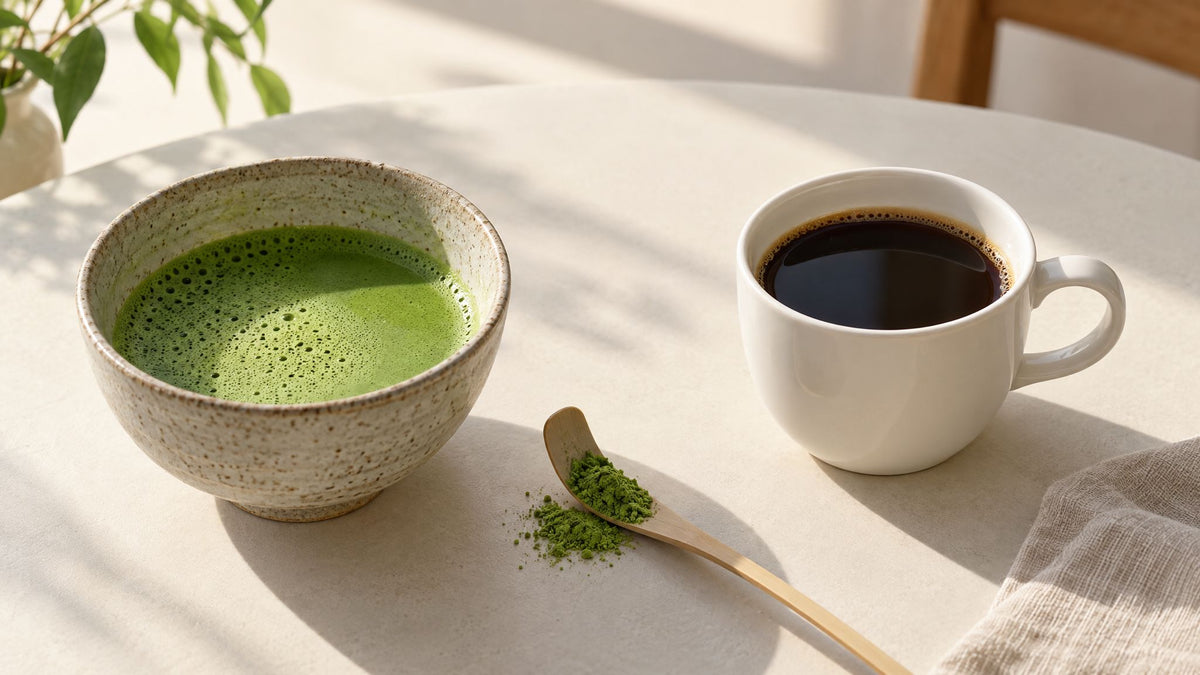
Yes. Matcha powder contains about 3.2 g of caffeine per 100 g, or 32 mg per gram (Japan Standard Tables of Food Composition). A typical 2 g bowl or latte has about 64 mg, a little under a 250 ml cup of brewed coffee at about 80 mg. Healthy adults are commonly advised to stay under 400 mg a day from all sources, and 200 mg during pregnancy.
In this guide
The short answer, graded
The official Japanese numbers
Japan Standard Tables of Food Composition, 8th edition, 2023 supplement, via Zennoh and the MEXT database (matcha 16035).
Japan's Food Safety Commission works through its own example: 1.5 g of matcha in 70 ml of water carries about 48 mg of caffeine. That matches the 32 mg per gram figure exactly.
Caffeine per serve of matcha
Calculated at 32 mg per gram unless noted.
The amount of matcha changes everything. Cafes vary from about 1.5 g to 4 g a latte. If you buy your matcha out, ask how many grams they use.
Plan your own day
The bedtime curve uses caffeine's half life, the time your body takes to clear half of it. EFSA puts it at about 4 hours on average in healthy adults, with a range of 2 to 8 hours, and up to about 16 hours late in pregnancy.
Matcha vs coffee
Many people say matcha feels smoother. Matcha contains L theanine, an amino acid that shading increases, and some small studies suggest theanine and caffeine together affect attention differently from caffeine alone. The evidence is limited, so treat claims of slow release caffeine with caution. Caffeine is caffeine, and it all counts toward your daily total.
What the limits are, and where they come from
How strong the evidence is, graded by us from the study types: 5 is strong, 1 is very limited.
Lower caffeine swaps
- Hojicha: roasted and stem forward; 16 to 30 mg in a 2 g serve of ours.
- Genmaicha: about 10 mg per 100 ml brewed, half of sencha.
- Cold brew sencha: cold water draws out less caffeine than hot.
- Less matcha: 1 g in a latte still tastes of matcha and halves the caffeine.
- Decaf matcha: rare and hard to find; decaffeinated green tea exists, but the process also strips some flavour.
Monthly Google searches in Australia.
Peak month for does matcha have caffeine: Nov. Quietest: May.
Google Ads Keyword Planner, Australia, all languages, Google Search. Monthly figures are Google estimates, rounded into ranges.Questions people ask
Does matcha have caffeine?
How much caffeine is in a teaspoon of matcha?
Does matcha have more caffeine than coffee?
Does green tea have caffeine?
Does matcha keep you awake?
How many matcha lattes can I drink a day?
Is there decaf matcha?
Arabella L.
Evidence guides, Teafy
Arabella writes the Teafy evidence guides. She reads the trials and the official tables, grades how strong the evidence is, and says plainly what it does and does not show.
Sources
- MEXT Food Composition Database, matcha (16035): caffeine 3.2 g and tannin 10.0 g per 100 g
- Japan Standard Tables of Food Composition, 8th edition, 2023 supplement, via 全農 茶ガイド
- Food Safety Commission of Japan, 食品中のカフェイン
- EFSA, Caffeine explained, and Scientific Opinion on the safety of caffeine, EFSA Journal 2015;13(5):4102
- FSANZ, P1056 caffeine safety assessment, and caffeine consumer guidance
- Australian Institute of Sport, caffeine content of common foods and drinks
- Google Ads Keyword Planner, Australia, searches October 2025 to September 2026, checked 11 November 2026
We update this page when the numbers change, and date every change here.
Teas in this guide
Keep reading
 Matcha in pregnancy
 L theanine and matcha
 Hojicha latte recipe
 Is matcha good for you?